
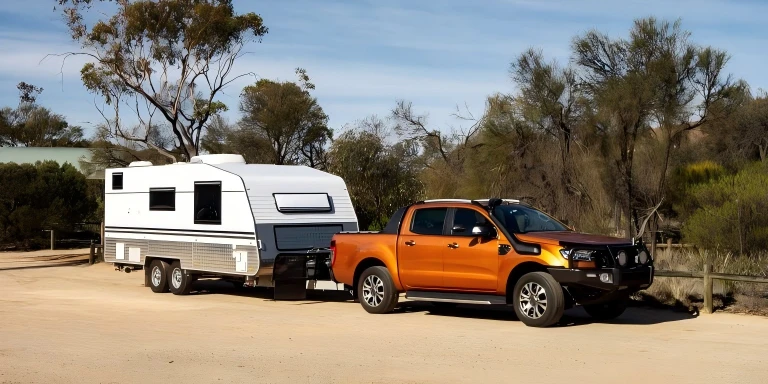


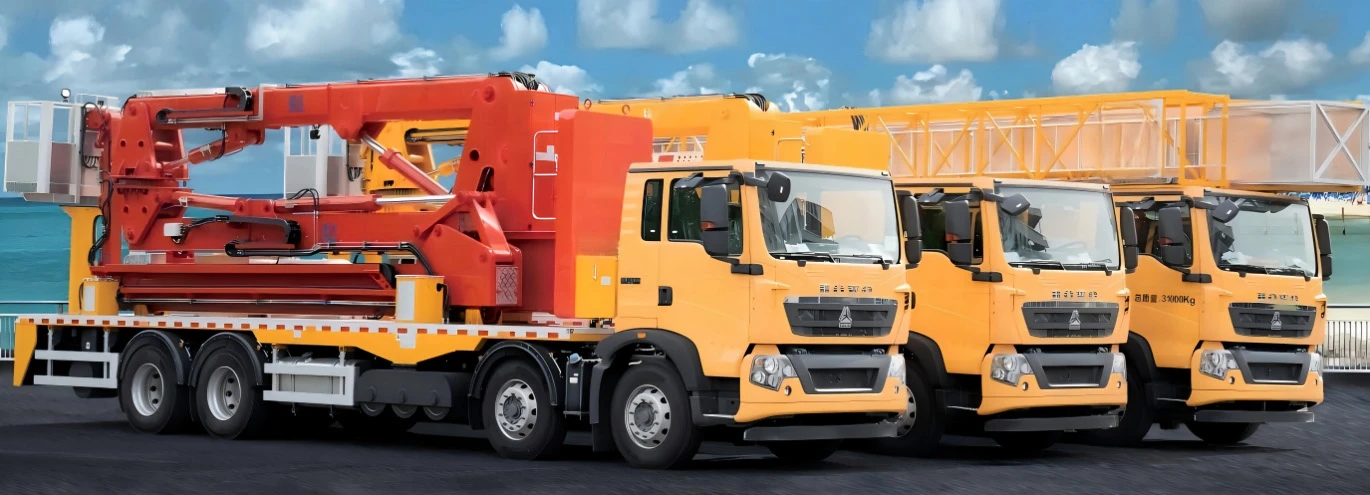
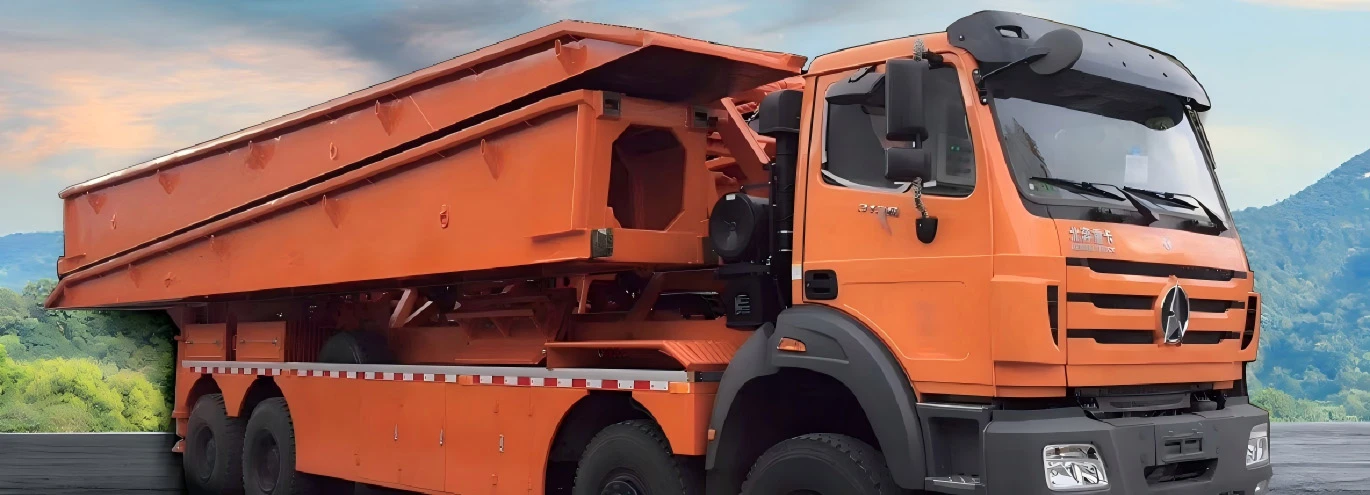
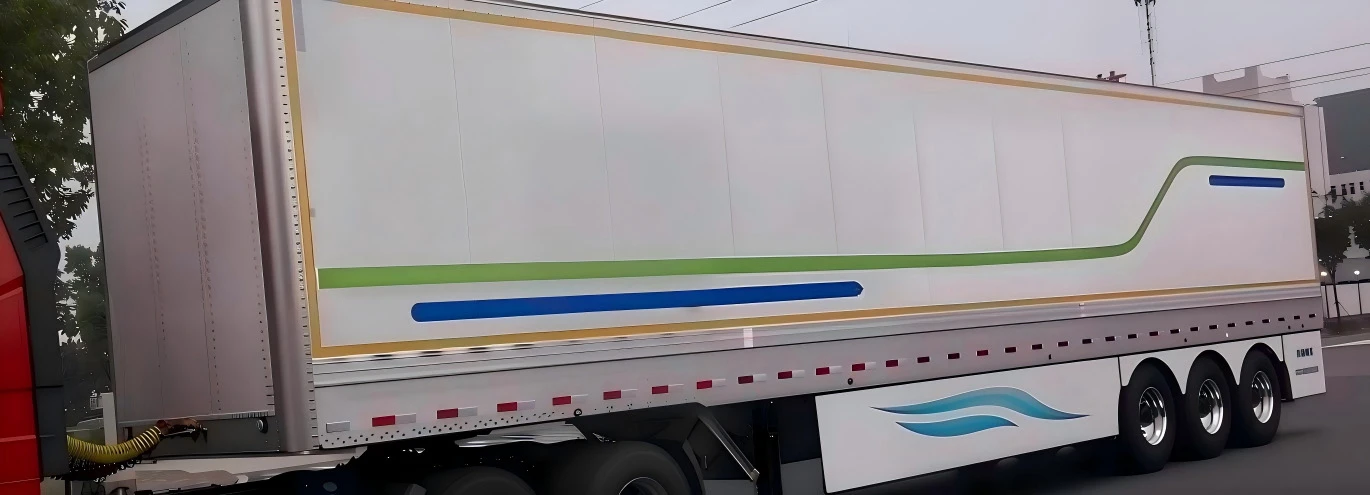

A Chinese dump truck is roughly half the price of a European one of the same payload, and in a market where the mining and construction fleets are being replaced rather than expanded, that gap is the whole commercial argument. The difficulty is that the vehicle which wins on price in Shandong is not automatically the vehicle that starts at minus 30 in Karaganda, or clears certification in Tashkent.
Commercial vehicles also fall under a different set of rules from passenger cars. Trucks and trailers are regulated as N and O categories, the certification route is type approval rather than a single-vehicle certificate in most volume cases, and a trailer is a regulated product in its own right rather than an accessory to the tractor.
This guide covers the three vehicle categories, the two certification regimes, the cold-climate specification that decides whether a fleet survives its first winter, and how these units actually move by rail.
Why Commercial Vehicles Suit This Market
Three conditions favour Chinese commercial vehicles in Central Asia. The first is price: the gap against European and Japanese trucks is wide enough to absorb a weaker residual value and still win on total cost over a five-year hold.
The second is duty structure. Many truck and trailer tariff lines carry lower rates than passenger cars, and the excise burden that makes a large-engined SUV expensive does not apply in the same way to a goods vehicle. That is why a 40-tonne tractor can be a more sensible import than a 3-litre passenger car.
The third is fit. The region's freight task is heavy, short-haul and road-rough: mining haulage, construction aggregate, cross-border container drayage. Chinese trucks are engineered for exactly that duty cycle, with simpler electrics, higher parts commonality and a tolerance for poor fuel that a European truck with a sensitive after-treatment system does not have.
Three Categories, Three Regimes
| Category | Typical specification | Certification route | Winter specification priority |
|---|---|---|---|
| Tractor unit (N3) | 6x4, 380 to 460 hp, GCW 40 to 60 tonnes | Type approval for volume; single-vehicle certificate for one-offs | Cold-start package, fuel heater, cab insulation |
| Dump truck (N3) | 8x4, 20 to 30 cubic metre body, reinforced suspension | Type approval; body builder documentation may be separate | Hydraulic oil viscosity, body steel grade, heater |
| Semi-trailer (O4) | 3 axles, 40 ft skeletal or flatbed, 13.6 m | Certified as a regulated product in its own right | Brake system compatibility, tyre specification |
| Rigid truck (N2/N3) | 4x2 or 6x2, 5 to 12 tonne payload | Type approval or single-vehicle certificate | Cab heater, battery capacity, coolant mix |
The trailer point is the one importers miss. A semi-trailer is not "part of the truck" for conformity purposes: it needs its own approval, and its braking system has to be compatible with the tractor it will run behind. A trailer approved with a European coupling and brake protocol may not mate cleanly with a Chinese tractor, and the mismatch shows up as poor braking balance rather than as an obvious fault.
Certification: EAEU Versus Uzbekistan
Kazakhstan and Kyrgyzstan apply the EAEU technical regulation on wheeled vehicles, which covers M, N and O categories. For trucks and trailers imported in volume, the route is type approval; for a single unit, a single-vehicle certificate is issued after inspection. Trailers are certified in their own right, with their own identification and their own documentation.
Type approval is not a paperwork exercise, because a truck's conformity depends on its configuration. A chassis-cab approved with one engine, one gearbox and one brake system does not automatically cover the same chassis with a different axle ratio, a different retarder or a locally built body. When a body is added after import - a dump body, a tank, a crane - the body builder's documentation becomes part of the conformity story, and an unapproved body can invalidate the approval of the chassis.
Uzbekistan is outside the union and requires national certification, with the same characteristics as its passenger car regime: technical regulation conformity, emissions evidence at the required class, documentation in Russian or Uzbek with notarised translation, and an authorised local representative who carries responsibility for the certificate, after-sales and recalls.
Two practical consequences. A type approval obtained for Kazakhstan does not clear Uzbekistan. And a fleet buyer who intends to operate across both markets needs both files, which is cheaper to arrange at the specification stage than after the trucks are built.
Cold-Climate Specification
This is where the cheapest quotation becomes the most expensive fleet. A standard Chinese domestic specification assumes a temperate winter; Kazakhstan's northern regions and much of Uzbekistan's steppe do not provide one.
The items that matter, in order of consequence:
- Coolant concentration. Factory fill is often adequate to about minus 25. Below that, a diluted mix freezes, and a frozen block cracks. Specify the concentration for the destination's design minimum.
- Cold-start capability. Battery capacity, starter rating, glow plugs or intake heater, and an engine pre-heater. A truck that will not start at minus 30 is a truck that misses its shift.
- Fuel system heating. Diesel waxes in cold weather; a fuel heater and an adequately sized filter are not optional in the north.
- Cab heating and insulation. A long-haul cab with a weak heater and single glazing is a driver-retention problem as much as a comfort one.
- Lubricants and hydraulic oil. The viscosity grade has to suit the operating temperature, particularly for the dump body hydraulics, which are often overlooked.
- Body steel and paint. Cold-brittle steel and thin paint fail at the first winter's salt and grit; specify the heavier gauge and the higher paint specification.
- Seals and rubber. Door seals, air lines and suspension bushes harden and crack; low-temperature compounds are a cheap option at the factory and an expensive retrofit.
None of these is exotic. All of them are cheaper to order than to fix, and most are invisible in a quotation that compares only price, payload and horsepower.
Fuel and AdBlue Reality
Euro 5 and Euro 6 after-treatment systems are sensitive to fuel sulphur and to urea quality. Where the local diesel is off-specification, the SCR system derates the engine, and a derated truck cannot do the work it was bought for.
Before committing a fleet, establish three facts: the sulphur content of the fuel actually available on the route, the availability of AdBlue along that route, and the truck's derate behaviour when the system detects a problem. Some operators deliberately specify a lower emissions class where the regulation permits it, because a simpler engine tolerates worse fuel; others specify the higher class because the regulation or the customer requires it. Either way, the decision should be made with the fuel data in hand, not after the first warranty claim.
Loads and Configurations That Sell
The configurations with real demand are narrow. A 6x4 tractor at 380 to 460 hp with a 40 to 60 tonne gross combination weight covers container drayage and general haulage. An 8x4 dump truck with a 20 to 30 cubic metre body covers construction and aggregate. A three-axle 40 ft skeletal trailer covers port and terminal work, and a flatbed or sidewall trailer covers building materials.
What does not sell well is the odd specification: an unusual axle ratio, a non-standard fifth wheel height, a body built for a different regulatory regime, or a colour and trim combination that only makes sense in a domestic brochure. Fleets buy commonality, because commonality is what keeps the parts bin small.
Shipping: Rail Wagons and Road
A truck does not fit in a container, and there is no roll-on/roll-off service to a landlocked market. That leaves two methods: rail on flat wagons, or driven over the road.
Rail is the volume solution. Trucks and trailers are loaded onto flat wagons, secured at the wheels and chassis, and moved in blocks. The gauge change at Alashankou or Khorgos is handled by transloading the units or by changing the wagon bogies, and the height and width of the load have to be checked against the route's clearance profile - a high-cube body or a raised crane can exceed it. Trailers travel more easily than tractors because they have no cab height and no fluids, but they still need brake compatibility documentation if they are to be registered as a combination.
Road is faster and better suited to small numbers: drive the unit across at Khorgos or through the Kyrgyz passes, with a transit declaration and a temporary plate or trade plate arrangement. The cost per unit is higher, the winter risk is real, and the driver needs the correct documentation at each border. For a single unit or a demonstration fleet, road is usually right; for twenty units, rail is.
Parts and Service: the Real Differentiator
Price wins the order and parts keep the account. A fleet buyer will ask three questions that a passenger car buyer does not: how long does a filter or a brake chamber take to arrive, who can diagnose the engine, and what happens in the second year when the warranty expires.
The answers are structural. Chinese trucks share platforms across brands more than European trucks do, so consumables are widely available and inexpensive. Diagnostics need the right tool and the right software, and a local workshop without them will replace parts rather than diagnose them. Warranty support depends on whether the brand has a distributor in the market or whether every claim has to be routed through China.
The practical package for a fleet order is therefore not just vehicles: it is a parts kit sized to the first year's consumption, a diagnostic tool, training for two technicians, and a written warranty procedure with a named contact. That package is what separates an exporter from a supplier.
Documentation Checklist
- Commercial invoice, packing list and SMGS rail waybill or road consignment note
- Certificate of origin with the HS code - 8704 for trucks, 8716 for trailers
- Type approval or single-vehicle certificate for the EAEU market
- National conformity certificate and authorised representative appointment for Uzbekistan
- Emissions evidence at the class required by the destination
- Body builder documentation where the body is added after import
- Brake compatibility statement for a tractor-trailer combination
- Chinese export declaration, and the export licence where a used unit is involved
- Photographs at loading, seal numbers and a condition report
Six Mistakes
- Quoting a temperate specification for a continental winter. Coolant, batteries, fuel heating and cab insulation are the difference between a working fleet and a parked one.
- Assuming the chassis approval covers the finished vehicle. A locally built body can invalidate the conformity of the chassis unless it is documented.
- Forgetting that a trailer is a regulated product. It needs its own approval and its own identification.
- Mixing tractor and trailer brake systems across standards. The combination brakes badly and fails inspection.
- Ignoring fuel sulphur and AdBlue availability. A derated engine is an expensive lesson in local fuel quality.
- Shipping without a parts kit. The first unscheduled repair decides whether the customer buys again.
Frequently Asked Questions
Can Chinese trucks be registered in Kazakhstan?
Yes, if they meet the EAEU technical regulation, which covers N and O categories, and carry type approval or a single-vehicle certificate. Left-hand drive is standard on Chinese trucks.
Do trailers need separate certification?
Yes. A semi-trailer is certified as a regulated product in its own right, and its brake system must be compatible with the tractor it will operate with.
How are trucks shipped to Central Asia?
By rail on flat wagons, or driven over the road. There is no container option for a complete truck and no Ro-Ro service to a landlocked market.
What cold-weather options should I order?
Coolant to the destination's design minimum, a cold-start package with adequate battery and pre-heater, fuel heating, cab insulation, low-temperature lubricants, and low-temperature seals and rubber.
Is a Euro 6 truck better than Euro 5 here?
Not automatically. Higher emissions classes need better fuel and reliable AdBlue; where those are unavailable, a simpler engine may be the more reliable choice, subject to what the destination regulation requires.
Can one approval cover Kazakhstan and Uzbekistan?
No. Kazakhstan applies the EAEU regime and Uzbekistan applies its own national certification with a local representative, so both files are needed for a fleet operating across the border.
Sources
1. Eurasian Economic Commission - technical regulation TR CU 018/2011 on the safety of wheeled vehicles, covering M, N and O categories including trailers - eec.eaeunion.org
2. EAEU legal portal - full text of TR CU 018/2011 and its amendments - docs.eaeunion.org
3. Uzstandard - national technical regulation and conformity assessment for vehicles, including trucks and trailers - standart.uz
4. Customs Committee of Uzbekistan - tariff classification for goods vehicles under HS 8704 and trailers under HS 8716 - customs.uz
5. KTZ, Kazakhstan Temir Zholy - flat wagon loading, clearance profile and transit procedures - ktz.kz
Tariff rates, certification routes and emissions requirements are set by regulation and applied by the authority on the day of entry, and vehicle specification must be matched to the destination's climate and fuel. Confirm both before placing a fleet order. Nothing in this article is legal or tax advice.