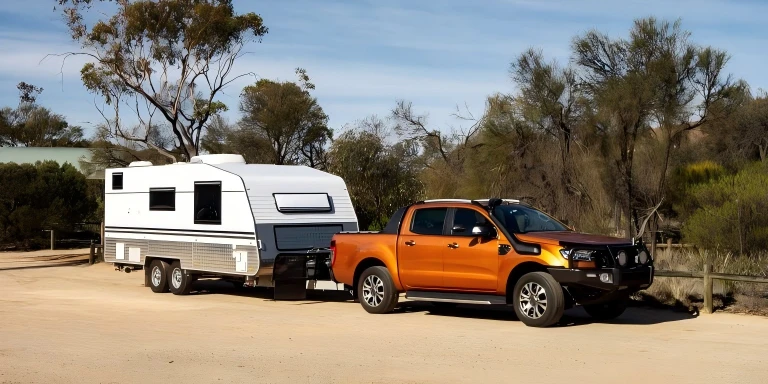



A road maintenance contractor based in Naryn has taken delivery of 10 four-wheel-drive diesel pickups, shipped from Zhengzhou by road and rail through the Irkeshtam crossing and handed over in Kyrgyzstan in November 2026. The vehicles were ordered as work trucks, not as lifestyle vehicles: each one carries a service body, a generator, tools and a salt spreader for winter passes.
This is the part of the pickup market that catalogue articles miss. The buyer was not comparing trim levels or screen sizes. The buyer was asking one question - will this vehicle still start at minus 25 degrees Celsius at 3,000 metres in February, with a loaded bed and a trailer behind it.
What Was Ordered
| Item | Specification |
|---|---|
| Vehicle | Double-cab pickup, four-wheel drive, diesel |
| Quantity | 10 units |
| Body | Steel service body with lockable compartments, roof rack and work lighting |
| Cold-climate package | Engine block heater, high-capacity battery, winter-grade coolant and lubricants, heated mirrors |
| Winter equipment | Salt spreader mounting points, tow hitch, recovery points front and rear |
| Export additions | Russian-language labels, dust filtration, two spare wheels per unit, first-year service parts |
Payload, axle ratings and the towing figure are stated on the factory specification sheet supplied with each unit. On a work truck those three numbers decide whether the vehicle is legal and safe when loaded, and they should be compared line by line between quotations - two pickups that photograph identically can differ substantially in payload once the service body is fitted.
The Real Specification Is the Altitude
Naryn sits above 2,000 metres and the routes out of it climb higher, through passes that stay closed or restricted for parts of the winter. At altitude a diesel engine loses power, the air is thinner so cooling and combustion both change, and a naturally aspirated unit feels noticeably weaker than its brochure figure. That is why the order specified a turbocharged diesel with a documented altitude correction rather than the cheapest engine in the range.
The second altitude effect is on the driver, not the vehicle. Long climbs in low temperatures with the heater working and the lights on put sustained load on the electrical system, which is why the battery and alternator were specified above the standard domestic configuration. A truck that needs a jump start at a mountain checkpoint is a truck that has stopped being a work vehicle.
Cold Starts and the Cost of Being Wrong
An engine block heater is not an accessory in this market; it is the difference between a fleet that runs in January and a fleet that does not. The order included block heaters, winter-grade coolant, low-viscosity lubricants and a battery sized for cold cranking, all fitted at the factory.
The reason is arithmetic rather than preference. Retrofitting a block heater and a larger battery in Bishkek costs more than specifying them at build, and the retrofit usually happens after the first cold snap, which is exactly when the vehicles are needed. Buyers in cold markets should treat every cold-climate item as an order-stage decision.
Service Body Before Trim Level
The contractor spent more on the service bodies than on the difference between two trim levels, and that was the right allocation. Lockable compartments, work lighting and a roof rack decide what the vehicle can actually do on a shift. A leather interior does not help spread salt on a pass at night.
The practical consequence for anyone ordering work pickups: fix the body and the equipment first, then choose the cab specification that supports it. Mounting points, wiring for work lights and the load distribution of the body all depend on the chassis, so the body design has to be settled before production, not after delivery.
Certification in Kyrgyzstan
Kyrgyzstan is an EAEU member, so the technical regulation route is TR CU 018/2011 and the vehicle is registered with an electronic passport. That is the same framework as Kazakhstan and Russia, which is why a specification approved for one of those markets usually transfers - but only if the paperwork is issued for the country of registration and the emission class matches the current requirement.
Two details are worth confirming in writing before production. First, whether the emergency call device is required for the registration route chosen, since that requirement is not applied identically across the union. Second, the current recycling fee, which is charged on import and changes by decree. Neither is a reason to avoid the market; both are reasons to confirm rather than assume.
Delivery by Road and Rail
Pickups are taller than sedans but still fit a 40 ft high-cube container, two per box, provided the door height is checked against the roof height with the service body removed. For this order the service bodies travelled separately and were fitted in Bishkek, which kept the container loading simple and avoided damaging the compartments in transit.
The alternative - driving the vehicles overland through the Irkeshtam or Torugart crossings - is faster for small quantities but exposes new vehicles to several hundred kilometres of mountain road before delivery, and the condition on arrival becomes a matter of argument. For a fleet of ten, containerised shipping with local body fitting was the cheaper and cleaner option.
Our Capability on Pickup Exports
Pickups for Central Asia are a category we handle end to end. Our team works from the destination backwards: we confirm the EAEU certification route and electronic passport requirements before the production slot is booked, specify the cold-climate and dust package for the actual altitude and winter conditions rather than the export default, and arrange body fitting locally where that reduces risk in transit. On the logistics side we run container and overland options through Khorgos, Alashankou and the Irkeshtam and Torugart crossings, with loading photographs, chassis numbers and odometer readings recorded for every unit, and a first-year parts package and mechanic training where the fleet depends on uptime. Because we ship regularly on these routes, we can tell a buyer which specification will clear and which will sit at the border - before the vehicles are built.
Ordering Work Pickups for Kyrgyzstan
The sequence is short but unforgiving: duty cycle and altitude analysis, body and equipment design, cold-climate specification, EAEU certification and electronic passport, production, container or overland shipping, local body fitting, then registration. The stage that most often delays a winter fleet is certification started after production, and the stage that most often causes complaint is a cold-climate package treated as an optional extra.
If you are specifying pickups for Kyrgyzstan or Kazakhstan, send the route, the altitude, the equipment the vehicle must carry and the month you need it in service, and we will return a configuration and a landed cost breakdown. Our pickup range lists current availability, the Kyrgyzstan transit and re-export guide covers the EAEU movement rules, and the fleet procurement checklist sets out the full sequence.
Order details are as confirmed with the customer at handover. Vehicle specifications, payload ratings, transit times and certification requirements vary by configuration, season and current local regulation, and are confirmed per order. Nothing in this article is a quotation.