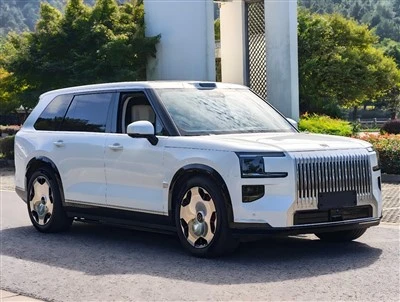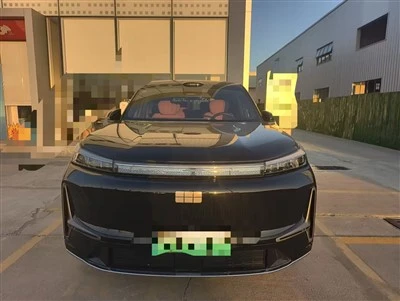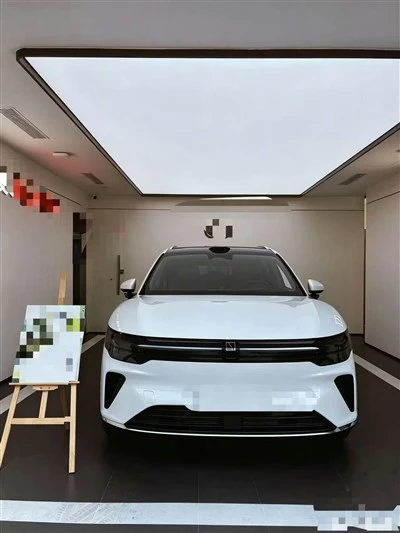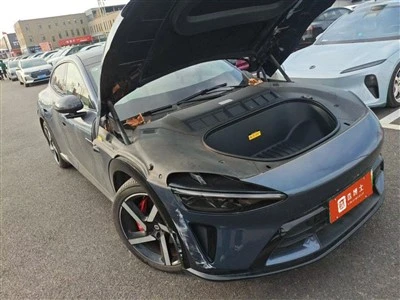


Denza opened pre-orders for the N8 on 26 October 2026 ahead of a November launch, pricing it in the RMB 350,000 class. It is a five-seat SUV measuring 5,150 mm with a 3,075 mm wheelbase, and it is the largest battery pack BYD has put into a passenger SUV: 105.792 kWh in the standard version, 130.15 kWh in the long-range one.
The headline claims are unusual even by Chinese standards. Up to 1,003 km of CLTC range, charging from 10 to 97 per cent in nine minutes, 890 kW from a three-motor system, and a 0-100 km/h time described as being in the 2.9-second class. All four come from the same platform, which is the point: Denza is demonstrating that BYD's second-generation blade battery and flash-charging architecture can carry a car this size.
For an exporter the questions are different. Which of those numbers survive contact with local infrastructure, what the car is like without the flash-charging network it was designed around, and whether a 130 kWh pack is an asset or a liability in a market that will never see a 1 MW charger.
Price and Versions
| Item | Figure |
|---|---|
| Positioning | RMB 350,000-class five-seat SUV |
| Powertrains | Battery electric and plug-in hybrid |
| Electric drive layouts | Rear single motor, 320 kW or 370 kW; three-motor all-wheel drive |
| Three-motor output | 890 kW combined |
| Battery options | 105.792 kWh and 130.15 kWh, second-generation blade |
| CLTC range | 800 km to 1,003 km depending on version |
| Plug-in hybrid electric range | 435 km CLTC |
Three things in that table deserve attention. The plug-in hybrid's 435 km of electric range is larger than the total range of most electric cars sold in export markets five years ago. The battery options differ by 24 kWh, which is a large gap and will show up as a large price gap. And the three-motor version's 890 kW is not a number that any road-legal use requires - it is a marketing statement about the platform, and it comes with the weight and cost that follow from 890 kW of hardware.
Dimensions and Space
The N8 is 5,150 mm long, 1,999 mm wide and 1,820 mm tall on a 3,075 mm wheelbase. It is five-seat only, and the packaging has been pushed to the limit of what a five-seat body can offer: a 205-litre front boot, a 1,046-litre rear boot that grows to 2,150 litres with the second row folded, and 33 storage locations.
There are four zero-gravity seats - both front seats and both outer rear seats - with the front pair reclining to 165 degrees and the rear pair to 146 degrees with 130 mm of fore-aft adjustment. Ventilation, heating and massage are fitted throughout.
That is a specification written for a specific buyer: the owner who is driven, or who drives long distances with passengers who expect to sleep. In the Gulf this configuration is a direct competitor to a premium Japanese SUV, at a fraction of the price.
Battery and Charging
The second-generation blade battery is BYD's lithium iron phosphate chemistry in a cell-to-body arrangement. LFP is the right chemistry for hot markets: it is thermally stable, tolerates routine charging to 100 per cent, and degrades slowly in high ambient temperatures.
The flash-charging claim is 10 to 97 per cent in nine minutes, with the company also quoting five minutes for a useful top-up and an additional three minutes at minus 30 degrees Celsius. Those figures require a charger that can deliver very high power - the kind of installation that exists in China and almost nowhere else. On a 120 kW station the same pack will charge at 120 kW, and a 130 kWh battery at that rate takes well over an hour from empty.
This is the central export issue with the car. Its charging architecture is designed for a network that does not exist in most destination markets, and the buyer pays for the capability in cost, weight and complexity without receiving the benefit.
Chassis and Safety
The car uses Yunian-A dual-chamber closed air suspension with road preview, rear-wheel steering that gives a 4.5-metre turning radius, and a body built around CTB integration with 2,000 MPa-class steel in the safety structure. Nine airbags are standard, and the design target is the 2024 C-NCAP five-star rating.
A 4.5-metre turning radius on a 5.15-metre vehicle is genuinely useful in tight city traffic and parking structures, and rear-wheel steering is one of the few premium features that a driver notices every day rather than once.
Air suspension is also the system most likely to fail expensively. In a market without a Denza workshop, a failed strut or compressor can ground the car for weeks. Importers should budget for spare suspension components in the first order if they intend to sell this model seriously.
Cabin and Technology
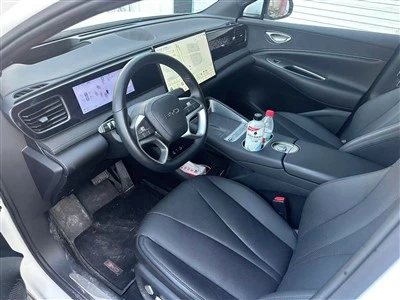
The interior is built around a 1.1-metre head-up display combined with a 30-inch central screen, Devialet audio, a 6.8-litre heated and cooled fridge, and a 17.3-inch roof-mounted screen for rear passengers.
Driver assistance is God's Eye 5.0, an end-to-end architecture with reinforcement learning. As with every Chinese system, the urban navigation functions depend on mapping, regulation and connectivity; the hardware-based functions - adaptive cruise, lane keeping, automatic emergency braking - are what travel.
The rear screen, like the fridge, is a feature that works anywhere. The connected services are the part that will not, and an importer who advertises them without testing will create a complaint at delivery.
Who It Is For
Three buyer types fit. A Gulf distributor selling to families who want a large, quiet, seven-seat-capable body with five seats and a premium rear cabin. A corporate fleet buying executive transport where the rear seat matters more than the badge. And a high-end rental operator in a market with enough charging to make a 130 kWh battery useful.
It fits poorly where charging is sparse and journeys are long, where the service network cannot handle air suspension and high-voltage systems, or where the buyer needs seven seats.
Export Checks
- Brand and warranty. Denza's overseas presence is expanding but thin. An exported car will generally not carry the factory warranty, and the importer becomes the warranty provider.
- Charging interface. Chinese GB/T. Confirm whether an export configuration exists; the flash-charging capability is unusable without the matching infrastructure in any case.
- Certification. Gulf markets require GSO/SASO approval, EAEU markets require TR CU conformity, and European registration of this model would need individual approval.
- Air suspension support. Confirm parts and diagnostic access before ordering the air-sprung versions.
- Climate and cooling. Establish that the thermal management and air-conditioning are calibrated for 45-degree ambient temperatures, not only for Chinese summers.
- Landed cost. Large electric SUVs attract value-based duty in most markets and capacity-based taxes in some. Model both before quoting.
Our electric vehicle range covers the models we source, and the Uzbekistan EV import guide explains what charging adaptation costs in a market without CCS2.
Frequently Asked Questions
How much does the Denza N8 cost?
It is positioned in the RMB 350,000 class, with pre-orders open since 26 October 2026. Final prices are confirmed at the November launch.
Is 1,003 km a real range figure?
It is the CLTC figure for the largest battery version. Expect roughly 650 to 750 km in mixed real-world driving, and less at sustained highway speed.
Does it charge in nine minutes?
From 10 to 97 per cent on a charger capable of very high power, which exists almost only in China. On a conventional 120 kW station the same pack takes over an hour.
How many seats does it have?
Five. It is a large five-seat SUV with four zero-gravity seats, not a seven-seater.
Can it be exported?
Through dealer and trading channels, subject to destination certification. Warranty, charging and air-suspension support are the three issues to resolve first.
Is the plug-in hybrid version better for export?
For most markets, yes. Its 435 km of electric range covers daily use, and the engine removes the dependence on charging infrastructure.
Sources
1. Sina Auto - Denza N8 launch and pre-order report, including battery options, range figures and drive layouts, 26 October 2026 - auto.sina.cn
2. China.com Auto - Denza N8 pre-order announcement with dimensions, cabin equipment and range claims - auto.china.com.cn
3. Denza official website - model range and technology information - denza.com
Prices and specifications are pre-launch figures published for the Chinese market and may change at the official launch in November 2026. Range and charging figures are manufacturer claims on the CLTC cycle. Export availability, certification and landed cost must be confirmed for each destination. Nothing in this article is a quotation.