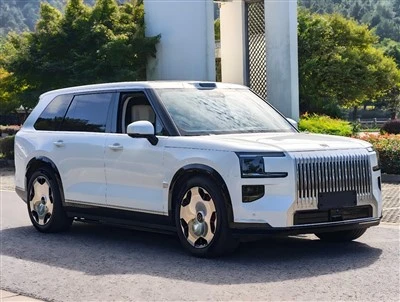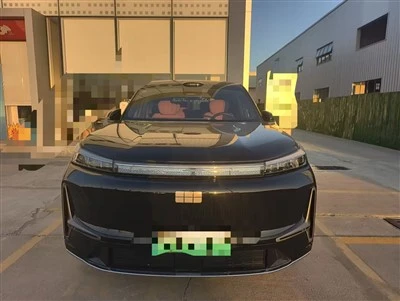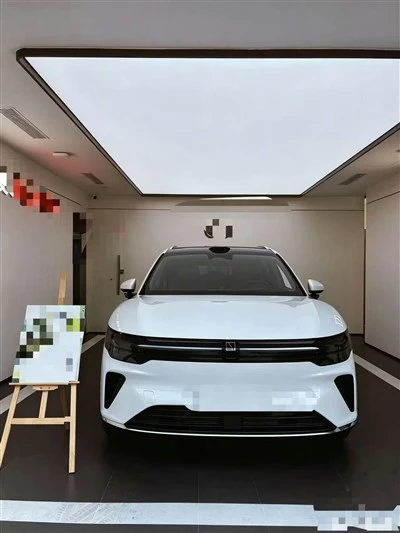



GAC AION opened pre-orders for the Ray7 at RMB 128,800 to 158,800 across five trims, with the launch expected in November 2026. It is the first model in the brand's Ray series: a rear-drive electric fastback saloon, 4,960 mm long, with a 2,920 mm wheelbase and up to 702 km of CLTC range.
The number that matters is the price of that range. The 702 km version sits at the top of the range at RMB 158,800, which makes it one of the cheapest cars on the Chinese market with a 60 kWh-plus battery and a genuine long-distance claim. The 530 km version starts at RMB 128,800 with a 45.58 kWh pack.
AION is also one of the Chinese brands with an established export business, particularly in Southeast Asia and the Middle East, which makes this car more than a domestic price story. This article covers the versions, dimensions, powertrain, battery and charging, chassis, cabin, and what an importer needs to confirm.
Price and Versions
| Version | Battery | CLTC range | 0-100 km/h | Pre-sale price |
|---|---|---|---|---|
| 530 km | 45.58 kWh | 530 km | 7.4 s | From RMB 128,800 |
| 702 km | 62.98 kWh | 702 km | 6.9 s | Up to RMB 158,800 |
Two battery suppliers are involved: the 530 km version uses a 45.58 kWh pack, and the 702 km version a 62.98 kWh pack from CATL. That is worth noting because the two packs are not simply different sizes of the same product - different suppliers mean different cell chemistry details, different degradation behaviour and, for an importer, different spare-part considerations over a ten-year life.
The price spread across five trims is only RMB 30,000, which means most of the differentiation is equipment rather than powertrain. Buyers should check what each trim actually includes, because several of the comfort features are confined to the 702 km version.
Dimensions and Body
The Ray7 measures 4,960 mm long, 1,900 mm wide and 1,455 mm tall on a 2,920 mm wheelbase. The height is the interesting figure: 1,455 mm is low for a modern electric car, and it is achieved by stacking the battery under a low floor and styling a fastback roofline.
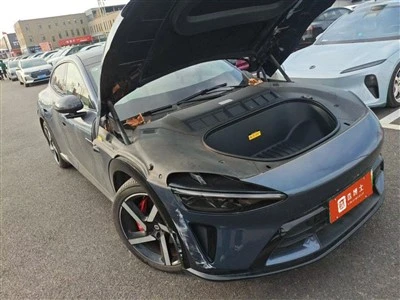
The body has frameless doors and a sloping rear screen, which is the current formula for a mid-size electric saloon that wants to look more expensive than it is. The boot holds 445 litres, and there is a 61-litre front compartment that can be washed out - useful for charging cables, wet items or, in a hot climate, nothing that will smell.
The low roofline has a practical consequence for rear passengers: headroom is adequate rather than generous, and the sloping rear glass means the boot opening is narrower than the 445-litre figure suggests. Buyers who carry bulky items should check the aperture rather than the volume.
Powertrain
Drive comes from a single rear-mounted motor supplied by AITO's DriveONE unit, producing 180 kW and 235 Nm. It drives the rear wheels, which is unusual at this price in a Chinese saloon and is a genuine dynamic advantage: no torque steer, better traction under acceleration, and a tighter turning circle than a front-drive car of the same size.
The 530 km version reaches 100 km/h in 7.4 seconds and the 702 km version in 6.9 seconds. Neither is a performance car, but both are quicker than the petrol saloons this car will be compared against in export markets, and the rear-drive layout makes the difference feel larger than the numbers suggest.
For markets with unpaved roads or heavy rain, rear drive is worth a note: it is better on dry tarmac and worse on loose or slippery surfaces than front drive at the same power. Where the car will spend its life on sealed roads, it is the right choice.
Battery, Charging and Heat
The 702 km version's 62.98 kWh CATL pack with a heat pump is the specification to order for any market that has either long distances or high ambient temperatures. A heat pump is usually described as a cold-weather device - it reduces the range loss from cabin heating - but it also improves efficiency in moderate conditions by moving heat rather than generating it.
The 702 km version also adds FSD adaptive damping, hydraulic rebound stops and a rear anti-roll bar. Those are chassis items rather than battery items, but they come as a package, and for an importer they mean the long-range car is also the better-riding car.
Vehicle-to-load output is 6 kW, enough for tools, a domestic circuit or a small event setup. In markets with unreliable grid supply, this is a feature that sells cars.
Cabin and Equipment
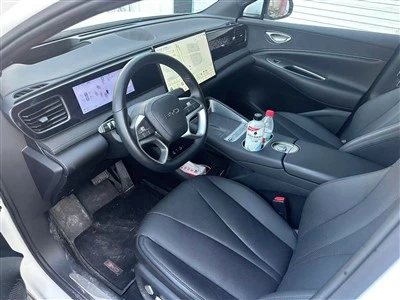
The dashboard carries an 8.8-inch instrument display and a 15.6-inch 2.5K central screen on Qualcomm's 8295P chipset. The cabin design is minimal, with most functions in the screen and a small number of physical controls retained.
Front seats with ventilation, heating and massage, four-way lumbar support, seat memory, 50 W wireless charging, a power tailgate and side curtain airbags front and rear all appear on the 702 km version. A 17-speaker audio system is a limited-time option rather than standard. The top trim adds EMB - electromechanical brake-by-wire - which is the most consequential item in the list, because it is a system that requires diagnostic support and is difficult to service without it.
How It Compares
| Factor | AION Ray7, 702 km | Typical mid-size electric saloon |
|---|---|---|
| Price in China | RMB 158,800 top trim | RMB 180,000 to 250,000 |
| Battery | 62.98 kWh CATL | 55 to 70 kWh |
| Drive | Rear motor, 180 kW | Front motor, 150 to 170 kW |
| Front suspension | Double wishbone | MacPherson strut |
| Length | 4,960 mm | 4,800 to 4,900 mm |
Double wishbone front suspension is the item that stands out. It is more expensive than a MacPherson strut and is usually reserved for cars a class above; it improves steering feel and camber control, and it suggests the chassis was developed with more care than the price implies.
Export Checks
- Brand presence. AION exports to Southeast Asia, the Middle East and Latin America, so a service path exists in many markets. Confirm the local distributor will support a parallel-imported car.
- Handedness. Left-hand drive. Right-hand-drive markets such as Kenya, South Africa and Malaysia cannot be supplied from this source.
- Certification. Destination approval is required: GSO/SASO in the Gulf, TR CU in the EAEU, pre-shipment conformity in most of Africa.
- Charging connector. GB/T at home. Confirm the export configuration, and be explicit with buyers about charge speed on their local DC network.
- Brake-by-wire. The top trim's EMB system needs diagnostic access. In a market without it, order a lower trim.
- Landed cost. Electric saloons are taxed on value in most markets, and the range advantage does not change the duty. Price the full chain before quoting retail.
Our sedan range covers the models we source, and the right-hand drive guide explains which Chinese models are genuinely built in RHD.
Frequently Asked Questions
How much does the AION Ray7 cost?
RMB 128,800 to 158,800 at pre-sale across five trims, with the 702 km version at the top. Final prices are confirmed at launch.
What is the real range?
702 km on the CLTC cycle for the long-range version, which is roughly 500 to 550 km in mixed driving and less at sustained highway speed.
Is it front or rear wheel drive?
Rear wheel drive, with a 180 kW AITO DriveONE motor. That is unusual at this price and gives it better traction and steering feel than a front-drive rival.
Does it have a heat pump?
Yes, on the 702 km version, which reduces range loss from cabin heating and improves efficiency overall.
Can it be exported?
Yes, to left-hand-drive markets through dealer channels, subject to destination certification and an export charging configuration.
Which version should an importer order?
The 702 km version without the brake-by-wire top trim: it carries the larger CATL pack, the heat pump and the better chassis, while avoiding a system that needs specialist service.
Sources
1. Yiche - November 2026 new-model preview with AION Ray7 pre-sale prices, dimensions, battery options, motor output and chassis specification - news.yiche.com
2. Sina - overview of nine models due to launch or debut in November 2026 - k.sina.cn
3. GAC AION official website - model range and technical information - gac-aion.com
Prices and specifications are pre-launch figures published for the Chinese market and may change at the official launch. Range figures are manufacturer claims on the CLTC cycle. Export availability, certification and landed cost must be confirmed for each destination. Nothing in this article is a quotation.