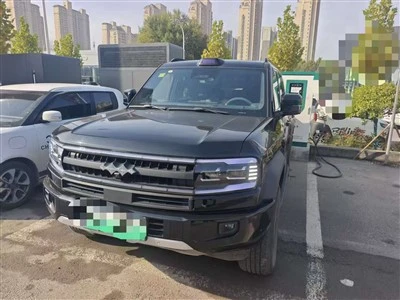
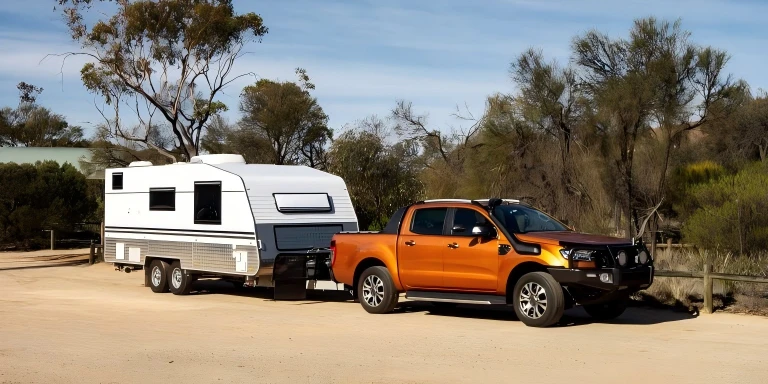


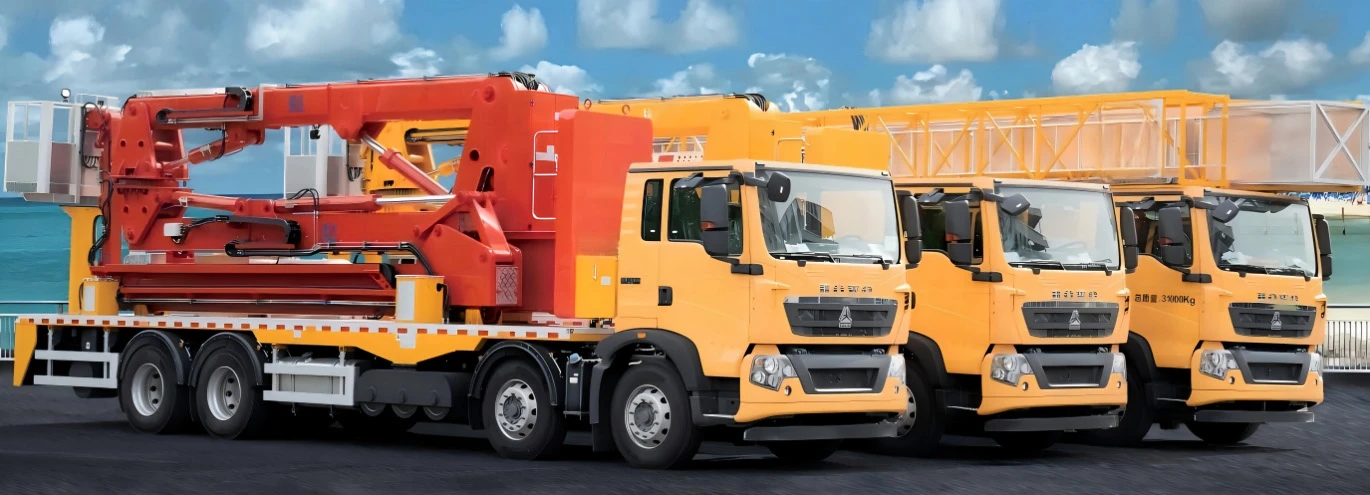
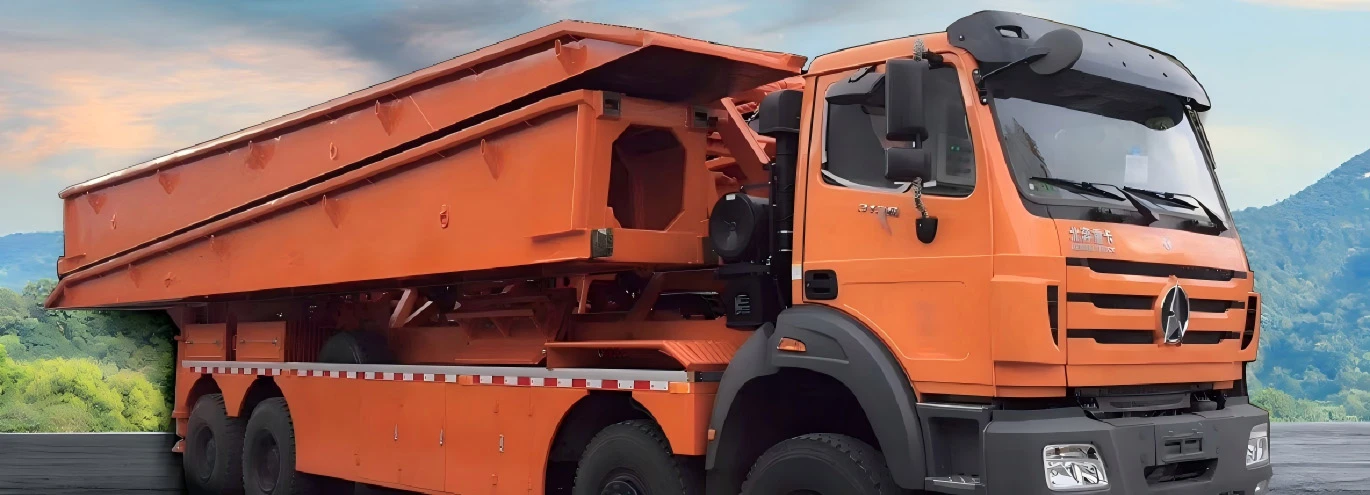

Most inspection checklists for Chinese vehicles are written for passenger cars. They measure paint thickness, look for accident repair in the pillars, and check for flood damage under the carpets. All of that matters - but if you are buying a tipper, a refrigerated box truck or a bridge inspection unit, it covers perhaps half of what decides whether the vehicle is worth shipping.
A truck carries its load on a ladder frame that flexes for a decade. A special vehicle adds a hydraulic system, a working platform or a compaction body on top of that frame, and those systems wear in ways no paint gauge will reveal. This guide sets out how we inspect commercial and special-purpose vehicles before shipment: the three layers of checks, the tools and thresholds used at each, the evidence that separates a repaired vehicle from a sound one, and what an inspection report should contain before you release a balance payment.

Why a Truck Inspection Is Not a Car Inspection
Four structural differences change what you look at, and in what order.
·The frame is the vehicle. On a passenger car the body shell carries the load and a bent unibody is a write-off. On a heavy-duty truck the ladder frame carries everything, and frames crack, sag and get welded. A cracked frame member near a spring hanger is a more serious finding than any amount of paint work, and no paint gauge will find it.
·Wear is measured in hours, not kilometres. A refuse compactor idles for most of its working day. Its engine may show 40,000 km and 6,000 hours, and the hours are the honest number. The same applies to refrigeration units and hydraulic power packs, which have their own hour meters entirely separate from the odometer.
·The body is a separate build. A vehicle built by a body builder is a chassis from one factory and a body from another. The chassis may be perfect while the body's hydraulics have been rebuilt twice, and the paperwork for the two halves comes from different companies. An inspection that only looks at the chassis is inspecting half a vehicle.
·Function has to be demonstrated, not observed. A refrigerator that runs is not a refrigerator that cools. A bridge inspection platform that unfolds is not a platform that holds 800 kg at 22 metres. These claims are verified by operating the equipment under load, which takes time and cannot be done from photographs.
The Three Layers of an Inspection
We run every unit through three layers in a fixed order, because a failure at an earlier layer makes the later ones pointless. A vehicle whose type approval number does not match its body cannot be exported on that declaration, however well it drives.
| Layer | What it establishes | Tools | Failure means |
| 1. Documents and configuration | That the vehicle is the vehicle on the contract, and can legally leave China as declared | VIN plate, nameplate, type approval certificate, body drawings | Stop - cannot be declared |
| 2. Chassis, driveline, structure | That the load-bearing and driving parts are sound and not previously repaired | Paint gauge, borescope, OBD scan, lift, straight edge, dye penetrant | Renegotiate or reject |
| 3. Body and special equipment | That the equipment performs to its published rating under load | Load test, pressure gauge, stopwatch, thermal probe, hydraulic flow meter | Rectify before shipment |
The layers are not equally expensive to fix. A layer-one problem is usually a paperwork or build error that delays the shipment. A layer-three problem found at the destination port is the most expensive of all, because the equipment has to be repaired by someone who may not have the parts.
Layer One: Documents and Configuration
·VIN and nameplate. Photograph the chassis VIN stamping, the VIN plate and the manufacturer's nameplate. All three must agree, and the engine number must match the declaration. On a chassis-cab destined for a body builder, confirm the VIN recorded on the body builder's documentation is the same one.
·Type approval number. Chinese special vehicles carry a type approval number - for example HZZ5250JQJG6 on a platform-type bridge inspection vehicle, or ZQZ5079ZYSDB6 on a 3-tonne compactor. This number ties the vehicle to a declared configuration: dimensions, total mass, axle configuration. If the body has been modified after approval, the number no longer describes the vehicle, and that is a problem at export and again at import.
·Dimensions against the declaration. Measure overall length, width and height, and compare them with the approved figures. A platform-type unit declared at 12,400 × 2,550 × 4,000 mm that measures 4,150 mm high has a fitment issue - and on a RoRo vessel, height decides which deck it can use.
·Mass against the declaration. Weigh the unit. Published total mass figures - 25,000 kg for a 6×4 platform unit, 31,000 kg for an 8×4, 7,360 kg for a 3-tonne compactor - are the basis for axle loads, shipping stowage and road permits. A vehicle that is 600 kg over its declared mass will create problems at the destination weighbridge.
·Emissions and market configuration. Confirm the emissions standard on the certificate matches what the destination accepts, and that the vehicle is left- or right-hand drive as ordered. Steering conversion done after the fact is visible at the steering box, the dash structure and the wiring loom, and it is the single most common cause of a vehicle failing destination inspection.
·Document set completeness. Chassis certificate, body builder's certificate, equipment certificates for the refrigeration unit or the hydraulic package, and the export declaration. Each is issued by a different party, and the set is only complete when all of them describe the same vehicle.
Layer Two: Chassis, Driveline and Structure
Frame and load-bearing structure
The ladder frame is checked on a lift, with the wheels hanging free so the frame is unloaded, and again on the ground under its own weight. What we look for:
·Cracks. Concentrated at the spring hangers, the cross-member attachments, and the area around the fifth wheel or the body mounting points. Any crack is marked and measured; a crack that has been drilled at its tip to stop propagation is a repair, and a repair is disclosed, not hidden.
·Welding and straightening. A frame that has been straightened shows heat discolouration, disturbed factory paint, replaced rivets with bolts, and weld beads that do not match the factory pattern. Factory frame rivets are uniform; a frame with three bolts where there should be rivets has been apart.
·Sag and twist. Measured with a straight edge along the frame rail and by diagonal cross-measurement between opposite corners. A frame that is out of square by more than a few millimetres will not track straight and will wear tyres unevenly.
·Body mounts and sub-frame. On a special vehicle, the body sits on a sub-frame bolted to the chassis. Check the mounting bolts for movement marks, the rubber pads for compression set, and the sub-frame itself for cracks where the equipment load concentrates.
Driveline
·Engine. Cold start from ambient, listening for injector knock and turbo whistle. Oil on the dipstick is checked for metal and for emulsion. On a common-rail engine, a cylinder balance test through the diagnostic port shows a weak injector that a road test will not.
·Gearbox and clutch. Manual boxes are checked for synchromesh wear on the upper ratios and for input shaft bearing noise. Automated manual transmissions are checked through the diagnostic port for clutch wear percentage and for stored adaptation faults - an AMT that has been re-adapted repeatedly is hiding a clutch or actuator problem. Automated boxes have no clutch pedal, so the wear figure from the ECU is the only honest indicator.
·Rear axle and differential. Oil seals for seepage, pinion for play, and a listening check under load. On a unit with a hub-reduction axle, the reduction hubs are checked for oil level and for metal.
·Power take-off. On a tipper, a compactor or a hydraulic working vehicle, the PTO is the part that fails first. Engage it, run it under load, and check for noise, engagement speed and oil seepage at the PTO housing. A PTO that engages with a delay or a knock will fail in service.
·Suspension. Leaf springs are checked for broken leaves, for misalignment between leaves, and for wear at the eyes and shackles. A broken second leaf is easy to miss and will fail on a bad road. Air suspension is checked for bag condition and for level Valve function.
·Tyres and wheels. Every tyre's DOT date code is recorded - the last four digits give week and year. A vehicle with four tyres of different ages, or with date codes later than the vehicle's build date, has had tyres swapped. Tread depth is measured at three points across each tyre, and uneven wear across an axle points to alignment or to a bent axle.
Cab and electrical
Cab mounts and cab tilt mechanism are checked for play. The wiring loom is inspected where it passes through the frame and where it enters the body - chafed loom is the most common cause of electrical faults on a used truck, and it is invisible until it fails. Every light, every switch and every gauge is operated, including the PTO controls, the differential lock, the exhaust brake and any body-specific controls.
Layer Three: Body and Special Equipment
This is the layer that separates a commercial vehicle inspection from a car inspection, and it is the layer most often skipped because it takes time and equipment.
Refrigerated bodies
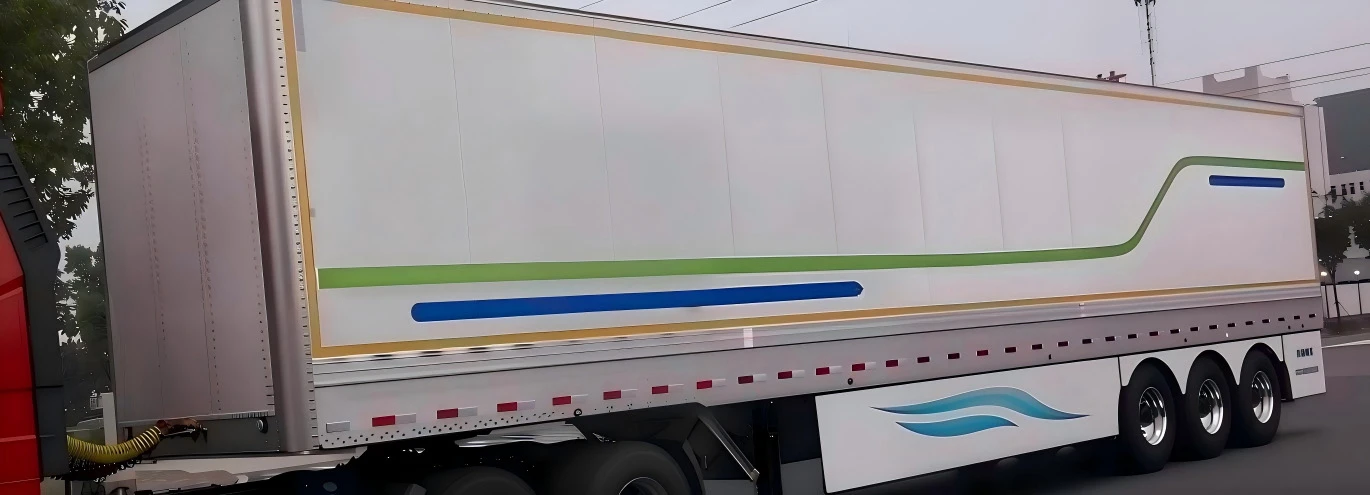
A refrigerated truck is checked on three things: does the unit cool, does the box hold, and is the box sound.
·Pull-down test. With the box empty and ambient temperature recorded, the unit is started and the box temperature logged at fixed intervals. The time to reach the set point, and whether it holds, is the only real measure of refrigeration performance. A unit that has lost refrigerant will run continuously and still not reach temperature.
·Compressor and hour meter. The refrigeration unit has its own hour meter. Record it, and compare it with the chassis odometer - a unit with 8,000 engine hours on a chassis showing 60,000 km has worked hard, and the compressor is the part that will fail.
·Box integrity. Insulation is checked for water ingress at the roof panel and at the floor, because a wet panel loses its insulating value permanently. Door seals are checked with a paper test around the full perimeter. Floor kerf and drain are checked for blockage, since a blocked drain means standing water under the load.
Hydraulic working vehicles
On a bridge inspection vehicle, an emergency bridge vehicle or any unit with a boom, the hydraulic system is the inspection.
·Load test at rated capacity. A platform-type unit is rated at 600 kg or 800 kg on the platform and 300 kg or 400 kg at the front end, depending on model. That rating is verified by loading it. A platform that holds its rated load without drift over a set period passes; one that settles is failing a cylinder or a lock valve.
·Turntable rotation. Platform units are published with a first turntable range of 0–90° and a second of 0–180°. Both are cycled through the full range, checking for smooth motion, for backlash at the slew ring and for noise. Backlash at the turntable shows up later as a platform that will not hold position.
·Stabilisers. Rear axle stabilisers on these units are cylinder type. Each leg is extended and loaded, and the vehicle is watched for frame deflection. A stabiliser that sinks means a leaking cylinder or a failed lock valve - and a stabiliser failure with a platform in the air is the most serious safety event possible on this equipment.
·Hydraulic locks and hose condition. Every hose is inspected for cracking at the crimp, for chafing where it passes a frame member, and for ballooning. Lock valves are tested by holding a load and watching for creep. Hoses are date-coded; a set of hoses older than the vehicle's service life is a replacement item before shipment, not after.
·Safety devices. Working wind speed is limited on these units - commonly 12.5 m/s - and the anemometer and interlocks that enforce it are tested. Platform gates, fall arrest anchors, emergency lowering and the intercom between platform and cab are all function-tested.
·Working envelope against the published figures. A QH22B is published at 22 m horizontal range and 8.5 m lowering depth; a QB18B at 18 m horizontal and 22 m under-bridge vertical range. The envelope is measured, not assumed, because a boom that has been repaired may no longer reach its declared figures - and the declared figures are what the buyer paid for.
Compaction and tank bodies
On a sanitation vehicle, the test is a full cycle, under load where possible. On a 3-tonne compactor with a 6.5 m³ body, the cycle is timed: packer forward, packer return, ejector, tailgate. A cycle that runs long indicates a worn pump or a bypassing valve. The body floor is checked for corrosion under the compaction plate, which is where refuse residue sits. The leachate tank is checked for cracks and for a functioning drain.
On tank bodies, the tank is checked for internal corrosion at the baffles, the pump is flow-tested, and every valve is cycled. A tank that has carried salt or slurry will have corrosion at the welds that an external inspection will not show, which is why an internal inspection hatch is opened on any tank vehicle.
Accident, Flood and Fire: What Actually Shows
These three categories are where buyers are most often deceived, and where the evidence is most consistent once you know where to look.
| Category | Where the evidence is | What it looks like |
| Accident repair | Pillars, longitudinal members, spring hangers, cab mounts, spot welds along the roof rail and sill | Paint gauge reading well above the surrounding panels; factory spot welds replaced with a continuous bead; seam sealer applied unevenly by hand; panel gaps that differ side to side |
| Flood damage | Seat rails, harness connectors, fuse box, spare wheel well, inside the frame rails, under the cab floor mat | Rust on unpainted seat rails; silt inside connectors; corrosion on fuse terminals; a tide line inside the frame; mould under the carpet; fogged lamp housings |
| Fire damage | Engine bay loom, bulkhead insulation, bolts near the heat source, paint on the underside of the cab floor | Brittle or hardened insulation; soot in areas a wash cannot reach; bolts that have lost their plating; paint that has blistered then been resprayed |
Paint thickness is the fastest screen for accident repair, but the threshold depends on the vehicle. A figure around 300 μm is commonly used as the point above which filler or a resprayed panel is likely on a passenger car; on a commercial vehicle with factory-applied heavy paint, the baseline reading is higher and must be established on an untouched panel of the same vehicle before any comparison means anything. Taking readings without establishing that baseline is how buyers talk themselves into false conclusions in both directions.
Hours Matter as Much as Kilometres
On a working vehicle, the odometer is the least reliable number on the dashboard. Three checks make it usable.
·Read the ECU, not the cluster. Engine hours and, on many models, a stored distance figure are held in the engine controller. A cluster showing 60,000 km against an ECU recording 180,000 km is a discrepancy that needs explaining before money moves.
·Cross-check the wear items. Pedal rubber, gear lever boot, steering wheel rim, driver's seat bolster and door sill are wear surfaces that age with use, not with the odometer. A vehicle showing 40,000 km with a worn-through pedal pad has done far more.
·Read the equipment hour meters separately. Refrigeration units, hydraulic power packs and compaction systems each carry their own hour meter. These are rarely tampered with, because nobody thinks to. They are often the most honest record on the vehicle.
For a fleet buyer, hours are also the better basis for valuation: a refuse truck at 5,000 hours and 50,000 km has a known remaining life in the compaction system, whereas the same vehicle at 1,200 hours and 90,000 km has a worn driveline and a nearly new body. Those are different vehicles at the same price.
What an Inspection Report Should Contain
An inspection that produces only a verdict - "good condition" - is not usable. The report should let a buyer who was not present reach their own conclusion, and it should let a dispute be settled without argument. Nine sections:
·1. Identification. VIN, engine number, model, type approval number, body builder, date of inspection, location, and the name of the inspector.
·2. Meter readings. Odometer, ECU distance where available, engine hours, and equipment hour meters, each photographed.
·3. Measurements. Paint readings with the baseline panel identified, frame cross-measurements, tyre tread depths, and overall dimensions against the declaration.
·4. Structure. Every frame, pillar and mounting point inspected, with findings marked on a diagram rather than described in prose.
·5. Function tests. What was operated, under what load, for how long, and the result. "Hydraulics tested" is not a finding; "platform loaded to 800 kg, held 15 minutes, no drift" is.
·6. Fault list with severity. Separated into items that stop shipment, items to rectify before loading, and items to disclose to the buyer. A single undifferentiated list lets a supplier argue that a cracked frame is "minor".
·7. Photographic evidence. Dated, with the VIN visible in at least one frame, and with close-ups of every fault named in the list.
·8. Video. Cold start, walk-around, and the equipment operating through its full cycle. Video is the only way a remote buyer can judge noise, smoke colour and cycle smoothness.
·9. Document check. Which certificates were sighted, and which were still outstanding at the time of inspection.
This is the same discipline a buyer should apply to the supplier itself, not just the vehicle; the 10-point supplier due diligence checklist covers the company side.
Who Should Perform the Inspection
There are three options, and they are not equivalent.
·Supplier self-inspection. Fast, cheap, and only as good as the supplier's incentive to disclose faults. Useful for a repeat order from a supplier you already trust, and for confirming that a unit matches its specification. Weak as evidence in a dispute, because the inspector and the seller are the same party.
·Third-party inspection company. Independent, and their report carries weight. The limitation is coverage: most Chinese third-party inspectors are built around passenger cars, and few have the equipment or the familiarity to load-test a bridge inspection platform or flow-test a compaction hydraulic system. Ask what they will actually test before you commission them.
·Buyer's representative. The strongest option where the order value justifies it. Someone acting for you, present at the works, operating the equipment. Common for special vehicles, rare for commodity trucks.
Our own practice is a combination: the supplier's inspection with the report structure above, plus an independent verification on any unit where the value or the application makes a failure expensive. For special vehicles we also send the body drawings and the function test results to the buyer before loading, because a buyer who understands what was tested can spot the gap.
The Last Gate Before Loading
The final inspection happens at the port, on the day of loading, and it is deliberately narrow. It confirms only what changes between the works and the vessel:
·Identity. VIN against the booking and against the export declaration.
·Condition in transit. New damage from the road move to port - mirror arms, roof panels, platform edges and lamp housings are the usual casualties.
·Dimensions and mass, again. Because a vehicle that was legal on the road may still not fit the deck it was booked on.
·Loose items. Spare parts, tools, documents and any equipment shipped inside the cab or the body. These are the items that go missing, and they are the items nobody claims for.
·Documents against the booking. The bill of lading must describe what is actually on the vessel, particularly for a special vehicle where length, width and height determine the freight basis.
Where all of this fits in the wider transaction is set out in the quotation-to-bill-of-lading walkthrough.
Frequently Asked Questions
1. How long does an inspection take?
A light commercial vehicle takes two to four hours. A special vehicle with a hydraulic system takes a full day, because the load test, the full cycle and the safety device checks cannot be compressed. Anyone quoting an inspection of a bridge inspection vehicle in two hours is not load-testing it.
2. Can you inspect a vehicle I have already paid a deposit on?
Yes, and it is worth doing even at that stage. A deposit paid against a specification is recoverable if the vehicle does not match it, provided the contract says so. What the inspection does at that point is create the evidence needed to make that argument, which is much harder without a report.
3. What paint thickness should I expect on a truck?
There is no single number, because commercial vehicles are painted more heavily than cars and the figure varies by panel and by factory. The correct method is to establish a baseline on an untouched panel of the same vehicle, then compare. A reading of 300 μm is a commonly used trigger point on passenger cars, but applying that threshold blindly to a truck produces false positives.
4. Is a used truck with high hours always a bad buy?
No. A vehicle with high hours and a documented service history is often a better buy than one with low hours and no history, because the second may have been standing, which damages seals, batteries and hydraulic systems. What matters is that the hours are known and priced in.
5. How do I know the odometer has not been altered?
You cannot know from the odometer. You can cross-check it against the ECU, against wear surfaces, and against equipment hour meters. A discrepancy between any two of those is the signal, not the number itself.
6. Can a special vehicle's equipment be tested before shipment?
Yes, and it should be. Load testing a platform, cycling a compaction body, or running a refrigeration pull-down test all happen at the works before the vehicle goes to port. What cannot be guaranteed is that the equipment will perform identically after six weeks at sea, which is why the test results and the baseline readings should travel with the documents.
7. What if the inspection finds a fault?
It gets classified. Faults that stop shipment are fixed or the deal is renegotiated. Faults that must be rectified before loading get a deadline and a re-check. Faults that are simply disclosed go into the contract so that the price reflects them. What must not happen is a fault being found and then quietly disappearing between the report and the invoice.
8. Does an inspection replace a warranty?
No. An inspection describes condition on a date. A warranty covers what happens afterwards. They answer different questions, and a supplier who offers a detailed inspection but no warranty, or a long warranty but no inspection, is offering you half of what you need.
9. Who pays for the inspection?
Normally the buyer, and it should be visible as a line in the quotation rather than buried in the price. An inspection presented as free is either not happening or already paid for inside the vehicle price - the second is not a problem, but it should be stated.
10. Can I send my own inspector?
Yes, and on special vehicles it is often the right call. Arrange it through the supplier so that the equipment is available and operating, and give the inspector the published specification so the test can be measured against something.
Request an Inspection Scope
Hong Kong Dragon Fist Trade Services Limited inspects and ships light and heavy cargo trucks and special-purpose vehicles from China. For each order we issue an inspection scope before the vehicle is built or secured, listing what will be measured, what will be load-tested, and what the pass criteria are - so that the report at the end answers questions you set at the beginning.
Send us the vehicle type, the application and the destination, and we will return an inspection scope with the test list for that specific unit. If you are still choosing between body types, start from the bridge inspection vehicles, the sanitation vehicles or the small cargo truck range.
Request an inspection scope - tell us what the vehicle has to do, and we will tell you what we will test.
Related Import Guides
Auto Export Companies in China: 2026 Comparison Guide
How to Verify a Chinese Car Export Supplier: 10-Point Due Diligence Checklist
How Chinese Vehicle Export Works: From Quotation to Bill of Lading
Heavy-Duty Cargo Truck Export from China: Tractor, Rigid and Dump Truck Guide
Small Cargo Truck Export from China: Types, Specifications and How to Order
Top 10 Car Exporters in China: How We Selected Them