

Three suppliers quote the same 6×4 tractor with the same specification sheet. One says USD 27,000 FOB Shanghai, one says USD 30,000, one says USD 31,900. All three can deliver within the same six weeks. All three are, in their own way, telling the truth.
What separates them is not margin. It is scope - what each number actually contains. A quotation written as a single figure is not a price; it is a position. And because most buyers compare positions instead of contents, the negotiation usually starts in the wrong place: arguing about a number instead of rebuilding it into its five component lines.
This page does the rebuilding. It sets out what an FOB price for a Chinese vehicle is made of, gives a worked example at USD 30,000 with every line exposed, explains where a USD 3,000 gap between two honest quotes comes from, and ends with the twelve items a quotation must state before it can be compared with anything.

Two Quotes, One Truck
Here is a real pattern from the market. A buyer in Lagos, Mombasa or Tashkent requests the same thing from three Chinese suppliers: a 6×4 tractor, 480 hp, manual gearbox, left-hand drive, plus documents for import. The specification sheet is two paragraphs long and mentions no emission standard, no tyre brand, no axle ratio and no delivery point beyond the word "FOB".
The replies arrive a week apart and differ by USD 4,900. The buyer does the reasonable thing - goes back to the two expensive suppliers and asks them to match the cheapest one. One refuses. One matches, and then, three months later, the vehicle arrives with mechanical-pump injection, a different tyre brand, and a document set that stops at the Chinese border because "import clearance at destination is the buyer's responsibility, as per FOB".
Nobody lied. The specification sheet contained three blanks, and each supplier filled them in differently. This is the single most common source of price confusion in Chinese vehicle export, and it is entirely avoidable: the blanks have names, and this page names them.
If you are still at the stage of choosing who to ask, the comparison of Chinese auto export companies covers how the eight selection criteria work in practice. What follows assumes you have two or three quotes on the table and need to read them.
What FOB Covers, and What It Does Not
Free On Board, in the 2020 revision of the Incoterms, means the seller delivers the goods on board the vessel nominated by the buyer at the named port of shipment, and risk passes to the buyer at that moment. Practically, for vehicles leaving China, the seller's obligations end when the unit is lashed down inside the vessel or on the RoRo deck.
FOB includes: the vehicle, the body or equipment build if there is one, export licensing and export customs declaration, inland transport from the factory to the port, terminal handling and loading, and the export document set. FOB excludes: ocean freight, marine insurance, destination port charges, import duty and VAT, inland delivery at destination, and registration.
Three things about that split are worth stating plainly, because they cause most of the arguments:
·"FOB China" is not a price. FOB is incomplete without a named port, and the port changes the number. A factory in Hubei shipping through Shanghai and the same factory shipping through Tianjin are two different inland costs, and on a heavy tractor the difference can be USD 700 to USD 1,500. If a quotation says FOB China, ask which terminal.
·FCA is technically the correct term for containers, and the market ignores it. When a vehicle is stuffed into a 40HQ or mounted on a flat rack, the seller hands it to the carrier at the terminal before it is on board, which is FCA, not FOB. Almost every Chinese vehicle quotation says FOB anyway. This is harmless in practice - but it means the Incoterm on the paper is not a reliable guide to what is included, which is exactly why the five lines below matter more than the three letters.
·CIF hides the freight, and that is where a quiet markup lives. A CIF quote bundles ocean freight and insurance into one number. Since freight moves weekly - a RoRo slot to West Africa has ranged from under USD 1,800 to over USD 4,500 per unit within a single year - a CIF price quoted in January and shipped in April can carry an invisible margin. Ask for the freight as a separate line even when you buy CIF.
| Term | Risk passes | What the quoted number includes | When it suits a vehicle buyer |
| EXW | At the factory gate | Vehicle only. No export declaration, no inland, no port. | Almost never - you cannot export from China without a Chinese export entity |
| FCA | When handed to the carrier at the named terminal | Vehicle, export clearance, inland to terminal | Container shipments where you control the forwarder |
| FOB | When the unit is on board | Everything above plus terminal handling and loading | The normal basis for vehicles; the one to insist on |
| CFR / CIF | When the unit is on board | FOB plus ocean freight, and with CIF, insurance | First-time buyers who want one number to the destination port |
| DAP | At the named place of destination | Everything to your yard, excluding import duty and clearance | Markets where the supplier has a partner who can clear customs |
The Five Lines of an FOB Price
Every FOB quotation for a Chinese vehicle, however it is printed, decomposes into five cost lines plus a margin. Once you know the typical share of each, an outlier becomes visible immediately.
| Line | Typical share of FOB | What drives the number | Where it hides in a quotation |
| 1. The vehicle | 82–90% | Model, emission standard, engine rating, gearbox, tyres, cab | One figure, or "as per specification sheet" |
| 2. Body and equipment | 0–25% | Body builder, steel gauge, hydraulics, reefer or platform make | Folded into line 1, or listed as "upper structure" |
| 3. Documents, certification, inspection | 0.8–2.5% | Origin certificate, export licence, consular legalisation, third-party inspection | "All export documents included" |
| 4. Inland transport to port | 1.5–8% | Distance, whether it drives or rides, low-bed for oversize units | Absent; implied by the port named |
| 5. Port charges and handling | 0.8–1.8% | Broker fee, terminal handling, lashing, VGM, container stuffing | "Local charges" or "port fees" as a lump sum |
| 6. Exporter margin | 3–8% | Service scope, payment risk, warranty exposure | Never shown |
The shares are the transferable part of this table; the absolute numbers move with specification, exchange rate and steel price, and we are not publishing a price list. But the shares are stable enough to be diagnostic. If a quote shows the vehicle at 95% of the total, it is probably factory-gate dressed up as FOB. If documents and port charges together are under 1%, someone is going to invoice you later.
Line One: The Vehicle Itself
This is 82 to 90 percent of the money and usually one number on the page. It contains more variables than the rest of the quotation combined.
·The emission standard is the biggest single lever. A China VI common-rail engine with aftertreatment, and an export-specification Euro III or Euro IV mechanical or electronically controlled engine for the same model, are not the same product at the same cost. In markets that still accept the lower standard, quoting Euro III can move 5 to 9 percent out of the price with no change visible on a specification sheet that never mentioned emissions. Ask for the emission certificate, not the brochure.
·The driveline is quoted in shorthand that hides money. "480 hp, manual" does not say which gearbox (a 12-speed overdrive and a 16-speed direct drive differ in price and in suitability for a given terrain), which axle ratio (a 4.11 and a 3.7 change fuel consumption on the route you actually run), or whether a retarder is fitted. On a tractor working a 60-tonne combination in a hilly market, the retarder is not an accessory.
·Tyres are a line item pretending to be a detail. A set of ten 12R22.5 tyres on a 6×4 varies from roughly USD 1,400 to USD 3,200 depending on brand tier and whether they are tubeless or tube-type. Two quotes that differ by USD 1,500 can be differing only in rubber.
·Stock unit or build-to-order. A unit already in the yard is cheaper to sell and can ship in two weeks, but check the production date on the plate: a truck built two years ago and sold as new loses resale value from the day it lands, and its tyres, batteries and seals have been ageing in the open.
·The factory price carries 13 percent VAT, and export removes it. This is the one line almost no buyer asks about, and it is worth more than the negotiation. It gets its own section further down.
What to demand for this line: the factory order confirmation or the chassis VIN, the engine model and emission certificate, the gearbox model, the axle ratio, the tyre brand and size, and the production date. Six data points. A supplier who cannot produce them is quoting a category, not a vehicle.
Line Two: The Body and Equipment Build
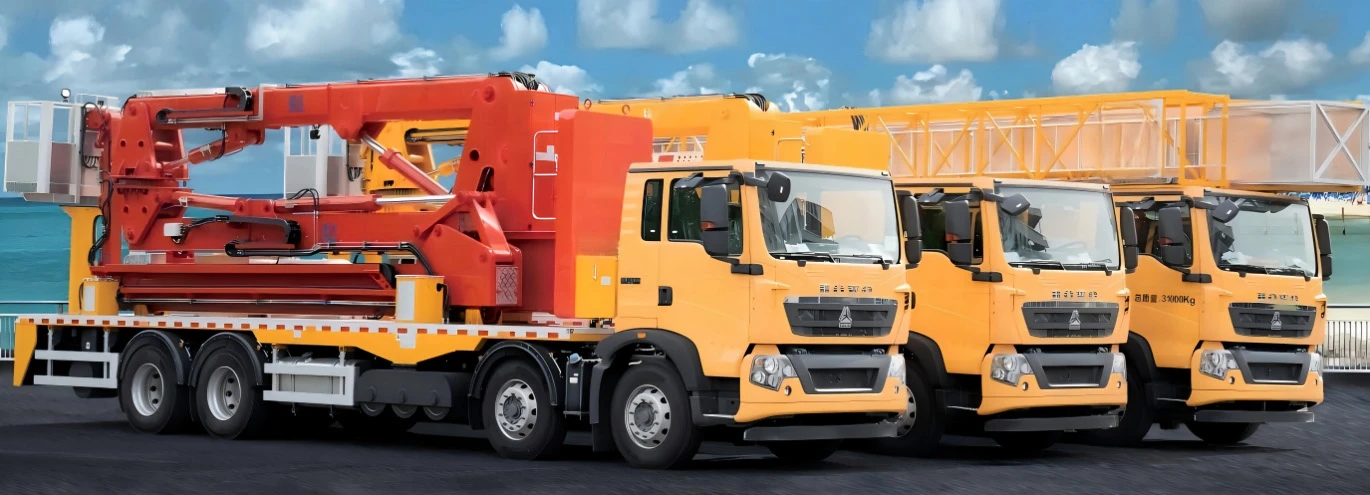
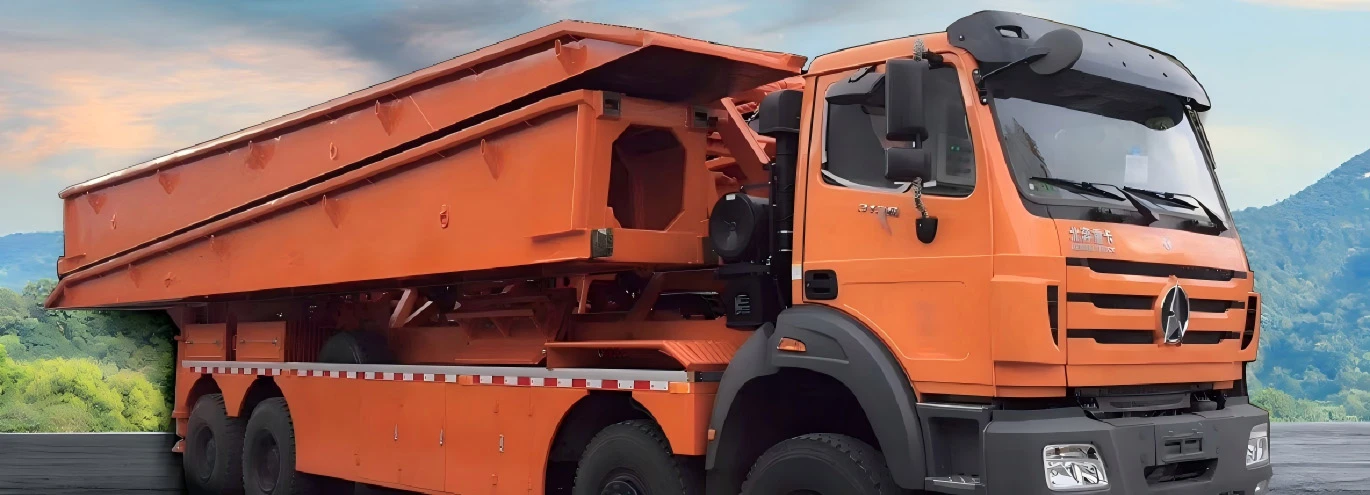
On a tractor or a rigid cargo truck this line is zero. On a tipper, a refrigerated box, a compactor, a water tanker or a bridge inspection vehicle, it can be a quarter of the price - and it is usually invisible.
A special vehicle is a chassis from one factory and a body from another. The chassis invoice and the body invoice come from two companies, with two warranties and two build schedules. Quotations often merge them into one figure with the word "upper structure", which makes the largest single variable in the deal unreadable.
Where the money actually differs, in descending order of size:
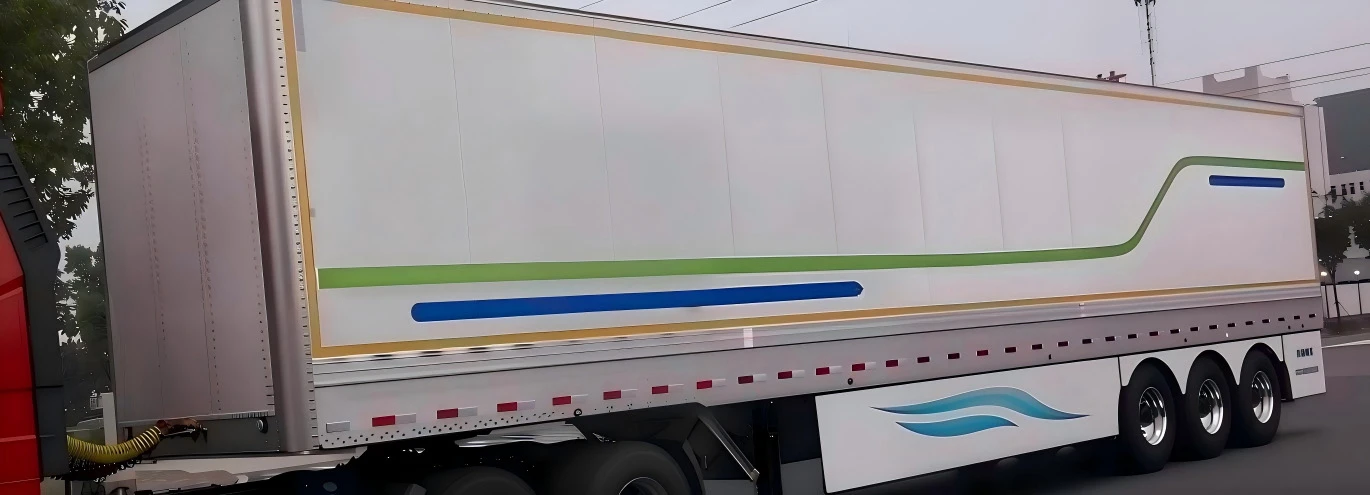
·The refrigeration unit. A Thermo King or Carrier unit and a domestic equivalent differ by roughly USD 4,000 to USD 9,000 on the same box, and the difference is not just badge: it is parts availability in your market, service network, and whether the unit can hold -18 °C in a 45 °C ambient. For a box truck, this one decision outweighs every other body variable.
·Steel gauge and floor construction. A 3 mm floor and a 4 mm floor look identical painted. A tipper body with a 5 mm Hardox floor and one with a 4 mm mild steel floor differ by thousands and by years of service life. Ask for the plate thickness in writing.
·Hydraulics. Cylinder brand, pump type (gear pump versus piston pump), hose quality and whether the system has a load-holding valve. A cheap cylinder on a compactor is a two-year component on a ten-year vehicle.
·Painting and surface preparation. Shot-blasting plus primer plus two topcoats, and a single coat over mill scale, are both described as "painted". In a coastal market the difference is visible in eighteen months.
·Whether testing is included. A load test, a full operating cycle and a pressure test at the works cost money and take a day. A body quote without them is cheaper and tells you nothing.
What to demand for this line: the body drawing, the bill of materials with plate thicknesses and component brands, the body builder's name, and the body warranty terms. If two quotes cannot be reduced to the same bill of materials, they cannot be compared - and that is a legitimate reason to reject a quote rather than negotiate it. The pre-shipment inspection scope is where those body commitments get tested.
Line Three: Documents, Certification and Inspection
This line is small - typically a few hundred US dollars on a truck - and it is where shipments die. The reason is that the cost of producing a document is low, and the cost of discovering it is missing after the vessel sails is the whole consignment sitting at the destination port accruing storage.
"All export documents included" means nothing until it is a list. The list should name:
·The export declaration (报关单). The official record of export, and the document your bank and your customs authority will want to see. It is also the proof of value, which matters when the destination customs disputes your invoice.
·Certificate of origin. A CCPIT-issued CO, or a Form E for ASEAN, or a Form RCEP where the agreement applies. The preferential form can reduce duty at destination by several percentage points, which on a USD 30,000 unit is worth more than the document costs by an order of magnitude. Confirm which form your destination tariff requires before the unit is built, not after.
·Export licence, where the category requires one. Used vehicles and certain vehicle categories fall under licence management. A supplier who has never mentioned a licence on a used unit has either never shipped one or is about to discover the requirement.
·Consular or embassy legalisation, where the destination demands it. Two to four weeks and several hundred dollars per set. It is the item most often forgotten until the booking is confirmed, and it is the reason some shipments sit at port for a month.
·Pre-shipment inspection certificate, where an approved body is required by the destination. Some markets require inspection by a nominated agency before loading; a Chinese third-party report is not a substitute.
·Commercial invoice, packing list, bill of lading. Routine, but they must agree with each other and with the declaration on weights, dimensions and value. A bill of lading that understates length puts the freight basis wrong and can be corrected only at cost.
The cost question to ask is not "are documents included" but "which documents, issued by whom, in whose name, and at what amount if extra".
Line Four: Inland Transport to Port
Chinese vehicle factories cluster in Hubei, Shandong, Anhui, Jiangsu and Guangdong. Ports cluster at Shanghai, Ningbo, Tianjin, Qingdao, Guangzhou and Lianyungang. The distance between the two is a real cost that a quotation absorbs silently into the words "FOB".
Three methods, three price levels:
·Driven to port. Cheapest per unit, and it adds 300 to 1,500 km to the odometer before the vehicle ever ships. On a new unit that is a defect in the eyes of the destination inspector, and on some routes the driver also uses the vehicle as a truck. Ask what the odometer reads at handover.
·Car carrier. Six to eight units per load, the normal method for light trucks and pickups. Priced per unit, typically a few hundred dollars over a mid-range distance.
·Low-bed trailer. Required for anything oversize - a 12-metre bridge inspection unit, an excavator-mounted body, a wide compactor. Three to five times the per-unit cost of a car carrier, and it needs permits for wide or long loads on some routes.
The failure mode here is not overcharging, it is mis-specification: a quote based on Shanghai when the factory is in Shiyan, and the cheapest sailing in your window is from Tianjin. Before you accept a port, ask which port the inland leg was priced to, and whether the freight saving at a different port outweighs the inland difference. The quotation-to-bill-of-lading walkthrough covers how the port decision interacts with the booking.
Line Five: Port Charges and Terminal Handling
Small, itemised in a good quotation, and a lump sum in a bad one. What sits inside it:
·Customs broker fee for the export declaration - a few hundred renminbi per declaration, more if the HS code needs a ruling or the vehicle is used and requires additional examination.
·Terminal handling and port miscellaneous charges, billed per unit for RoRo and per container for containerised shipments.
·Lashing, chocking and protection. Wheel chocks, straps, wax or protective film for RoRo; bracing and blocking for a flat rack. On a high-value or oversize unit this is not optional and not free.
·VGM weighing and manifest filing for containers, plus the container stuffing itself where the vehicle does not fit whole.
That last point deserves emphasis. A 12-metre truck does not fit into a 40HQ. Shipping one in a container means removing wheels or the front axle, tilting or removing the cab, and rebuilding at destination - a workshop operation on both ends, not a loading operation. Any quote that offers "container shipment" for a long special vehicle without mentioning disassembly is either wrong or quoting a different vehicle. RoRo, breakbulk or flat rack are the honest options.
A Worked Example at USD 30,000
Here is a 6×4 tractor, 480 hp, manual gearbox, left-hand drive, Euro V, FOB Shanghai, with the five lines exposed. The figures are illustrative and rounded; the structure is not.
| Line | USD | Share | What to check |
| 1. Vehicle, ex-works, net of export rebate | 26,400 | 88.0% | Emission certificate, engine model, gearbox, axle ratio, tyres |
| 2. Body and equipment | - | - | Tractor unit; not applicable. A tipper would add 18–25%. |
| 3. Documents, CO, inspection | 500 | 1.7% | Which form of CO; who issues; consular legalisation needed or not |
| 4. Inland transport, 310 km to Shanghai | 520 | 1.7% | Odometer at handover; driven or carried |
| 5. Port charges, broker, RoRo terminal, lashing | 660 | 2.2% | Itemised list, not a lump sum |
| 6. Exporter service margin | 1,920 | 6.4% | Never shown; judge it against the service scope |
| Total, FOB Shanghai | 30,000 | 100% | Price validity, payment terms, warranty terms |
Now the same vehicle quoted at USD 27,000 and USD 31,900, and what is actually different. This table is the whole point of the page.
| Item | Quote A - 27,000 | Quote B - 30,000 | Quote C - 31,900 | Delta B vs A |
| Emission standard | Euro III, mechanical pump | Euro V, common rail | Euro V, common rail | +1,600 |
| Gearbox | 9-speed | 12-speed overdrive | 12-speed AMT with retarder | +450 |
| Tyres | Economy brand, tube-type | Mid-tier tubeless | Premium tubeless | +700 |
| Delivery point | Factory gate, "FOB" nominal | FOB Shanghai, all charges | FOB Shanghai, all charges | +1,000 |
| Documents | Invoice and packing list only | Full set with CO | Full set, consular legalised | +500 |
| Inspection | None | One-day third-party check | Full check plus load test | +240 |
| Spares and warranty | None | 12 months, parts only | 12 months plus spares kit | 0 |
Quote A is not a scam. It is a Euro III tractor sold at the factory gate with no documents beyond an invoice, and for a buyer who genuinely wants that, it is a fair price. The problem is that the specification sheet never said Euro V, never said which port, and never said who issues the origin certificate - so Quote A filled the blanks in the cheapest defensible way. The USD 4,900 spread across all three quotes is almost entirely scope, and only about USD 1,000 of it is margin.
Where a USD 3,000 Gap Comes From
Six sources, in order of how much money they move and how little they are discussed.
| Source of the gap | Typical size | The one question that exposes it |
| Emission standard and engine hardware | 1,500–3,000 | "Which emission standard is quoted, and can I see the certificate?" |
| Body or equipment scope | 0–9,000 | "Send the body drawing and the bill of materials with plate thickness." |
| Delivery point: gate versus port | 500–2,500 | "Which port, and who pays the inland leg to it?" |
| Tyres, rims, tanks, cab specification | 600–2,000 | "Tyre brand, size, and tube or tubeless?" |
| Documents: included or buyer's cost | 200–900 | "List each document, who issues it, and the price if it is extra." |
| Export tax rebate and agency economics | 5–11% of vehicle price | "Is this price net of the 13% export tax rebate?" |
The line most buyers never see: the export VAT rebate
A vehicle bought inside China carries 13 percent value-added tax. When it is exported, the sale is zero-rated and the exporter - if it is a general VAT taxpayer with its own export right - claims that VAT back from the tax authority. On a vehicle invoiced at RMB 190,000, the refundable amount is a little over RMB 21,800, or roughly USD 3,000 at current rates.
This has two consequences that a buyer should understand before comparing prices.
·A competent exporter's FOB price already has the rebate netted out. The money is part of how the price is built, not a discount granted afterwards. If a quote is 10 percent above the market for identical hardware, one explanation is that the seller is a trader buying from a dealer at the VAT-inclusive price and paying an export agent a fee of 0.5 to 1.5 percent to declare the goods - and that chain cannot recover the rebate.
·If you are quoted ex-works, VAT included, you may be paying tax you can never recover. A foreign buyer has no standing with the Chinese tax authority. The VAT stays in the price, permanently.
So the question to put in writing, once, to every supplier: "Is your FOB price net of the 13 percent export tax rebate, and will the export declaration be issued in your company's name?" A supplier that answers "yes, and yes" is an exporter. A supplier that answers vaguely is a trader, which is fine, provided the price reflects it. The verification process for telling the two apart is set out in the ten-point supplier due diligence checklist.
How to Compare Two Quotations Line by Line
The rule is simple and almost nobody follows it: normalise before you negotiate. Rebuild both quotations into the same twelve fields, then compare fields. Negotiating a total against a total is negotiating blind.
| Field | What the quotation must state |
| Incoterm and port | FOB plus the named terminal, e.g. FOB Shanghai Waigaoqiao |
| Emission standard | The standard, plus the certificate number and issuing body |
| Driveline | Engine model and rating, gearbox model and speeds, axle ratio |
| Tyres | Brand, size, tubeless or tube-type, quantity including spare |
| Body and equipment | Body drawing, bill of materials, plate thickness, component brands |
| Documents | Each document named, issuer named, price stated if extra |
| Inland leg | Who pays, from which factory to which terminal, driven or carried |
| Port charges | Itemised, with amounts, or explicitly included in the total |
| Inspection | Whether included, performed by whom, what is tested |
| Price validity | A date, and the basis - exchange rate and steel price at quotation |
| Payment terms | Deposit percentage, balance trigger, when title passes |
| Warranty | What is covered, for how long, honoured by which legal entity, parts from where |
Two practical notes. First, ask for the same twelve fields from every supplier in the same message, so nobody gets to answer a different question. Second, keep the written answers; the specification sheet attached to the contract should be built from them, not from the brochure. When the vehicle lands short of specification, the comparison table you built is also the evidence you need.
Red Flags in a Vehicle Quotation
These are the patterns that predict a problem, drawn from quotations we have been shown by buyers who came to us after a bad experience elsewhere.
·One number, no Incoterm. A total with no delivery term is not an offer; it is an opening position that can be reinterpreted at any point.
·"FOB China". A country is not a port. This phrasing usually means the seller has not yet decided who pays the inland leg.
·No VIN, no factory order number. If the unit is real, its identity exists before the contract.
·A price valid for six months. Steel, tyres, exchange rate and freight all move. A long validity is either a large cushion built into the price or an offer that will be renegotiated at signature.
·"All documents included", with no list. In practice this means the two cheapest documents.
·Refusal to name the body builder. On a special vehicle the body is half the product, and a supplier who will not say who builds it is hiding either the quality or the margin.
·No past export declaration, even redacted. Every genuine exporter can show one with the buyer's details removed. Refusal is informative.
·Full payment to a personal account. Company account, company name on the invoice, company name on the declaration. Three names must match.
·Warranty "by the factory" with no named entity. Ask which company signs the warranty, and in which country it can be enforced.
·A price 15 percent below everyone else, unexplained. Occasionally real - a stock unit, a cancelled order, a factory clearing inventory. Usually scope. The test is whether the supplier can explain exactly which line is lower and why.
Frequently Asked Questions
1. Is FOB or CIF better for a first import?
CIF is easier and usually slightly more expensive, because the seller controls the freight and can profit from it. For a first shipment, CIF to your nearest port removes a variable you cannot yet manage. For the second shipment, buy FOB and appoint your own forwarder - you will typically save the difference and you will see the freight cost for what it is.
2. Can I get a fixed price for six months?
Rarely, and when you do, the cushion is inside the number. What works better is a price tied to a stated basis - exchange rate and steel price on the quotation date - with a written adjustment formula. A supplier who will not disclose the basis is charging you for the uncertainty invisibly.
3. How much is ocean freight, and why is it not in the FOB price?
Because FOB ends at the ship's rail. Freight depends on the route, the vessel type and the week. A RoRo slot for a tractor to West Africa has ranged from under USD 1,800 to over USD 4,500 per unit within a year, and container rates to East Africa have moved just as violently. Anyone quoting you a freight number today for a shipment in four months is either guessing or hedging, and you should ask which.
4. Why do two suppliers quote different HS codes for the same truck?
Because the code determines duty at destination, and the classification depends on gross vehicle weight, engine type and intended use. A tractor unit, a rigid cargo truck and a chassis-cab for a body builder can fall under different subheadings. The code must match the vehicle and be consistent across the invoice, the declaration and the bill of lading. Inconsistency is a customs problem at destination, and it is the buyer who pays the storage.
5. Should I buy ex-works and handle export myself?
Only if you have a Chinese entity with export rights. Without one you cannot file the declaration, you cannot claim the rebate, and you cannot legally put the vehicle on a vessel. Buyers who try this usually end up paying an agent anyway, at a worse rate than the supplier would have charged.
6. Does the export rebate reduce my price?
It should already be in it. The rebate is how a Chinese exporter converts a VAT-inclusive factory price into a competitive export price. If your supplier's price looks structurally higher than the market for identical hardware, ask whether the rebate is being recovered at all - and if the answer is no, you are funding the gap between a trader and an exporter.
7. Is the cost structure the same for used vehicles?
No. A used vehicle has no export rebate, because it was not purchased with a deductible VAT invoice in the normal way. Its price is condition-driven, it requires an export licence, and inspection is a larger share of the total. The FOB lines are the same five, but line one behaves completely differently. The used vehicle section covers the 180-day rule and the licensing side.
8. Does buying more units reduce the price?
Yes, on four lines and no on two. Inland transport, documents, port charges and inspection all spread across units, so a five-unit order can reduce those by 60 to 70 percent per unit. The vehicle price and the body build do not move much - a factory discount of 1 to 3 percent on volume is typical, not dramatic. Anyone offering 15 percent off for quantity is moving scope, not cost.
9. What is the biggest mistake buyers make when comparing quotes?
Comparing totals. The second biggest is accepting a specification sheet with blanks in it. Both are avoidable with one message: send the same twelve-field template to every supplier and compare the answers, not the totals.
10. Can you tell me what a specific truck costs today?
Yes, as a line-item quotation against a named specification. What we will not do is publish a band so wide that it means nothing, or quote a number we cannot hold. Send the vehicle type, the emission standard your market accepts, the destination port and the quantity, and you will get the five lines separately.
Get a Line-Item Quotation
Hong Kong Dragon Fist Trade Services Limited exports light and heavy cargo trucks and special-purpose vehicles from China. Every quotation we issue separates the five lines: vehicle, body build, documents and inspection, inland transport and port charges - with the port named and the emission standard stated on the certificate rather than the brochure.
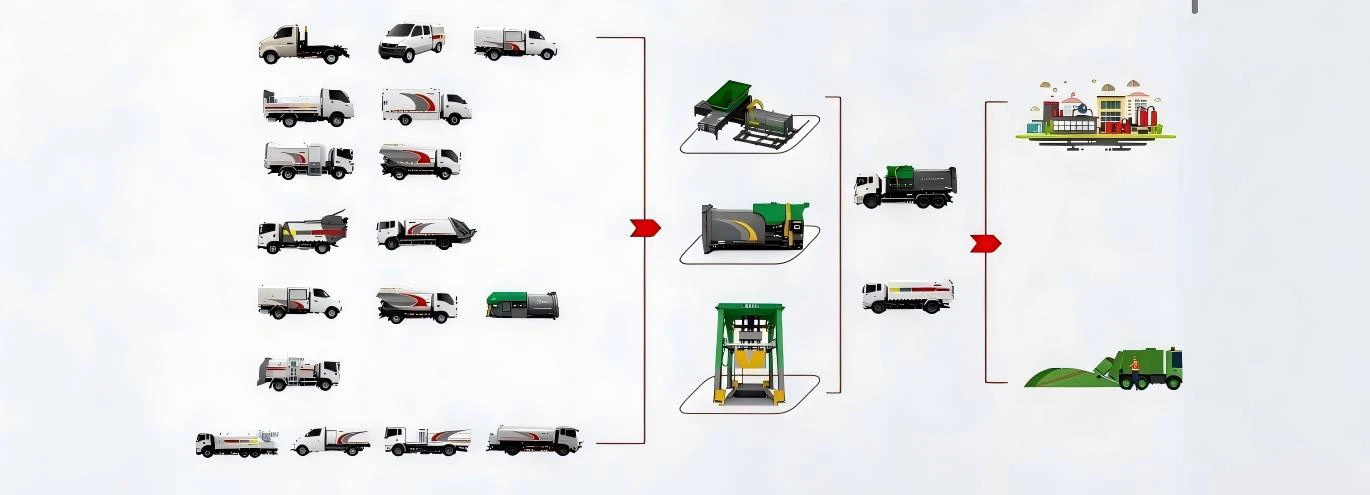
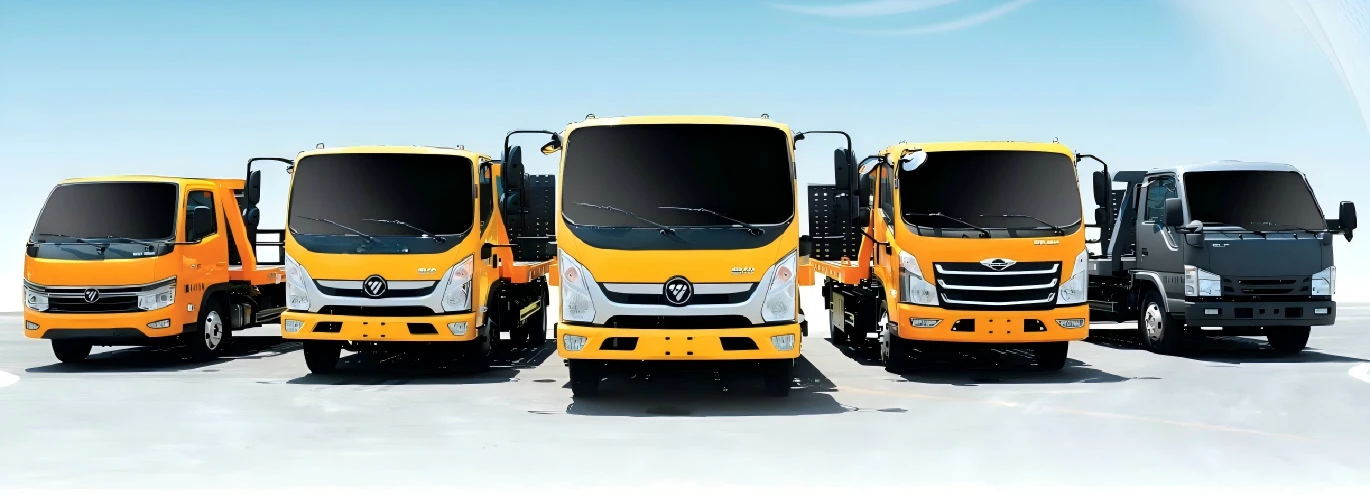
Send the vehicle type, the emission standard your market accepts, the destination port and the quantity. You will get a quotation you can put side by side with any other, line for line. If you are still defining the specification, start from the heavy-duty cargo trucks, the small cargo truck range or the sanitation vehicles, and tell us the application.
Request a line-item quotation - tell us the specification and the port, and we will show you the five lines.
Related Import Guides
Auto Export Companies in China: 2026 Comparison Guide
Pre-Shipment Inspection for Chinese Commercial Vehicles: Scope, Tools and Thresholds
How Chinese Vehicle Export Works: From Quotation to Bill of Lading
How to Verify a Chinese Car Export Supplier: 10-Point Due Diligence Checklist
Chinese Car Export Companies Compared: Trader, Factory Agent and Factory-Direct Exporter
Heavy-Duty Cargo Truck Export from China: Tractor, Rigid and Dump Truck Guide
China Vehicle Export Service Package: Six Modules, What Is Included and What Is Not