
Search auto export companies and you get a page of homepages, not a comparison. Every one of them says it sources vehicles, handles documentation and ships worldwide, and almost none of them tells you what that actually includes. The result is that buyers compare the one number that is easy to compare - the quoted price - and discover the differences later, when a certificate is missing at the destination port or the specification does not match what was ordered.
China's vehicle export sector is not a single market. It splits into at least three supplier types - brand-channel exporters, export service companies that source and ship on a buyer's behalf, and sourcing agents who work on commission - and the type you choose decides who is contractually responsible when something goes wrong. This guide compares five companies that publish verifiable information about how they operate, sets out the eight criteria we used, and explains where the supply is genuinely thin: trucks and special-purpose vehicles, which most of the companies on this page do not handle at all.

What an Auto Export Company Does
An auto export company buys or sources vehicles inside China and sells them to a buyer outside China, taking responsibility for the export transaction. That responsibility has four parts, and it is worth naming them because suppliers differ on which parts they actually own:
·Sourcing and specification. Matching a request to what is actually in production, in the right trim, with the right emissions standard and the right market configuration. This is where most disputes originate, because a model name is not a specification.
·Contract and payment. Issuing the sales contract, the commercial invoice and the payment instructions, and acting as the seller of record on the export declaration.
·Inspection and documentation. Verifying the vehicle before it leaves, then producing the certificate of origin, the export licence where required, and whatever the destination market demands for clearance.
·Movement and handover. Booking the vessel or rail slot, delivering to the port, and handing over a document set the buyer can clear against.
A company that owns all four is an export service company. A company that owns only the middle two - the paperwork, on someone else's stock - is a trading intermediary, and the difference shows up the day a vehicle arrives wrong. The comparison of export companies, trading companies and sourcing agents sets out the ten points where they diverge.
Three Roles Selling Chinese Vehicles Abroad
Before comparing individual companies, it helps to know which role each one plays, because you are not comparing like with like otherwise.
| Role | What they own | Where they fall short | Suits whom |
| Brand-channel exporter | Authorised access to one manufacturer's range; factory warranty terms; model-year consistency | Locked to one brand; little flexibility on specification or body work | Buyers who want a single brand, a clean warranty and no substitution risk |
| Export service company | Sourcing across brands, inspection, export documents, shipping, and the contract itself | Quality depends entirely on how the inspection and document steps are run | Dealers and fleet buyers assembling a mixed order |
| Sourcing agent | The relationship and the negotiation; works on commission or a service fee | Usually does not sign as seller, so liability sits with a third party | Buyers who already have an import licence and a freight forwarder |
The practical test is not what the company calls itself. It is who appears as the seller on the commercial invoice, and who answers when the container is opened at the destination. Ask for both before discussing price.
How We Assessed the Companies on This Page
Five companies are profiled below. They were not ranked, scored or placed in an order of merit - an export company publishing a list of its own competitors and then declaring a winner is not a comparison, it is advertising. What follows is a description of what each one publishes publicly, judged against eight criteria a buyer can check without leaving their desk.
·1. Named legal operator. A registered company name and a location, not just a brand name and a WhatsApp number. Without this, there is no one to serve a claim against.
·2. Vehicle range stated concretely. Models, body types and powertrains listed by name rather than described as "all Chinese brands".
·3. Pricing transparency. Whether prices are shown, and whether the trade term is named - EXW, FOB or CIF - rather than left as "contact us".
·4. Inspection scope. Whether inspection is defined - point count, tools, pass criteria - or merely asserted as "quality checked".
·5. Document capability. Evidence that the company understands destination requirements, not just Chinese export formalities.
·6. Markets actually served. Named regions, ideally with the shipping routes that support them.
·7. Claim verifiability. Whether stated figures - years in business, vehicles shipped, countries served - can be checked, or are only self-asserted.
·8. Category depth. Whether the company goes beyond passenger cars into commercial, heavy or special-purpose vehicles, which require a different supply chain entirely.
Criteria 1, 3 and 4 carry the most weight in practice, because they are the three a buyer can act on immediately. Criteria 7 is the one most often failed: a claim such as "10,000 vehicles shipped" cannot be verified from outside, and should be read as a marketing statement rather than an audited figure.
The Companies and What Each One Publishes
The five profiles below use only information published on each operator's own site at the time of writing. Where a point is not published, it is marked as not stated rather than inferred. Domains are given in plain text so you can open them and check the same pages yourself.
1. HC Automobile Export Company - hcautoexport.com
Operator and base. The site names its trading entity as 漳州瀚珩程飞科技贸易有限公司, registered in Fujian, and describes itself as a vehicle-sourcing and export trading brand based in Zhangzhou.
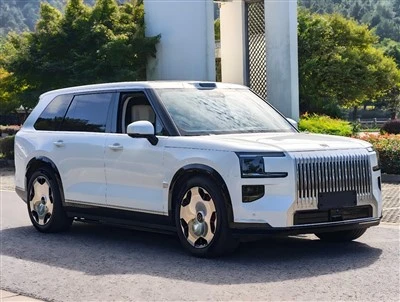
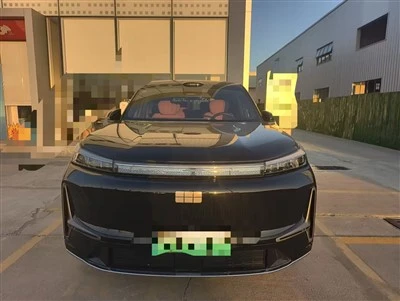
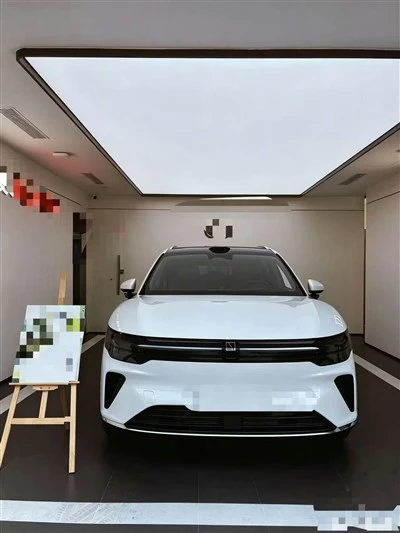
Vehicle range. Multi-brand new energy and petrol vehicles, with named brands including Li Auto, ZEEKR, XPENG, Changan, Geely, DEEPAL, Qiyuan, Jetour and GAC. The featured models are all SUVs and crossovers - GAC S7, Jetour T2, Li L9, XPENG GX, ZEEKR 8X - each listed with dimensions and powertrain type, and each carrying a "dealer pricing" label rather than a figure.
Pricing. Prices are not published. The site states that EXW, FOB or CIF terms can be requested for a specific vehicle, quantity and port, and that stock and transport are confirmed per order.
Inspection and documents. Inspection scope is agreed before purchase, with photos or video provided before confirmation. Export document requirements are confirmed within the quotation.
Timing. One week for domestic handover or dispatch preparation after order confirmation, with international shipping additional.
Markets. Not stated by country or region; the site addresses dealers and importers generally.
2. ChinaUsedAutoExport - chinausedautoexport.com
Operator and base. The site describes itself as a government-licensed used car export pilot enterprise. That is the operator's own description and, like any licensing claim, is worth verifying against the licence itself before contracting.
Vehicle range. Used passenger cars and electric vehicles, listed individually with year, mileage and transmission - for example a 2021 Toyota Corolla at 45,000 km, a 2023 BYD Seal at 12,000 km, a 2022 Tesla Model 3 at 25,000 km, a 2020 Volkswagen Tiguan at 52,000 km and a 2023 NIO ES6 at 8,000 km.
Pricing. The site states that EXW and FOB prices are shown with a full breakdown covering inspection, documentation and shipping, with no hidden costs.
Inspection. A 203-point inspection is claimed, covering engine, transmission, chassis and electrical systems.
Markets. Southeast Asia, the Middle East, Africa, Central Asia and South America are named, with established shipping routes to each.
Stated scale. More than 10,000 vehicles exported, more than 30 countries served, and over ten years of experience. These are operator-stated figures and cannot be verified externally.
3. Zhonggu Auto Export - zhongguauto.com
Operator and base. The company's registered city is not published. Vehicle locations are given instead: Horgos in Xinjiang, Qingdao and Nansha Port.
Vehicle range. New and used vehicles - petrol, battery-electric, extended-range, hybrid, plus mini electric city cars, SUVs, sedans and seven-seat models. Brand logos on the page include BYD, Geely, SAIC, FAW, GAC and Volkswagen, with BMW, Toyota, Kia, MG, Jetour, Bestune, Jetta and Livan appearing in the listings.
Pricing. FOB prices are shown against individual units, in US dollars for most and RMB for some. This is the most transparent pricing of the five at the level of an individual vehicle.
Contact. A WhatsApp number and an enquiry form; no email address or registered address is published.
Content. The site is a vehicle directory with no guides, articles or explanatory pages. Buyers get a number and a specification, not a methodology.
4. Auto Exports China - autoexportschina.com
Operator and base. Operated by Jinhua Amel Enterprise Services Co., Ltd. in Jinhua, Zhejiang, and described on the site as a member of the Yiwu China-Africa Chamber of Commerce.
Vehicle range. New and near-new passenger cars across a catalogue of 47 models, with BYD alone accounting for 32. The catalogue runs brand, then model, then year and trim, with stock units listed separately.
Pricing. Stock units carry an EXW price with the export port named - commonly Ningbo - and a plain statement that FOB means the vehicle price plus full export documentation, with shipping excluded and varying by destination. That single sentence removes most of the ambiguity buyers complain about elsewhere.
Inspection. The strongest published asset of any company on this page: an eight-step inspection process attributed to Chaboshi, with roughly 350 checkpoints, including paint-thickness readings against a 300 μm threshold, OBD mileage cross-checks against the instrument cluster, borescope inspection of the airbag module, and cut-and-weld assessment at the A, B and C pillars and the longitudinal members.
Languages and markets. English, French, Spanish and Arabic, which points to West and Central Africa, the Middle East and North Africa, and Latin America.
5. auto-in-china.com - a research-stage resource rather than an operator
What it is. A content-led site that publishes brand-level and process-level guides on Chinese vehicles. Its exporter page lists manufacturers - SAIC, Chery, Geely, BYD, GAC, Dongfeng and FAW - rather than export service companies.
Why it is included. Because it is the page most buyers find first, and it illustrates a common confusion: an OEM that manufactures vehicles is not the same thing as a company that will export one vehicle to your port with your documents. Useful for understanding the industry; not a substitute for a supplier.
Side by Side Comparison
| Criterion | HC Automobile | ChinaUsedAutoExport | Zhonggu | Auto Exports China | auto-in-china |
| Named operator | Yes - Fujian-registered entity | Licence claimed, entity not named | Not published | Yes - Jinhua | Not applicable |
| New or used | New | Used | Both | New / near-new | Reference only |
| Prices shown | No - quotation | Yes, EXW / FOB | Yes, FOB per unit | Yes, EXW per unit | No |
| Trade term named | EXW / FOB / CIF | EXW / FOB | FOB | EXW / FOB | No |
| Inspection defined | Scope agreed per order | 203 points claimed | Not published | 350 checkpoints, 8 steps | No |
| Passenger cars | SUV focus | Yes | Yes | Yes, 47 models | Yes |
| Light or heavy trucks | No | No | Occasional listings | No | Editorial only |
| Special-purpose vehicles | No | No | No | No | No |
Two things stand out from the table. The first is that pricing transparency and inspection depth do not travel together: the company showing per-unit FOB prices publishes no inspection method, and the company with the most detailed inspection publishes prices only on stock units. The second is the bottom two rows, which are empty across the board.
Where the Supply Is Thin
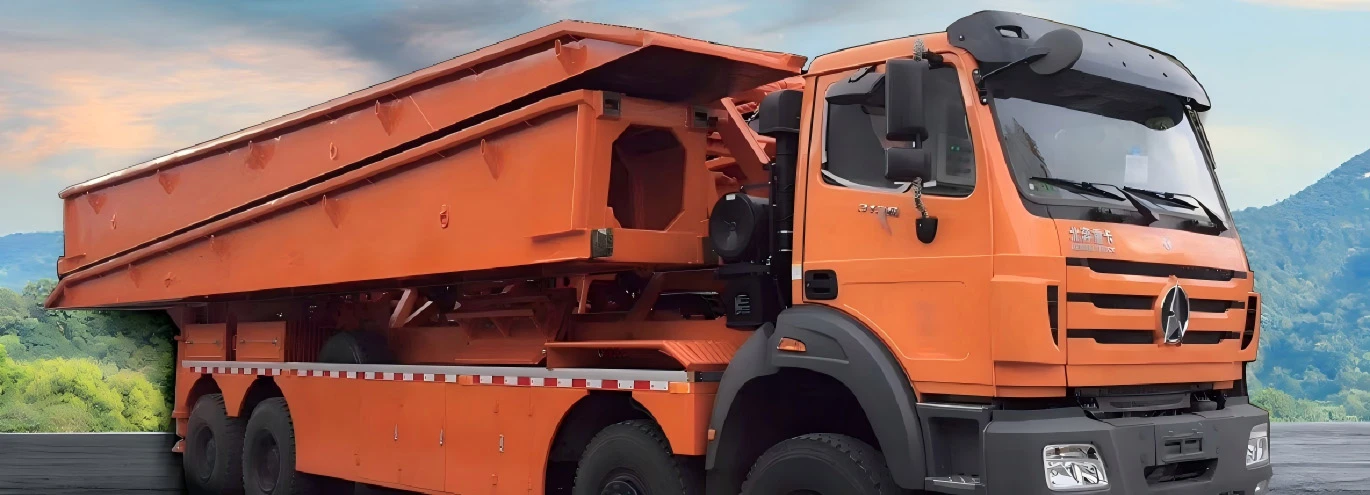
All five companies above are concentrated in passenger cars, SUVs and used vehicles. That is not an accident of who happened to be profiled - it reflects where the volume is. Passenger vehicle export is a catalogue business: a model exists, buyers pick from it, and the transaction repeats. Commercial and special-purpose vehicles work differently, and the difference is why the same suppliers do not cover both.
·Chassis-based, not catalogue-based. A small cargo truck is a chassis plus a body, and the body is built to the buyer's task. Two orders for the same cab can produce two different vehicles. Nothing about that fits a stock listing.
·Specification is duty-cycle driven. On a heavy-duty cargo truck, gross combination weight, drive configuration, gearbox and rear axle ratio are decided by the route and the load, not by a trim level. Getting it wrong is a five-year fuel penalty.
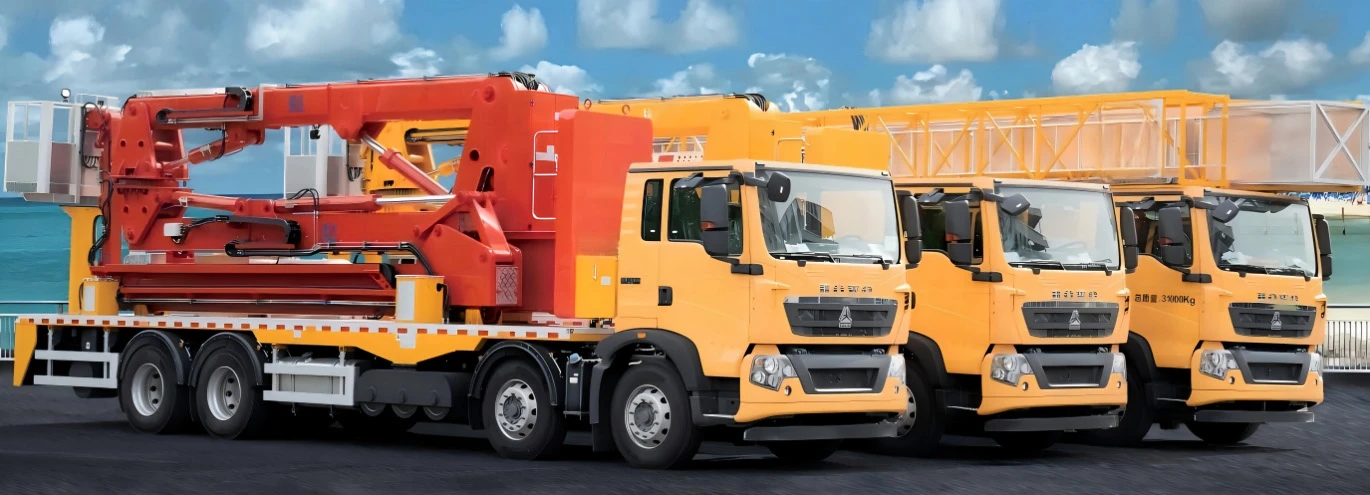
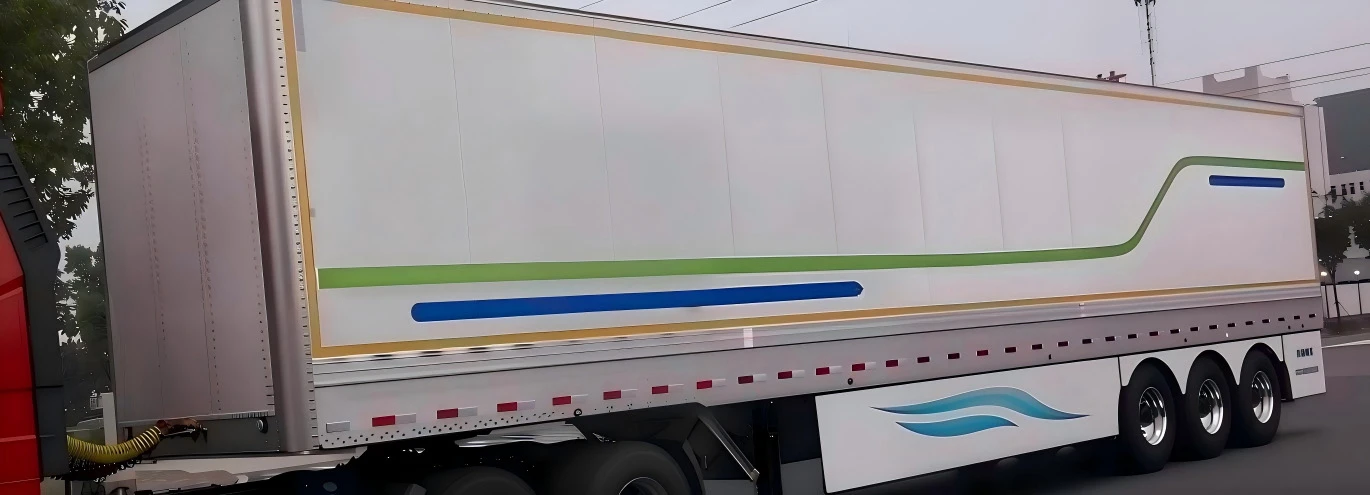
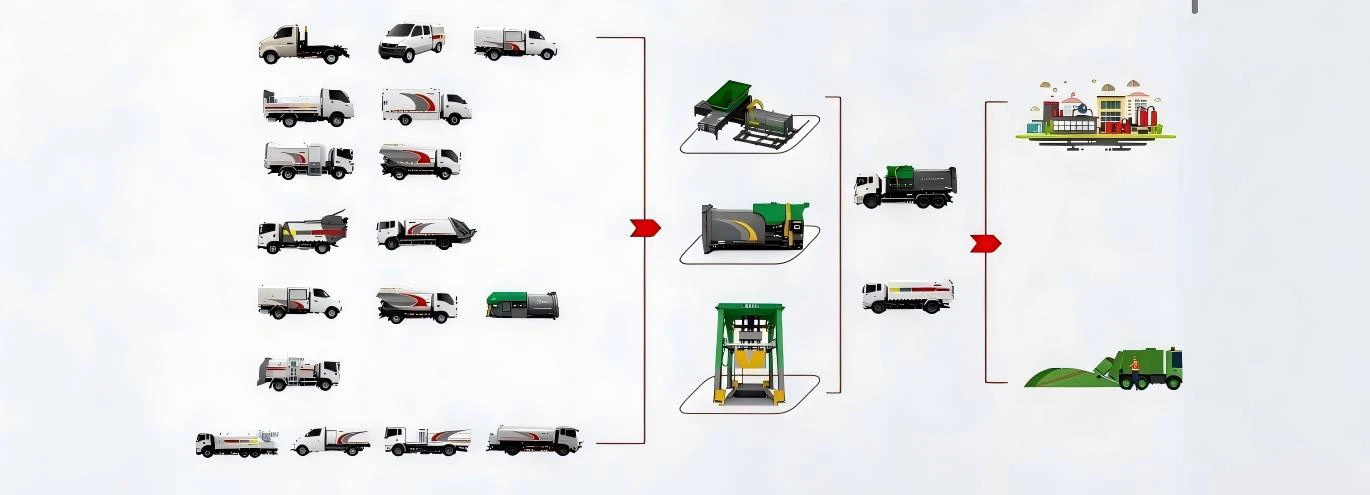
·Bodies are a separate supply chain. A refrigerated truck involves a refrigeration unit, insulation panels and a body builder. A bridge inspection truck involves a hydraulic boom and a working platform rated for personnel. An emergency bridge vehicle involves a launch mechanism. A sanitation vehicle involves a tank, a pump or a compactor. None of these are catalogue items.
·Documents are technical, not commercial. Special vehicles often need body drawings, axle-load calculations and equipment certificates in addition to the standard export set, and those documents come from the body builder rather than the chassis manufacturer.
This is the practical consequence for a buyer: if your requirement is ten SUVs, any of the five companies above can quote. If it is four refrigerated box trucks on a light chassis, or one bridge inspection unit, the shortlist is much smaller, and the criteria that matter shift from price to whether the supplier can supply the body drawings and the equipment certification.
Where We Sit in This Comparison
This page is published by Hong Kong Dragon Fist Trade Services Limited, which is itself an export company. That is a conflict of interest, and the honest way to handle it is to state it plainly: we have not ranked the companies above, we have not placed ourselves at the top of a list we wrote, and the eight criteria are the same ones we would expect a buyer to apply to us.
For transparency about our own position: our work is concentrated in the categories the table above leaves empty. We handle light and small cargo trucks, heavy tractors, rigids and dump trucks, and special-purpose vehicles including refrigerated, bridge inspection, emergency bridge and sanitation units, alongside pickups and passenger vehicles. If you are buying SUVs at volume, several of the companies profiled above are a reasonable place to start, and we will say so.
What we publish that you can check: the small cargo truck guide and the heavy-duty truck guide both quote manufacturer specifications rather than our own claims, and mark every figure that depends on configuration.
What a Quotation Should Contain
Most price differences between Chinese suppliers are not margin differences. They are scope differences - the same vehicle quoted on different terms. Before comparing two numbers, check that both cover the same eight items:
| Item | What to confirm in writing |
| Trade term and named place | EXW, FOB or CIF, with the specific port or location named. "FOB China" is not a term. |
| Vehicle specification | Model, year, trim, emissions standard, drive configuration, body type and dimensions. A model name alone is not a specification. |
| Included services | Inspection, photographs, inland transport, export documentation, certificate of origin, and whether destination certification is included or extra. |
| Excluded costs | Ocean freight, insurance, destination port charges, duties and taxes, and any certification body fees. |
| Payment structure | Deposit percentage, balance trigger - before shipment or against documents - and the bank details on the contract. |
| Delivery window | Preparation time from order confirmation, and the estimated sailing or rail date. Both, separately. |
| Document list | The exact set to be issued, and who produces each one. |
| Warranty and after-sales | What is covered, for how long, who performs the work in your country, and how parts are supplied. |
A quotation missing three or more of these is not cheaper. It is incomplete, and the missing items will reappear as costs later. The quotation-to-bill-of-lading walkthrough shows where each item enters the process.
Eight Checks Before You Pay a Deposit
·1. Match the company name to the bank account. The name on the contract, the name on the invoice and the name on the bank account should be the same legal entity. A mismatch is the single most common warning sign.
·2. Confirm the business scope covers vehicle export. Since the foreign trade operator registration requirement was abolished at the end of 2022, registration alone proves less than it used to; what still matters is a customs consignor registration for import and export goods, and a business scope that includes vehicles.
·3. Ask for the VIN or chassis number before shipment. A real order has a specific vehicle attached to it. A supplier who cannot produce an identifier until the vessel sails is selling something it does not hold.
·4. Get the inspection criteria in writing. Not "we will check it", but the point count, the tools and the pass thresholds - the level of detail that makes a claim checkable.
·5. Name the destination certificate before you pay. Whether your market requires GSO/GCC conformity, SABER with SASO, PVoC through KEBS or TBS, SONCAP with Form M, an NRCS letter of authority, or SBKTS with ERA-GLONASS, the requirement should be identified in the quotation, not discovered at the port.
·6. Check who is the seller of record. If the company you are talking to is not the entity on the export declaration, establish who is, and what happens if they fail to perform.
·7. Test responsiveness before money moves. Send a specific, technical question - a body dimension, an axle ratio, a certificate requirement. A supplier who answers precisely before the deposit will answer precisely after it.
·8. Verify one claim independently. Pick the largest number on their site and try to corroborate it. If nothing outside the site mentions it, treat it as marketing and price accordingly.
These eight are condensed from a longer set; the full version is in the 10-point supplier due diligence checklist.
How the Order Runs
Whichever company you choose, a vehicle export from China runs through the same five stages. Knowing them is what lets you tell, at any point, whether the order is on track.
1. Enquiry and specification. You state the vehicle, quantity, destination and any body or equipment requirement. The supplier returns a configuration sheet. This is the stage where a mistake costs nothing to fix and everything to ignore.
2. Quotation and contract. The eight items above are fixed in writing, along with the payment structure.
3. Sourcing, build and inspection. The vehicle is secured or the body is built, then inspected against the agreed criteria, with photographs or video issued before shipment.
4. Export documentation. Contract, invoice, packing list, certificate of origin, export declaration, and any destination certificate. Issued in a sequence, not all at once.
5. Shipment and handover. Booking, delivery to port, loading, and the document set released against the balance payment. The bill of lading is the document that transfers control of the goods, which is why the balance trigger matters as much as the price.
Special vehicles add a step between 3 and 4, because body drawings and equipment certificates have to be approved before the vehicle can be declared. That is one reason a special-purpose order runs longer than a passenger car order of the same value.
Frequently Asked Questions
1. How many auto export companies are there in China?
There is no reliable public count, and any specific number should be treated with suspicion. What matters more is that the sector is layered: a small number of large state-linked trading houses, a long tail of small export service companies concentrated in Zhejiang, Shandong, Guangdong and Tianjin, and a larger number of agents who do not export in their own name. The layer you are dealing with determines your recourse.
2. Is it cheaper to buy through an export company or directly from a dealer?
Usually through an export company, but not because the vehicle costs less. A domestic dealer sells in RMB, inside China, with no export documentation and no destination certification - those services have to be bought somewhere, and assembling them yourself rarely costs less than buying them bundled. The exception is a buyer with an existing import licence, a freight forwarder and experience in the destination market.
3. Can I buy a single vehicle, or is there a minimum order?
Single vehicles are routinely exported, particularly passenger cars and pickups, but the fixed costs - documentation, inspection, port handling - do not scale down, so the per-unit cost of a one-unit order is high. Most suppliers will quote one unit; fewer will quote it at a price that still makes sense to both sides.
4. Why do two companies quote very different prices for the same model?
Almost always scope. One quote is EXW with no documentation, the other is FOB with the certificate of origin and inspection included. A difference of a few hundred dollars per unit is normal between suppliers; a difference of several thousand usually means either a different specification or a materially different document set.
5. What is the difference between EXW, FOB and CIF here?
EXW means the vehicle is yours at the supplier's premises, and you arrange everything from there. FOB means the supplier delivers to the named port and clears export, and you pay freight. CIF means the supplier also arranges and pays freight and insurance to your destination port, but risk still passes at loading. CIF is not a door-delivery service, and destination charges remain yours.
6. Can one company supply both passenger cars and trucks?
Some can, and consolidating is often cheaper because one shipping plan, one document set and one inspection protocol cover the whole order. But verify the truck side separately - a supplier strong in passenger cars may be reselling trucks through a third party, which puts another layer between you and the body builder. Mixed orders commonly pair passenger vehicles with light cargo trucks in one booking.
7. How long does an order take?
For a vehicle in stock, roughly one to two weeks from confirmation to loading, plus sailing time. For a vehicle built to order, add the production period, which varies by manufacturer and is longer for special bodies. The honest answer is that any supplier who gives you a single number without splitting preparation from transit is not giving you a plan.
8. What if the vehicle arrives damaged or wrong?
Your position depends almost entirely on three documents: the contract's specification clause, the inspection report issued before shipment, and the bill of lading. If the specification clause is vague and no inspection report exists, there is little to claim against. This is why criteria 3 and 4 in our assessment carry the most weight - they are the buyer's only real protection.
9. Should I visit China before ordering?
For a first order above a modest value, yes if it is practical. Seeing the vehicle, meeting the entity that will sign the contract, and watching an inspection being performed resolves more uncertainty than any amount of correspondence. If a visit is not possible, commission an independent inspection rather than relying on the supplier's own photographs.
10. Are used vehicles harder to export than new ones?
Different rather than harder. Used vehicle export was piloted in China from 2019 and opened nationwide later, and it carries additional requirements around vehicle condition records and, in some markets, age limits at import. If used vehicles are part of your plan, check the destination's age and condition rules before choosing a unit - the used vehicle range is a starting point, not a guarantee of admissibility.
Request a Comparison Sheet
Hong Kong Dragon Fist Trade Services Limited works on the categories that the passenger-car specialists above do not cover: light and heavy cargo trucks, and special-purpose vehicles built on those chassis. If your requirement is a mixed order - some pickups, some box trucks, one refrigerated unit - we can quote it as one shipment with one document set.
Tell us the vehicles, the quantity, the destination port and the body or equipment requirement. We will return a configuration sheet that separates vehicle cost, documentation, inspection and freight, so the number can be compared with any other quote line by line.
Request a comparison sheet - or start from the main ranking of car exporters in China and the category-by-category view of Chinese vehicle exporters if you are still narrowing the shortlist.
Related Import Guides
Top 10 Car Exporters in China: How We Selected Them
How to Verify a Chinese Car Export Supplier: 10-Point Due Diligence Checklist
Car Export Company vs Trading Company vs Sourcing Agent
How Chinese Vehicle Export Works: From Quotation to Bill of Lading
Chinese Vehicle Exporters by Category: Cars, EV, Pickups, Trucks and Special Vehicles
Small Cargo Truck Export from China: Types, Specifications and How to Order
Heavy-Duty Cargo Truck Export from China: Tractor, Rigid and Dump Truck Guide
Related Import Guides
Pre-Shipment Vehicle Inspection: What We Check Before a Truck Leaves China
China Vehicle Export Price Breakdown: What an FOB Quote Really Contains
China Vehicle Export Service Package: Six Modules, What Is Included and What Is Not
Top 10 Chinese EV Cars You Can Export in 2026: Range and Buyer FitTop 10 Chinese Trucks for Export Under $20,000 FOB