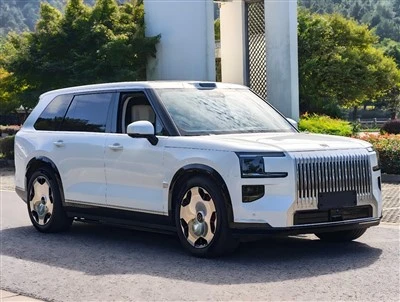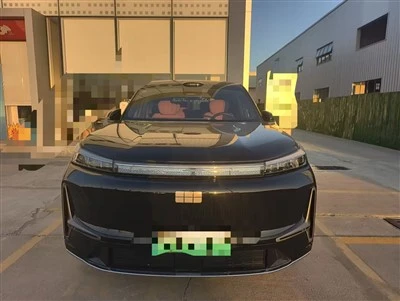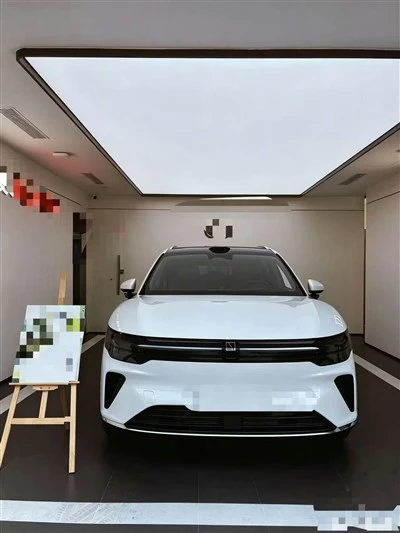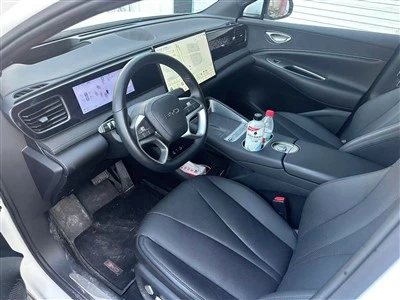

China exported more vehicles than any other country last year, and the fastest-growing slice of that volume is battery-electric passenger cars. For an overseas dealer, fleet operator or distributor, this creates a specific problem: the market is flooded with "top 10 Chinese EV" lists that rank cars by domestic popularity, review scores or price - none of which answers the question an importer actually asks. A car that sells well inside China is not automatically a car you can export, register, service and resell in your market.
This list is built the other way round. Every model below is a battery-electric passenger car that we source and export, with a live specification sheet and current stock availability. The list is ordered by CLTC driving range, from longest to shortest - not by preference, and not by price. Each entry states what the car is genuinely good at, what it is not good at, and the export-specific details (charging port configuration, market fit, warranty position) that decide whether it belongs on your order.
Two models excluded from the list are worth naming. PHEVs (BYD's DM-i range, for example) are omitted because they ship, register and are taxed differently from pure EVs in most markets - lumping them into one list produces advice that is wrong for both. And the 2022 GAC AION LX, still available at attractive pricing, is a strong buy for the right buyer but is built on a platform GAC has since moved past; we cover it in the honorable mentions rather than the main ten.
How We Selected These Ten
A top-10 list is only as good as its filter. Ours is export-first - a model qualified only if all five of the following are true.
·Battery-electric, in current production. No PHEVs, no EREVs, no models already replaced by a successor. A car you cannot reorder in six months is not a line you build a dealership around.
·Exportable configuration available. The model must be orderable with a charging port that matches non-Chinese standards (CCS2 or CCS1 rather than the domestic GB/T), the emissions and safety homologation your market accepts, and the correct steering side. If a model only exists in domestic specification, it fails the list.
·Range verified against the specification sheet, not the brochure headline. All ranges below are CLTC unless stated, taken from the configuration we actually source, and CLTC runs optimistic versus the WLTP figures your customers know - we flag the conversion where it matters.
·Parts and service are realistically reachable. Either the brand has a service presence in major export markets, or its parts are cross-referenced and available through third-party channels. A car with no parts path is a liability with a badge.
·We have shipped it or its direct predecessor. Every model below comes from the range we source through daily - no desktop research entries. If you want the fuller picture of how we vet suppliers and models before they reach our catalog, the supplier verification checklist documents the method.
At a Glance: Ten Chinese EVs Compared
Ordered by CLTC range. "Best for" is the buyer profile the model genuinely suits - every entry then explains who it does not suit.
| Model | Type | CLTC range | Peak motor | Best for |
| BYD Seal 07 EV (2026) | Mid-size sedan | 705 km | 240 kW | Flagship retail sedan; markets where range anxiety is the objection |
| Leapmotor B01 (2026) | Sedan | 670 km* | Verify by trim | Long range at a value price; price-sensitive retail |
| BYD Song L EV (2025) | Mid-size SUV | 662 km | 230 kW | Families and fleets that need an SUV with genuine highway range |
| GAC AION V (2025) | SUV | 650 km | 165 kW | SUV buyers prioritising cabin space over badge prestige |
| GAC AION S MAX (2025) | Sedan | 610 km | Verify by trim | Commercial fleets: taxi, ride-hailing, corporate |
| GAC AION Y Plus (2025) | Compact SUV | 610 km | 150 kW | High-turnover urban retail - the volume seller |
| Leapmotor Lafa5 (2026) | Hatchback | 605 km* | Verify by trim | Hatchback buyers wanting sedan range in a compact body |
| MG ES5 (2025) | Compact SUV | 525 km | 125 kW | Markets where the MG badge outperforms Chinese brands |
| BYD e7 (2025) | Mid-size sedan | 520 km | Verify by trim | Ride-hailing duty with passenger-visibility branding |
| Leapmotor T03 (2026) | City hatchback | 403 km* | Verify by trim | Entry price point; city-runabout segments |
* Leapmotor figures are quoted up to the stated CLTC maximum for the longest-range trim; the exact battery, motor output and range depend on the trim ordered, and our quotation states the trim explicitly. No entry on this list is priced - prices move with specification, battery grade and exchange rate, and a quoted "starting price" without a trim definition is how buyers end up comparing different cars. The FOB price breakdown guide explains what an EV quotation must contain line by line.
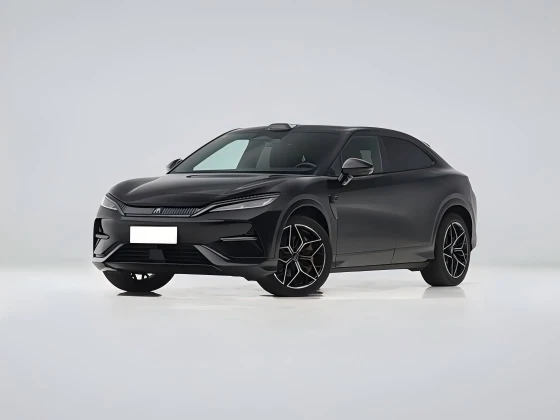
BYD Seal 07 EV - 705 km
The longest-range model we currently export, and the one that most directly answers the first question every EV customer asks: "what happens when I want to drive past the city?" At 705 km CLTC, the Seal 07 EV carries a real-world margin that survives the 15–25 percent discount you should apply when converting CLTC to the WLTP figures your buyers know - still comfortably beyond 500 km of honest range.
The 240 kW (326 PS) motor output puts it in premium-sedan territory on paper, but the reason it leads this list is the segment it opens rather than the acceleration it offers. In markets where charging networks are thin outside major cities, range is not a specification number - it is the difference between a car a customer will consider and one they will not. A 705 km CLTC sedan arrives at that conversation already won.
Export notes: BYD's overseas network has expanded fast, which cuts both ways - in markets where BYD has an official distributor, a parallel-imported unit may not receive local warranty support; confirm the warranty position for your market before ordering. Charging port must be specified as CCS2 (or CCS1) export configuration, never domestic GB/T. Parts are not a concern: BYD's parts availability is among the best of any Chinese brand abroad.
Not for: buyers whose market prices sedans against SUVs - in most emerging markets the same money in an SUV body wins the retail battle.
2026 BYD Seal 07 EV - full specification sheet
Leapmotor B01 - 670 km
The B01 is the argument of this list in one car: a sedan that reaches 670 km CLTC at a price tier well below the BYD pair. Leapmotor's partnership with Stellantis means the brand's international service and parts path is stronger than its domestic price positioning suggests - international versions are distributed through Stellantis channels, and that structure increasingly shows up in parts cross-referencing abroad.
For a dealer, the B01 plays a specific role: it is the car you show the customer whose budget says A-segment but whose expectations say flagship range. Because the range figure is trim-dependent (up to 670 km CLTC on the longest-range trim), the trim must be locked in the contract - two B01s with different battery grades are two different products, and the gap is invisible from the driver's seat.
Export notes: Specify trim, battery capacity and motor output in the order confirmation, in writing. CCS2 export configuration. Leapmotor is newer to export markets than BYD or GAC - if your market has no Leapmotor presence at all, confirm parts lead times with us before committing to volume; honesty here is cheaper than a warehouse of cars waiting on a controller board.
Not for: buyers who need badge prestige. Leapmotor's brand recognition trails BYD's outside China, and in status-driven retail segments that gap is real money.
2026 Leapmotor B01 - full specification sheet
BYD Song L EV - 662 km
If the Seal 07 EV is the specialist answer, the Song L EV is the general-purpose one, and on export volume it is the more important car. A mid-size electric SUV with 662 km CLTC range and 230 kW peak output, it combines the two things the largest number of buyers actually want: a body style that sells itself across the Middle East, Central Asia and Latin America, and a range number that removes the objection.
The 360 N·m torque figure matters more than the headline power - it is what makes the car feel decisive fully loaded with five passengers and luggage, which is the condition it will spend most of its life in. As a dealership flagship it is the model we most often recommend first to buyers who are establishing an EV line and need one SKU that covers the widest range of walk-in customers.
Export notes: Same BYD parallel-import warranty caveat as the Seal 07 EV - verify your market's position first. Export configuration with CCS2 is standard for our orders. The mid-size SUV segment is also the most competitive among Chinese EVs, so price against the AION V below rather than against domestic Chinese prices.
Not for: fleet buyers running duty cycles inside a single city - paying for 662 km of range to do 80 km a day ties up capital in battery you will never use.
2025 BYD Song L EV - full specification sheet
GAC AION V - 650 km
The AION V is the quiet value play of the SUV entries. With 650 km CLTC range and a 165 kW / 240 N·m motor, it gives away nothing meaningful to the Song L EV in daily use, and its pricing position reflects GAC's strategy of buying market share with substance rather than badge. Cabin space is where the AION V spends its advantage: it is the roomiest of the three SUVs on this list for its footprint.
GAC is one of China's largest state-backed automotive groups, and AION is its dedicated EV brand - that matters for export buyers because the company behind the product has the balance sheet to stand behind parts supply years from now. In our shipment mix, AION products consistently arrive with fewer pre-delivery faults than the segment average, which shows up in our inspection reports as well as in the anecdote.
Export notes: CCS2 export configuration; RHD availability should be confirmed per order for right-hand-drive markets. GAC's overseas service network is thinner than BYD's - parts are available through third-party channels and from us, but a buyer planning a large fleet should price a small opening parts order into the first shipment. The service package guide covers what that parts commitment should look like.
Not for: buyers in markets where AION has zero brand presence and retail customers buy badges - the V wins on spreadsheet, not on showroom pull.
2025 GAC AION V - full specification sheet
GAC AION S MAX - 610 km
The S MAX is the commercial workhorse of this list. The AION S family is the default taxi and ride-hailing sedan across Chinese cities - a market that punishes any car with the world's harshest duty cycle: 300 km a day, mostly urban, constant door cycles, charging twice daily. A model that survives in Chinese taxi service has passed a durability test no brochure can simulate.
For a fleet operator, that track record is the product. The 610 km CLTC range means a full-shift day on a single charge in most urban duty cycles, and the S MAX's running costs - consumables, brake wear under regenerative braking, motor service intervals - are the economics that decide whether a taxi operation makes money. It is also the car to think about when a government or corporation tenders for an EV fleet: the S family is the reference point procurement officers already know.
Export notes: Commercial duty cycles charge harder and more often than retail use, so battery warranty terms deserve extra attention - see the FAQ on warranty transfer below. Confirm CCS2 configuration and, for tender business, the availability of the white/comfort trim sets that institutional buyers specify. In our experience this is also the model most often ordered alongside a small cargo truck by mixed commercial buyers.
Not for: retail showroom sales where buyers want an SUV - a sedan this functional does not carry showroom appeal, and pretending otherwise ties up stock.
2025 GAC AION S MAX - full specification sheet
GAC AION Y Plus - 610 km
The Y Plus is the volume engine of compact electric SUVs in Chinese cities, and it earns that position with a simple formula: a boxy, space-efficient body that reads as a small MPV, a 610 km CLTC range at a compact price, and running costs that make it the default choice for urban ride-hailing drivers carrying passengers in the back every day.
For an importer, the Y Plus is the unit that turns. It hits the demographic that buys its first EV: urban, price-conscious, needing a car that carries family and side-business cargo on weekends. The upright body means rear-seat headroom and luggage flexibility that conventional compact SUV styling gives away - and that practicality is exactly what sells in the markets where first EVs are bought with savings, not financing.
Export notes: With up to 150 kW depending on trim, the motor output varies meaningfully across the range - as with every GAC product, lock the trim in the contract. CCS2 for export. Because the Y Plus is a high-turnover retail SKU, order depth matters more than trim spread: five units of the trim your market actually buys will outsell five different trims.
Not for: highway-heavy markets. The Y Plus is a city car by design; sustained 120 km/h cruising is not what its motor and gearing were built for, and buyers who drive cross-country weekly should move up the list.
2025 GAC AION Y Plus - full specification sheet
Leapmotor Lafa5 - 605 km
The Lafa5 exists because a segment of buyers wants hatchback practicality without accepting the short range that hatchbacks traditionally carry. At up to 605 km CLTC, it delivers sedan-class distance in a body 30–40 cm shorter - which in dense cities is not a compromise but an advantage: it parks where sedans do not, and its turning circle suits the streets that SUVs struggle with.
Positioned between the T03 and the B01 in Leapmotor's range, the Lafa5 shares the B01's platform economics and the same Stellantis-backed international structure. For a dealer, it segments cleanly: the customer who test-drives a B01 but keeps looking at parking spaces is a Lafa5 customer, and the two cars cover sedan and hatchback body styles at one price tier.
Export notes: Trim-dependent range and motor output, stated per order. CCS2 export configuration. Hatchbacks price more sensibly than sedans in most emerging markets - the Lafa5's advantage over the B01 is operational, not aspirational, so lead with parking, running cost and city usability when presenting it.
Not for: buyers who need the rear legroom of a sedan or the ground clearance of an SUV - a hatchback is a third choice, and pretending otherwise loses the sale to a car that fits.
2026 Leapmotor Lafa5 - full specification sheet
MG ES5 - 525 km
The ES5 is on this list for one reason that outweighs its spec-sheet position: the badge. MG's global recognition - built over decades and now backed by SAIC's worldwide distribution - does a job in the showroom that no domestic Chinese brand can replicate yet. In markets where customers hesitate at unfamiliar badges, the MG logo is the difference between a test drive and a walk-past.
The substance underneath justifies the badge's promise: 525 km CLTC range, 125 kW (170 PS) and 250 N·m - not the numbers of the BYD pair, but honest compact-SUV performance with the widest RHD availability and market-matched homologation of anything in this list, because MG versions are engineered for export markets from the start rather than converted to them. For right-hand-drive markets, that factory-engineered configuration removes the single biggest risk in RHD sourcing.
Export notes: MG's export-market engineering means fewer port and charger specification surprises - but confirm the specific market version (RHD/LHD, port type) at order, because MG produces more regional variants than any other brand here. MG's official network in many markets also means the parallel-import warranty question must be checked per country.
Not for: buyers chasing maximum range per dollar - the ES5 competes on trust and total-cost story, and on pure specification it is beaten by cheaper cars above it on this list.
2025 MG ES5 - full specification sheet
BYD e7 - 520 km
The e7 is BYD's ride-hailing sedan, built for the same duty as the AION S MAX but with two differences that matter to specific buyers: it is a BYD, with the parts network and badge recognition that carries in export markets, and its styling is deliberately passenger-visible - the e7 looks like a modern retail sedan rather than a fleet car, which matters in markets where ride-hailing drivers own the vehicle and sell the ride on appearances.
With a 520 km CLTC range and a front-mounted motor, the e7 is optimised for urban duty economics rather than highway ambition. Its front-wheel-drive layout and simpler motor arrangement keep maintenance costs low, and BYD's blade battery has the thermal record that commercial operators scrutinise hardest - a battery incident in a taxi fleet is a business-ending event, and buyers in this segment know it.
Export notes: CCS2 export specification. For fleet orders, confirm the charger package (onboard AC capacity) matches your depot infrastructure - an 11 kW-capable car charging on a 7 kW point overnight is fine; the same car on a 3.5 kW household point is not. The e7 and S MAX are direct competitors: choose by parts-network priority, not by spec sheet, because in commercial duty both are adequate and in downtime neither is.
Not for: retail customers - the e7 is a commercial tool with commercial styling, and a dealer who positions it as a family sedan will disappoint buyers.
2025 BYD e7 - full specification sheet
Leapmotor T03 - 403 km
The T03 is the entry door of Chinese EV export: a four-seat city hatchback with up to 403 km CLTC - a figure that embarrasses the traditional city-EV segment, where 250–300 km is normal. It is the car that makes an EV line affordable for a dealer testing a market, and for customers whose daily driving is school runs, errands and commute, its range number is not a limitation at all.
Its second role is portfolio economics. A dealer carrying a T03 alongside a Song L EV covers the two ends of the walk-in range: the budget customer who was never going to buy a flagship, and the flagship buyer whose partner or child now wants "the small one". Low unit cost also means low inventory risk - a T03 that sits for two months costs the business a fraction of what a stranded SUV does.
Export notes: Trim-dependent range and equipment. CCS2 export configuration. The T03's charging speed is modest on DC and slow on AC - in markets where home charging is rare and public charging is the norm, that matters more than the range figure; match the market's charging reality to the car's charging behaviour before ordering volume. For used-EV strategies the used vehicle section covers the 180-day rule and licensing that apply.
Not for: any market where the car will regularly see highway speeds for sustained periods - the T03 is a city car, and loading it with a family at 120 km/h is outside its design life.
2026 Leapmotor T03 - full specification sheet
Honorable Mentions
·2022 GAC AION LX (650 km NEDC). A former flagship now priced accordingly. For a buyer who wants maximum car per dollar and accepts a 2022 platform and NEDC range figures, it is a legitimate deal - order it with a battery health report, same as any used or aged unit.
·2026 GAC AION S Plus (505 km) and AION UT / UT Super (420–500 km). Current, in production, and cheaper than their MAX/Y Plus siblings. They miss the main list only because the models above beat them on the same segment - but for a budget retail line they are exactly right.
·2025 BYD Qin EV (450 km). The compact sedan for buyers who want the BYD badge and parts network at the lowest entry price. A solid fourth sedan in a BYD-heavy line-up.
·2025 XPeng X9 (702 km, AWD). The electric luxury MPV - a category of one in this price class, and the car that wins the executive-transport segment. It is omitted from the main list only because MPV volumes are specialist; for the right buyer it is the most impressive vehicle here. Source it through the EV catalogue with current stock.
What Every Chinese EV Order Must Specify
EVs differ from petrol cars in ways that show up after the deposit is paid, not before. Four specifications decide whether an EV order arrives as an asset or a problem - all four are one-line items in a proper quotation, and all four are where low quotes go quiet.
| Item | What to demand in writing | What goes wrong without it |
| Charging port | CCS2 (or CCS1) export configuration, stated on the order confirmation - never domestic GB/T | The car arrives and cannot use your market's public chargers; conversion costs more than the freight saving |
| Trim, battery and range | The exact trim with battery capacity in kWh, motor output, and the CLTC range of that trim - not the model family's maximum | You pay flagship-trim money and receive the entry battery; nothing on the bodywork tells the difference |
| Battery health evidence | For any unit not factory-new: a state-of-health report with SoH percentage from a battery diagnostic readout, not a photograph of a screen | A 92 percent battery and a 78 percent battery are different resale values and different prices, and only one number separates them |
| Warranty position | Which entity honours the battery and vehicle warranty in your market, and the claim path - in writing, per market | The customer finds out at month fourteen that the eight-year battery warranty was tied to first registration in China |
Two more EV-specific realities belong on the logistics side. Lithium traction batteries are Class 9 dangerous goods for shipping: vehicles move under UN 38.3 requirements, and carriers impose state-of-charge limits for RoRo and container loading - which is why an EV shipment's readiness date includes a charging appointment, not just a customs slot. And the connected-software layer - account registration, app functions, map region, over-the-air update availability - is regional by design; a vehicle configured for the Chinese software region will behave differently abroad, and the export-market configuration must be confirmed before the unit leaves the factory, because some software region changes cannot be performed at the destination.
Both of these belong in the inspection scope, not in the brochure. Our pre-shipment inspection guide sets out how EV checks - battery diagnostic readout, charging test on both AC and DC, port physical verification, thermal-event evidence - fit the three-layer inspection method we run on every unit.
How to Choose by Use Case
| Your situation | Models that fit | Why |
| Opening an EV dealership line, one SKU to start | BYD Song L EV or GAC AION V | Mid-size SUV fits the widest walk-in demographic in most markets |
| Taxi or ride-hailing fleet | GAC AION S MAX or BYD e7 | Commercial-duty sedans with proven high-mileage durability; choose by parts network priority |
| Budget retail, first-EV buyers | GAC AION Y Plus, Leapmotor Lafa5 or T03 | Low entry price with honest urban range; volume sellers, not aspirational stock |
| RHD market sourcing | MG ES5 first | Factory-engineered RHD and export homologation; least conversion risk |
| Range-anxious market, thin charging network | BYD Seal 07 EV or Leapmotor B01 | 650–705 km CLTC makes range a non-objection even at a 25% conversion discount |
| Executive / VIP transport | XPeng X9 (honorable mentions) | The electric luxury MPV category leader at its price point |
Whatever you shortlist, apply the same three tests to the supplier as to the car: written export licence verification, third-party inspection, and an itemised quotation. The comparison of Chinese auto export companies shows how those criteria separate real exporters from listing pages.
Frequently Asked Questions
1. Why is this list ordered by range instead of ranked best-to-worst?
Because "best" depends on your market, and a ranking that hides its criteria is marketing, not information. Range is objective, verifiable from specification sheets, and the single variable EV buyers ask about first. Every entry states its own "not for" so you can build your own ranking for your market - which is the ranking that matters.
2. What is the difference between CLTC and WLTP range, and which should I quote to customers?
CLTC is the Chinese test cycle; WLTP is the standard used in Europe, the Middle East and much of the rest of the world. CLTC figures typically run 15–25 percent higher than WLTP for the same car. Quote CLTC in supplier correspondence (it is what the Chinese documents state) and convert to WLTP for your customers - a dealer who quotes CLTC numbers as real-world range will be corrected by the first customer with a long commute.
3. Can I get these cars with a CCS2 charging port, or are they all GB/T?
Export-configuration units are ordered with CCS2 (standard for Europe, the Middle East, Africa, Southeast Asia and Australasia) or CCS1 where applicable. Domestic-specification units carry GB/T and are the wrong choice for almost every export market - port conversion is possible in some cases but costs more than ordering the correct configuration. The port type is a line item on our quotations, and we do not accept an order without it.
4. Do Chinese EV warranties transfer to my country?
Generally, no - vehicle and battery warranties are tied to first registration in China unless the brand operates an official international warranty programme covering your market. Where BYD, MG or another brand has an official distributor in your country, ask them directly whether parallel-imported units receive local coverage, and get the answer in writing. For our part, the quotation states the warranty entity and claim path explicitly, which is the fifth commitment in our service package.
5. Are EVs more expensive to ship than petrol cars?
Marginally, yes. Lithium traction batteries are Class 9 dangerous goods: units ship under UN 38.3 requirements, carriers apply state-of-charge limits at loading, and some routes add a dangerous-goods surcharge per EV. The difference is a modest line on the freight invoice, not a structural barrier - but a quotation that has not mentioned it has not priced it.
6. Which of these EVs is the safest choice for a first EV import order?
The GAC AION Y Plus or BYD Song L EV, depending on whether your market is price-led or badge-led. Both are high-volume models with mature supply chains, forgiving duty cycles and strong resale recognition. Start with three to five units of one trim rather than one unit each of five trims - depth in the trim your market wants beats breadth that splits your marketing.
7. Can you supply used or near-new versions of these models?
Yes - used-unit sourcing is available with battery health reports as standard, and China's 180-day registration rule shapes which near-new units are exportable and when. Used EVs are graded on battery SoH before anything else; a used EV without a battery report is a used petrol car with an unknown engine. Details are in the used vehicle section.
8. How many units should a first order be?
Single-unit orders are accepted - many of our long-term fleet customers started with one. But dealership economics usually want three to five units of a single trim: enough to display, sell and restock without waiting on a second shipment. The decision variable is how fast your market absorbs stock, not what the supplier prefers.
9. What about PHEVs - should I consider those too?
Only deliberately. PHEVs such as BYD's DM-i range serve markets where charging infrastructure is thin but fuel is affordable and regulation rewards electrification - a genuinely different product decision with different taxation, registration and buyer economics. If your market fits that profile, tell us and the recommendation changes; if not, BEVs are simpler to sell, simpler to explain and cheaper to maintain.
10. How do I know the specification sheet matches the car that ships?
Because the inspection verifies it: VIN, nameplate and type approval against the order, trim and battery against the contract, charging port physically checked, and a DC and AC charging test performed. The report travels with the documents. That is the difference between a specification sheet that was true on order day and one that was true on sailing day - and it is why the inspection scope is issued before the unit is built.
Request a Quotation
Hong Kong Dragon Fist Trade Services Limited sources and exports Chinese EVs - and the petrol, PHEV and commercial vehicles around them - to dealers, fleets and distributors across the Middle East, Central Asia, Africa and Latin America. Every EV quotation states the trim, battery capacity, charging port configuration, CLTC-to-WLTP position, and the warranty entity in writing, before the order is confirmed.
Send the models you are considering, your destination market and the quantity, and you will receive a line-item quotation against your exact specification - starting from the EV catalogue above or the BYD range.
Request an EV quotation - tell us your market and the models, and we will tell you what fits, what does not, and what it costs.
Related Import Guides
China Vehicle Export Price Breakdown: What an FOB Quote Really Contains
Pre-Shipment Inspection for Chinese Commercial Vehicles: Scope, Tools and Thresholds
China Vehicle Export Service Package: What Is Included and What Is Not
Auto Export Companies in China: 2026 Comparison Guide
How to Import Cars from China to the UAE: Process, Costs and Customs
Top 10 Car Exporters in China: How We Selected Them