

"Full service" is the most common phrase in Chinese vehicle export and the least informative. It appears in every brochure, means nothing in particular, and is impossible to hold anyone to. Two suppliers can both offer "full service from factory to port" while one of them issues an inspection report and the other sends photographs of the truck in a car park.
The way to make a service package comparable is to reduce it to commitments you can check. Not adjectives - deliverables. For each thing a supplier claims to do, there should be a document you receive, a moment it happens, and a way to verify it independently.
This page sets out the package we actually run, as six modules with four checkable commitments each. For every module we state what is included, what is not, how you verify it, and the specific way it fails when it is done badly. It also states, deliberately, what we do not offer - because a supplier who cannot name their own limits has not thought about the work.

"Full Service" Is Not a Service
A vehicle export transaction passes through the hands of at least six parties: the factory, the body builder, the inland transporter, the port terminal, the forwarder and the vessel operator. Add the inspection body and the customs broker and it is eight. Nobody performs all of those functions. What an exporter does is coordinate them - and coordination is only worth paying for when it is specified.
Three things make a package readable.
·A deliverable per commitment. "We handle documentation" is a claim. "You receive a document list with the quotation, and the origin certificate in the correct preferential form for your tariff, issued in your name" is a commitment, because at the end you either have the document or you do not.
·A stated exclusion. Every package has edges, and the edges are where disputes live. A supplier who lists what is not included is telling you where to look in your own cost model. A supplier who lists nothing is either inexperienced or hoping you will not ask.
·A verification path you control. You should not have to take the supplier's word for anything material. Photographs, third-party reports, customs declarations, bills of lading, tracking - each commitment below names the artefact you can check, and most of them can be checked without our involvement.
The same discipline applies when comparing suppliers. The comparison of Chinese auto export companies applies eight criteria across five real companies; this page is the detail behind one of them.
The Six Modules at a Glance
Six modules, in the order they happen. A failure in any one of them can sink the shipment, and the failures are not equally visible: the first two happen while you still have leverage, the last two happen after you have paid.
| # | Module | What it decides | How it fails when skipped |
| 1 | Sourcing and specification | Whether the vehicle on paper is the vehicle for the job | A unit that meets the specification sheet and cannot do the work |
| 2 | Pre-shipment inspection | Whether what was built is what was ordered, before you pay the balance | Faults discovered at the destination, where repair costs three times as much |
| 3 | Documentation and certification | Whether the vehicle can legally enter your country at the duty you planned | Consignment held at port; duty assessed on the wrong code |
| 4 | Logistics, loading and insurance | How it travels, what it costs, and who pays when it is damaged | Damage that nobody insured; a method that required disassembly nobody quoted |
| 5 | Spare parts and after-sales | Whether the vehicle is still working in year two | A truck parked for six weeks waiting for a part worth USD 80 |
| 6 | Payment structure and risk | Who carries the risk at each stage, and what happens when something goes wrong | Full payment made against a promise; no remedy written down |
Module One: Sourcing and Specification
Most disputes in this business are not about quality. They are about a specification sheet with blanks in it. A sheet that says "480 hp, manual, air-conditioned" has not specified a vehicle; it has specified a category. Whoever fills the blanks chooses the price - and by default, they fill them in the cheapest defensible way.
This module exists to close the blanks before a price is agreed, and to put the trade-offs in writing while you can still choose between them.
| Commitment | What you receive | How you verify it |
| A build sheet, not a brochure paragraph | A one to two page specification naming engine model, emission standard, gearbox model, axle ratio, tyre brand and size, tank capacity, cab type, and for special vehicles the body drawing reference | It contains model numbers, not adjectives. If you cannot find the axle ratio, it is not a build sheet. |
| Stock and build-to-order quoted separately | Two options with production dates, lead times and prices, so the saving on a stock unit is visible next to its age | Ask for the production date on the plate of the stock unit. If it is more than twelve months old, price it as such. |
| The factory and the body builder named | Both company names on the quotation, plus the body warranty terms and its duration | The names must also appear on the certificates and on the body plate fixed to the vehicle. |
| Trade-offs stated in writing | A short note on where a cheaper choice costs you later - emission standard against market acceptance, tyre tier against route, body gauge against payload and life | If every option is presented as equally suitable, the analysis has not been done. |
What is not included. Body design from a blank sheet, new tooling, engineering drawings for a body type that does not exist, and sourcing of non-vehicle goods. If your requirement needs an engineering project, it needs an engineering partner, and we will say so rather than absorb it into a vehicle price.
How it fails. The buyer receives a truck that exactly meets the sheet and cannot climb the route it was bought for, because the sheet never mentioned the gradient, the altitude or the axle ratio. This is the most expensive kind of correct delivery.
Module Two: Pre-Shipment Inspection
Inspection is the only module that happens while you still hold the balance payment, which makes it the most valuable one in the package and the one most often reduced to a formality.
On commercial and special vehicles the inspection is structurally different from a car inspection: the ladder frame carries the load and cracks at the spring hangers, wear is measured in hours not kilometres, the body is a separate build with its own warranty, and equipment has to be operated under load rather than observed. The full method, including tools and thresholds, is set out in the pre-shipment inspection scope.
| Commitment | What you receive | How you verify it |
| The scope is issued before the vehicle is built | A written test list with pass criteria for that specific unit, agreed with you at order stage | The final report answers the scope line by line. Anything in the scope with no corresponding result is an omission. |
| Three layers, in a fixed order | Layer one: documents and configuration. Layer two: chassis, driveline and structure. Layer three: body and special equipment | Each layer names its tools - paint gauge, borescope, diagnostic scan, straight edge, dye penetrant, load test, thermal probe, flow meter. |
| Equipment is operated, not photographed | Load test results at rated capacity, a full operating cycle, a reefer pull-down curve, hydraulic pressure readings | Numbers with units and timestamps. A photograph of a platform unfolded is not a load test. |
| Faults are classified, not summarised | A report with photographs, measurements, hour-meter readings, and each fault marked as stops shipment, rectify before loading, or disclose and price | A report with no faults on a used unit is a report you should question. |
What is not included. Destructive or laboratory material testing, engine tear-down, and certification by an agency nominated by your own government for import - that last one can be arranged, at cost, and must be named in the quotation because it is a different body performing a different inspection.
How it fails. A report that repeats the specification sheet back to you: it lists the engine model and the tyre size, confirms they match the order, and never lifts the vehicle. It looks thorough, it costs money, and it detects nothing. The test is simple - ask what the inspector measured that could have been wrong.
Module Three: Documentation and Certification
Documents cost a few hundred dollars and are worth the whole consignment. The asymmetry is why this module is specified rather than assumed.
Two failures dominate. The first is a missing document discovered after the vessel sails - consular legalisation takes two to four weeks, and a shipment that misses it sits at the destination port accruing storage that dwarfs the document cost. The second is a document that exists but is wrong: an origin certificate in the general form when a preferential form was available, or an HS code that does not match the vehicle, which changes the duty at destination and can trigger a reclassification.
| Commitment | What you receive | How you verify it |
| The document list accompanies the quotation | Each document named, with issuer and price if it is extra - export declaration, certificate of origin, export licence where required, inspection certificate, invoice, packing list, bill of lading, legalisation | Compare the list against your customs broker's requirement list before you order, not after. |
| The origin certificate form is chosen for your tariff | The correct form - general CO, Form E, Form RCEP or other - selected against your destination tariff schedule and stated in writing | Ask your broker what duty difference the preferential form makes. On a USD 30,000 unit it is usually several times the document cost. |
| The HS code is agreed in writing and used consistently | The code on the invoice, the export declaration and the bill of lading, all identical | Three documents, one code. Any inconsistency is a destination customs problem and you will pay the storage. |
| Copies reach you before the vessel sails | Scans of the declaration, certificate, invoice, packing list and draft bill of lading, sent for your approval | Check the weights, dimensions and value against the vehicle. A bill of lading that understates length puts the freight basis wrong. |
What is not included. Import clearance at destination, duty and VAT payment, homologation or registration in your country, and any certificate your government requires from a body inside your own jurisdiction. Consular legalisation is included only when it appears as a priced line.
How it fails. The vehicle arrives, the documents are complete, and the duty is 8 percentage points higher than budgeted because a preferential origin form that was available was never applied for. Nobody did anything wrong; nobody asked the question either.
Module Four: Logistics, Loading and Insurance
Freight is the most volatile number in the transaction and the easiest to hide inside a CIF price. This module is written to keep it visible.
Method selection is not a preference, it is a constraint. A 12-metre special vehicle does not fit into a 40HQ without disassembly at both ends; a high-cube unit may exceed RoRo deck height; a compactor may be too wide for a standard flat rack. The recommendation has to come with the reason, because the reason is what you will be checking when the booking is made.
| Commitment | What you receive | How you verify it |
| A written method recommendation with the reason | RoRo, container, flat rack or breakbulk, chosen against the unit's dimensions and mass, with the constraint named | Ask what would have to be removed to fit a container. If the answer is "the cab", the recommendation should not have been a container. |
| Loading is supervised and recorded | Photographs before and after lashing, a stowage note, and the odometer reading at handover | The odometer at handover versus the odometer at the factory tells you whether the unit was driven to port and how far. |
| Freight and insurance are separate lines | Ocean freight as its own figure, and marine insurance quoted at 110 percent of invoice value with the cover named | A CIF number with no freight breakdown cannot be compared with a FOB number. Ask for the split. |
| Destination cost exposure is stated up front | A short written note of what you will pay at destination - terminal charges, storage after free days, demurrage, inland delivery - with typical amounts | Ask for the free days at destination and the daily rate after them. This is the single most common surprise invoice. |
What is not included. Destination port charges, demurrage and detention caused by late clearance, inland delivery at destination unless quoted as DAP, and storage beyond the carrier's free period.
How it fails. The unit ships on a method that required disassembly nobody priced, arrives with the cab tilted and the front axle in the box, and the reassembly at destination costs more than the freight saved. The second failure is quieter: cargo damage with no cover, discovered when the vehicle is unwrapped at the buyer's yard.
Module Five: Spare Parts and After-Sales
Every supplier promises after-sales. Very few can answer the question that matters: what happens in month fourteen when a brake chamber fails and the nearest dealer for that brand is 900 kilometres away?
The answer is not a warranty. A warranty that requires shipping a gearbox to China is a document, not a remedy. What actually keeps a truck working is a parts list with OEM numbers so you can buy locally, plus a small kit of the parts that stop a vehicle, chosen before shipment when they cost almost nothing to include.
| Commitment | What you receive | How you verify it |
| A spares kit defined by failure, not by catalogue | A priced kit built from the parts that stop a vehicle: filters, belts, brake chambers, clutch components, sensors, lamps, a hydraulic hose set for special vehicles | Ask which part in the kit has actually stopped a truck in service. If the answer is vague, the kit was copied from a list. |
| A parts list with OEM numbers | A spreadsheet covering the main assemblies, with OEM part numbers and the Chinese supplier reference | Take three numbers to a local parts dealer and see whether they cross-reference. That is the real test of usability. |
| The warranty names the entity that honours it | Warranty terms stating duration by assembly, the legal entity responsible, and the claim path with a response time | Ask which company signs it and in which jurisdiction it can be enforced. "By the factory" is not an answer. |
| A named technical contact | One person, with an email address, a fault-report form, and a stated response window | Send a test question before you order. The response speed now is the response speed later. |
What is not included. On-site service in your country, a local parts warehouse, operator training unless quoted separately, and labour costs for warranty repairs performed by third parties.
How it fails. A USD 80 sensor keeps a USD 30,000 truck parked for six weeks, and the warranty discussion takes longer than the repair. This is the most common after-sales failure in export, and it is almost always a documentation failure rather than a parts failure.
Module Six: Payment Structure and Risk
Payment terms are part of the service, not a separate commercial argument. A deposit tied to a date transfers all the risk to you; a deposit tied to a milestone you can verify transfers it to whoever missed the milestone.
| Commitment | What you receive | How you verify it |
| Balance tied to a verifiable milestone | Payment terms written against the inspection report and the booking confirmation, not a calendar date | You should be able to withhold the balance after a failed inspection. If the contract does not allow that, the inspection is decorative. |
| Three names match | Company name on the invoice, on the bank account and on the export declaration, all identical | Ask for the declaration of a previous shipment with the buyer details redacted, and compare the company name. |
| Documents released against payment | The bill of lading and the original document set released on receipt of the balance, with the sequence stated | Confirm in writing that the B/L will not be released before payment clears, and that you receive a draft before the vessel sails. |
| A written remedy for lateness and off-specification | A clause stating what happens if the vehicle is late or does not meet the agreed specification: the remedy, the timeline, who bears the cost | Read it and ask what it would have meant on your last shipment. A remedy that has never been tested is a draft. |
What is not included. Trade finance, credit insurance, and letters of credit beyond working under one - an L/C can be used, but the bank charges and the document discipline are yours to manage.
How it fails. Full payment is made against a promise, the vehicle is two months late, and the contract contains no remedy because nobody drafted one. The clause costs nothing to write at order stage and cannot be added afterwards.
Three Tiers: What Changes
Buyers arrive with different amounts of infrastructure. A fleet operator with its own forwarder and inspector needs less than a first-time importer buying three trucks. The package scales by module, and we will say which module you should not drop.
| Tier | Who it suits | What is in it | What stays the same |
| Supply | Buyers with their own forwarder, inspector and customs broker | Modules 1, 3 and 6. Vehicle sourced, specified, documented and exported FOB | The build sheet, the document list and the three matching names are never optional. Neither is the fault classification, if an inspection is performed at all. |
| Standard | Most first and second shipments | All six modules, with inspection on every unit and a spares kit priced alongside | |
| Managed | Fleet buyers ordering more than five units a year | All six modules plus annual specification planning, consolidated spares, and a scheduled inspection calendar |
One module does not scale down: on special vehicles, we do not offer a tier that omits the inspection. A platform that unfolds is not a platform that holds 800 kg at 22 metres, and shipping one without a load test is not a service level, it is a gamble with your money and our name.
What We Deliberately Do Not Offer
A package is defined as much by its exclusions as its inclusions. These are ours, with the reason.
·Free inspection. An inspection costs a day of a technician's time and a load test. If it is presented as free, it is either not happening or already inside the vehicle price - and the second is only a problem when it is not disclosed.
·A price valid indefinitely. Steel, tyres, exchange rate and freight all move. We quote a basis and a validity date, and we will tell you which component is most likely to move.
·Import clearance in your country under our name. We are not a licensed importer in your jurisdiction, and an exporter who offers to clear your customs is usually subcontracting it to someone you have never met.
·A delivery date we cannot tie to a booking. We will give you a production window and a sailing window. A single promised date that ignores vessel schedules is a promise about the calendar, not about the vehicle.
·A used vehicle we have not physically seen. For used units, the inspection comes before the offer, not after the deposit. There is no version of this where photographs are enough.
·Full payment to a personal account. Not a policy preference. A payment that does not match the invoice and the declaration is a payment you cannot prove.
·"Guaranteed lowest price". Unfalsifiable claims are not commitments. We will show you the five lines and let you compare them with anyone.
·Body engineering from scratch. If the requirement needs new tooling or a structural design that does not exist, it needs an engineering partner and a longer timeline. We will introduce one rather than pretend.
How to Audit a Package Before You Sign
Eight questions, each with the answer that should reassure you and the answer that should not. These work on any supplier, including us.
| Question | Reassuring answer | Answer that should worry you |
| Can I see the inspection scope for this unit? | A written test list with pass criteria, issued before the build | "Our engineer will check everything." |
| Who is the legal entity on the invoice? | A named company, matching the bank account and the export declaration | A trading name, or a request to pay an individual |
| Which HS code will be declared? | A specific code, with the reason it applies to this vehicle | "Our broker will handle it." |
| Which origin certificate form, and why that one? | The form named, with the duty difference it produces at your destination | "CO, standard." |
| What is not included in this price? | A list: destination charges, demurrage, legalisation if applicable, import duty | "Everything is included." |
| What happens if the inspection finds a fault? | A defined sequence: rectify, re-inspect, renegotiate, or reject, with the balance withheld until resolved | "We will fix it, no problem." |
| Who honours the warranty, and where? | A named entity, a jurisdiction, a claim path and a response time | "The factory warranty applies." |
| Can you show me one previous shipment? | A redacted declaration, bill of lading or buyer reference | "Our clients are confidential." |
Two of these questions - what is not included, and what happens when something goes wrong - will tell you more about a supplier than the other six combined. They are also the two that are almost never asked, which is why they are worth asking first.
Frequently Asked Questions
1. What does a service package cost?
It is priced per unit and it separates: inspection is typically a few hundred dollars for a light commercial vehicle and a full day's rate for a special vehicle with hydraulics; documents run from a couple of hundred dollars to several hundred with legalisation; the coordination itself is a margin inside the vehicle price, typically in the mid single digits. What we will not do is quote a package as a percentage without showing what is inside it.
2. Can I take only part of the package?
Yes, with one exception. If you have your own inspector acceptable to us, we will work with them. On special vehicles we will not ship without a load test being performed, because the failure lands on our name at the destination whether or not it was in your package.
3. Who signs the contract, and who appears on the invoice?
The contracting entity, the invoicing entity and the entity named on the export declaration are the same company, and that company is named on the quotation before you pay anything. This is a low-cost question with a high diagnostic value.
4. What happens if the vehicle does not meet specification at inspection?
It is classified before anyone argues: fix before shipment, renegotiate against a stated defect, or reject. The balance stays with you until the classification is resolved, which is why the payment terms are written against the inspection report rather than a date.
5. Can you ship to a port you have not used before?
Usually. The first shipment through a new port carries a learning cost - a new broker, unfamiliar terminal rules, possibly a different inland route - and we will state that cost rather than absorb it silently into a later invoice.
6. Do you provide a warranty that can be claimed in my country?
Not for labour, and we will say so plainly. What travels is the parts warranty through the named entity, plus a parts list with OEM numbers so a local workshop can source consumables. A supplier who promises full local warranty coverage in a market where they have no presence is describing an intention, not a mechanism.
7. Can you supply parts after the warranty ends?
Yes, and the parts list is the mechanism. Because it carries OEM numbers, you can buy from us, from a local dealer, or from a third-country distributor. A parts list that only carries the supplier's own internal codes locks you in; that is the thing to check.
8. How do I verify you have actually shipped vehicles before?
Ask for a redacted export declaration or bill of lading from a previous shipment, and ask for one buyer reference you may contact. Every genuine exporter can produce both. This is also the fourth item in the ten-point due diligence checklist.
9. Is inspection worth it on a new vehicle?
On a new unit it is a configuration check more than a condition check: emission standard against the certificate, dimensions and mass against the declaration, steering side, tyre specification, and for a special vehicle the load test. It catches build errors, not wear. That is still worth a few hundred dollars when the alternative is discovering a build error at the destination port.
10. What do buyers most often assume is included but is not?
Destination charges and demurrage. The vehicle arrives, the terminal bills for handling and storage, and the buyer discovers that FOB ended at the ship's rail. The second most common assumption is that a warranty includes labour. Both are worth one sentence in the contract, and both are usually missing.
Request a Package Outline
Hong Kong Dragon Fist Trade Services Limited exports light and heavy cargo trucks and special-purpose vehicles from China. Every order starts with a package outline stating which of the six modules are included, what you receive for each, what is excluded, and what the verification path is - written before the price, not after it.
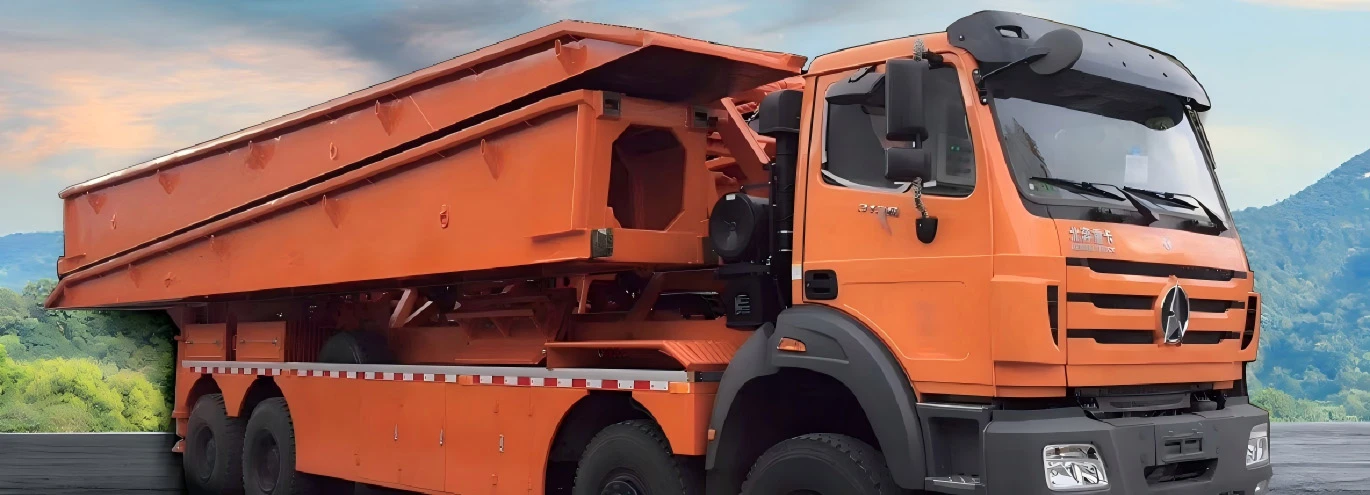
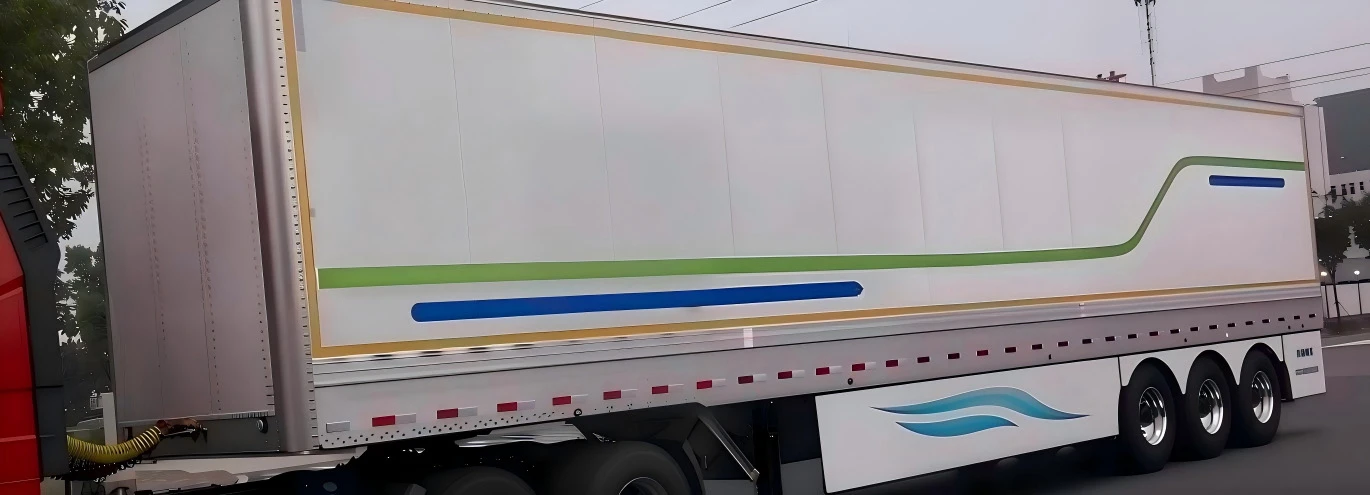
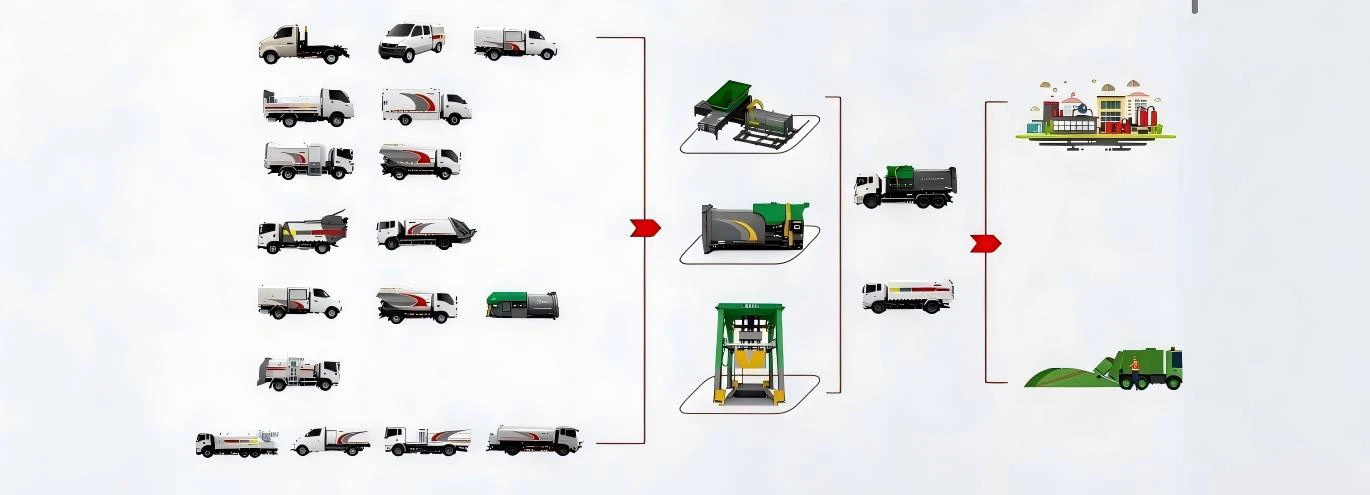
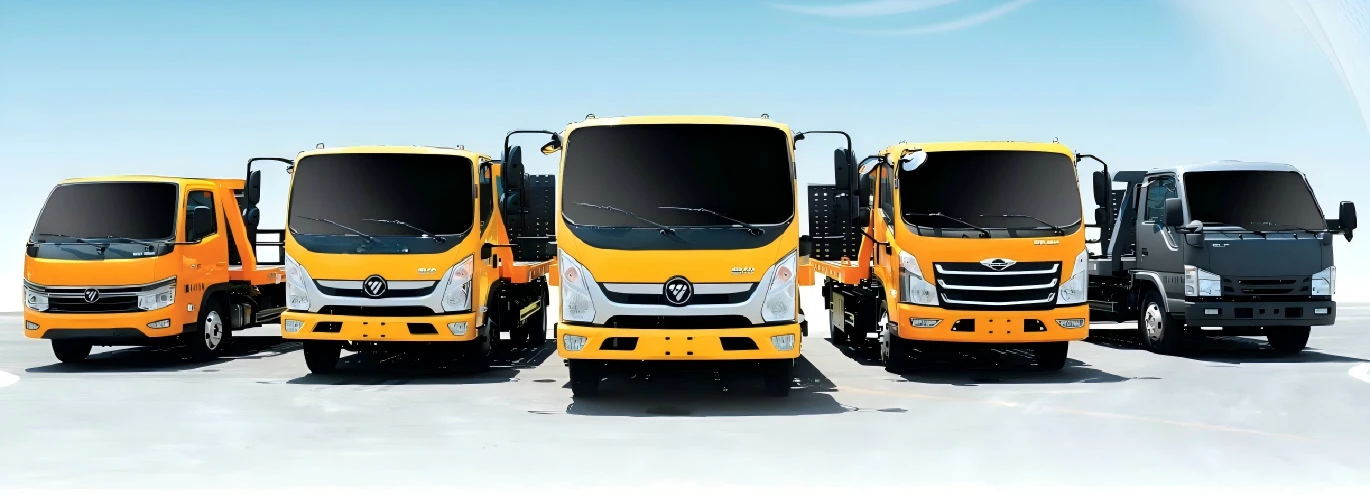
Send the vehicle type, the application and the destination, and we will return the outline with the modules marked and the exclusions listed. If you are still choosing between vehicle types, start from the heavy-duty cargo trucks, the small cargo trucks, the sanitation vehicles or the refrigerated trucks, and tell us the duty cycle.
Request a package outline - tell us what the vehicle has to do, and we will tell you which modules you need and which you can drop.
Related Import Guides
Auto Export Companies in China: 2026 Comparison Guide
China Vehicle Export Price Breakdown: What an FOB Quote Really Contains
Pre-Shipment Inspection for Chinese Commercial Vehicles: Scope, Tools and Thresholds
How Chinese Vehicle Export Works: From Quotation to Bill of Lading
Top 10 Car Exporters in China: How We Selected Them
Sanitation Vehicle Export from China: Compactor, Sweeper and Water Truck Guide