

Search for how to import used cars from China and you get the same article ten times over: sourcing, inspection, payment, export licence, shipping, documents, customs clearance, a cost formula. Most of them also mix three different kinds of rule into one list - national export conditions, provincial implementation notices and destination-country import restrictions - without saying which is which. That is where a buyer gets into trouble. A local government guide explaining how to set up a one-stop registration desk in one province is not a condition your shipment has to satisfy, and a duty percentage quoted from a 2025 industry blog is not a number you can put into a 2026 contract.
This guide draws a hard line. On the China side, we use one source only: the Announcement on Matters Concerning the Export of Used Cars, issued jointly by five national ministries and effective from 1 March 2024. Its own text states that it applies to the export of used cars out of the customs territory of the People's Republic of China. We do not cite provincial or municipal policy interpretations as export conditions, and we do not repeat procedural details we cannot trace to a national-level document. On the destination side, where several major markets changed their rules during 2026 and where published sources disagree, we name the variables that must be confirmed in writing before shipment rather than publishing a single percentage as if it were settled.
What follows is therefore narrower and more useful than a step-by-step checklist. It covers the six-step China-side export sequence with the four time limits the announcement actually sets, the five documents a licence application must contain, what the 20-vehicle licence cap does to a container plan, where the 180-day rule sits, how landed cost is built on the importing side, why our stock of nearly new new-energy vehicles is a different purchase from a conventional used car, and the ten questions worth putting in writing before you pay. For the vehicles themselves, see our stock list of 24 low-mileage used Chinese NEVs; for the export-side price structure, see the FOB price breakdown; for what a supplier does and does not handle, see the export service package.

One National Rule - Not Local Practice
The national framework for exporting a used car from China is the Announcement on Matters Concerning the Export of Used Cars, issued on 5 February 2024 by the Ministry of Commerce, the Ministry of Industry and Information Technology, the Ministry of Public Security, the Ministry of Transport and the General Administration of Customs, and effective from 1 March 2024. The announcement states in its general provisions that it applies to the act of exporting used cars out of the customs territory of the People's Republic of China. It replaced earlier ministry notices where those conflicted with it. That single sentence is the reason we treat it as the governing text for the China-side procedure and do not build a buyer's checklist out of regional policy explainers.
The distinction matters in practice. Provincial and municipal documents in this field typically address how a local authority organises applications, builds export bases, encourages one-stop motor vehicle registration service stations, or supports overseas warehousing. Those are implementation and industry-development measures. They are not additional conditions a foreign buyer's shipment must meet, and repeating their local processing promises as national rules would give an importer a false schedule. Conversely, the announcement itself assigns certain tasks to provincial commerce authorities - reviewing enterprise applications and issuing export licences - and that assignment is national law, not local discretion. Knowing which is which prevents two opposite mistakes: treating a local service promise as a legal guarantee, and treating a nationally fixed time limit as something that varies by province.
Below are the constraints that come directly from the announcement. Each is traceable to a numbered section of the text, so you can verify it against the original rather than taking our word for it.
| Constraint | Where the announcement says it | What it means for a buyer |
|---|---|---|
| Used-car exports are under export licence management; the Ministry of Commerce sets national policy | General provisions | Your supplier must be an approved exporting enterprise, not a trading intermediary acting in its own name |
| Two enterprise categories: manufacturers in the MIIT vehicle catalogue exporting their own products, or distributors with premises, trade experience and at least three appraisal professionals | Section 2 | Ask which category your counterparty falls under before discussing units |
| Approval is valid for one year and must be applied for again the following year | Section 3(2) | A supplier approved in 2025 is not automatically approved in 2026 |
| Provincial commerce authority reviews an enterprise application within 15 working days | Section 3(3) | A fixed national time limit for enterprise eligibility, not for your shipment |
| On resale, the registration certificate is endorsed as pending export and a temporary plate is issued, valid at most 60 days | Section 4(2) | The vehicle has a short legal window to leave; do not plan a long warehouse hold after this step |
| Export licence applications follow a who-exports-applies principle and cannot be made by another enterprise or individual | Section 4(3) | The licence applicant and the exporter of record must be the same entity |
| Provincial commerce authority issues the licence within 3 working days for a conforming application | Section 4(4) | A fixed national time limit, again for the licence only |
| One licence per batch, a maximum of 20 vehicles under one commodity code, declared quantity must equal the customs quantity and be cleared in one go | Section 4(5) | Directly constrains how you pack an order; see the dedicated section below |
| Customs verifies licences online; the goods name is declared as used plus brand, displacement and body type | Section 4(7) | Specification data on your documents must survive into the customs declaration |
| Once endorsed pending export, the vehicle cannot be resold domestically; if the export contract fails, a new buyer and a new contract are required | Section 4(8) | This step is not reversible through a domestic resale |
| After export clearance, deregistration must be applied for within 2 months; a cleared used car cannot be returned | Section 4(1) | Two hard end-points: no return shipment, and a deadline for closing the registration |
| Third-party inspection reports follow WM/T 8-2022 for passenger cars or WM/T 9-2022 for commercial vehicles and trailers | Section 5(4) | Ask for the standard number, not just a report title |
| Ten categories of vehicle are prohibited from export, including vehicles within one year of mandatory scrapping age, pledged or seized vehicles, vehicles inconsistent with their registration certificate, and vehicles failing inspection | Section 6 | A due-diligence list you can hand to a supplier |
| The exporting enterprise is the responsible party for quality traceability and must truthfully disclose mileage and repair history | Section 7(6) | Disclosure is a legal duty of the exporter, not a favour |
One more boundary is worth stating plainly. We have seen 2026 commentary describing additional pre-export verification steps that we could not trace to a national-level announcement or official text. We have deliberately left those out. If an extra requirement applies to your shipment, it will come from the accepting authority or the destination market, and it should be confirmed with the party that will actually process your documents - not inferred from a guide, including this one.
The Export Sequence Step by Step
The announcement describes a sequence rather than a menu. Six steps, in order, with two points of no return.
| Step | What happens | Who acts |
|---|---|---|
| Enterprise eligibility | The exporter is approved under the manufacturer or distributor conditions and re-applies each year | Exporter and provincial commerce authority |
| Acquisition and pending-export endorsement | Original plates and the driving licence are returned, the vehicle is presented for examination, the registration certificate is endorsed pending export, and a temporary plate is issued | Exporter and vehicle registration authority |
| Pre-export inspection and market declaration | A third-party inspection body issues a report to WM/T 8-2022 or WM/T 9-2022, and the exporter declares that the vehicle meets the target market access standards | Inspection body and exporter |
| Export licence application | The exporter applies on the Ministry of Commerce unified platform with the five document sets listed in the next section; the licence is issued within 3 working days if the application conforms | Exporter and provincial commerce authority |
| Customs declaration and clearance | Customs checks the licence online; the goods name, VIN and declared quantity must match; the batch clears in one operation | Exporter and customs |
| Deregistration | Within 2 months of export clearance, deregistration is applied for using the export declaration and supporting documents | Exporter and vehicle registration authority |
The first point of no return is the pending-export endorsement. From that moment the vehicle cannot change owner inside China, and the temporary plate runs for at most 60 days. The second is export clearance: a cleared used car cannot be shipped back, and the deregistration clock starts. Both are consequences of the national text, not of a carrier's policy. If a supplier proposes to hold a vehicle indefinitely after endorsement, or suggests that an unsold unit can simply be returned, the plan is inconsistent with the framework.
Notice also what the sequence does not include. There is no separate buyer-side import licence in this list - that belongs to the destination country. There is no vehicle-age gate on the China side either; age limits in export guides are almost always destination-market rules. Conflating the two is the most common reason a shipment is specified correctly for export and still refused on arrival. For the documents a supplier should be able to show you at step four, our supplier verification checklist turns the same framework into a due-diligence tool.
The Documents a Licence Application Needs
Section 5 of the announcement lists five sets of documents for a used-car export licence application. We have added a third column: what you, as the importer, should verify on each one. A supplier who can produce these cleanly is usually a supplier who can actually export.
| Document | What the announcement requires | What the importer should check |
|---|---|---|
| Export licence application form | VIN entered in the VIN field; exporter and consignor both show the exporting enterprise name; goods status marked as used; brand and model in the specification field; content consistent with the registration certificate | VIN on the form matches the VIN on the vehicle and on the inspection report |
| Legally binding export contract including after-sales content | A foreign-language contract must be accompanied by a Chinese translation, and the Chinese version prevails | Which language version governs if the two differ, and whether after-sales obligations are actually specified |
| Original or scanned motor vehicle registration certificate | The vehicle owner shown must be identical to the name of the enterprise applying for the licence | Owner name matches the exporter; no third-party owner in the chain |
| Third-party inspection report plus the inspection body's self-declaration | Report issued to WM/T 8-2022 or WM/T 9-2022; the body declares no unrectified violations and no serious dishonesty | Standard number is stated; report date is current; the body is identifiable |
| Declaration of compliance with target market access standards | Signed and stamped by the exporting enterprise | Names your destination and the standard claimed, rather than a generic statement |
That last row is where destination rules re-enter the China-side procedure. The exporter must declare that the vehicles meet the target market's access standards, which means the destination's age, emission, steering and certification requirements have to be known before the licence application, not after the container is booked. A supplier who asks only for a port of discharge and never asks about the destination's technical rules is skipping a document the national framework expects to exist.
Two companion pages go deeper on the physical side of this: our pre-shipment inspection guide covers what to examine on the vehicle, and the used-EV battery health guide covers the component that dominates the value of a nearly new electric vehicle.
The 20-Unit Licence Rule and What It Does to Your Order
Section 4(5) of the announcement is short and unusually consequential. Export licences are issued one per batch. Under a single commodity code on one application, an exporter may apply for at most 20 used cars. The applied quantity must equal the actual customs quantity and the batch must clear in one operation; if fewer vehicles are declared than the application states, a new licence must be applied for.
Three practical consequences follow, and almost none of the generic import guides mention them.
Orders above 20 units need more than one licence. A 30-car order is not a single licence with 30 lines. It has to be structured as separate batches or separate applications, which affects how you group vehicles, book space and schedule clearance. Our own 24-unit stock list is a live example: it is a stock list, not a single shippable batch under one licence.
The cap is per commodity code, not per container. The phrase in the announcement is under the same commodity code on the licence application. A mixed load of battery-electric vehicles, plug-in hybrids and extended-range vehicles, or of different displacement classes, may need to be grouped by classification before the application is filed. Decide the classification before you decide the packing list, not the other way round.
The declared quantity must be locked before filing. Because a short declaration forces a fresh licence application, you cannot file for a round number and then trim the load afterstuffing. Vehicle count, VIN list and commodity classification all have to be final at the application stage. That is a planning constraint on the buyer as much as on the exporter - if your order is still changing while the supplier is applying, the schedule will slip.
For smaller orders the rule is simply a reason not to over-specify. For container-load buyers it is the single most useful paragraph in the national text, because it converts a vague promise of we will handle the paperwork into a concrete question: how many licences will my order need, and under how many commodity codes?
Where the 180-Day Rule Fits
One further China-side condition sits alongside the 2024 announcement and matters disproportionately to the kind of stock we hold. A vehicle registered for less than 180 days is subject to additional requirements before an export licence can be obtained. We have covered the change that took effect on 1 January 2026, the requirement that licence data match the registration certificate, the stricter treatment of modified vehicles, company-level compliance and the negative list in a dedicated page - see China used-car export rules and the 180-day requirement. We are not going to repeat those details here or paraphrase secondary commentary about them.
What matters for this guide is where the rule sits in the sequence. It is a precondition at the licence application step, so it belongs in the same conversation as the five documents above, not in a shipping checklist. And it is unusually relevant to nearly new stock: our inventory is largely 2025 and 2026 model-year vehicles registered within the last year, with recorded mileages from 0 km upward. Some units sit inside the 180-day window by construction. If you are buying a 2026 car with a few thousand kilometres on it, ask about registration date and the associated confirmation document at the same time as you ask about price - not after the vessel is booked.
The general principle from the earlier section applies here too. Where a requirement is described in online commentary but we cannot point to a national-level text for it, we do not add it to your checklist. Confirm the current accepting requirements with the party filing your licence documents.
Why a Nearly New Car Is a Different Purchase
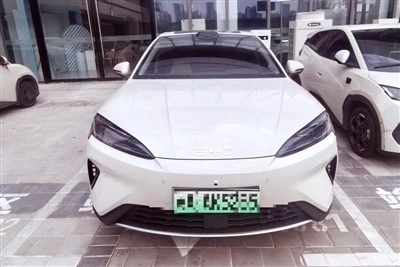
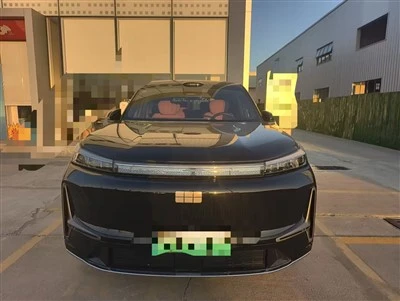
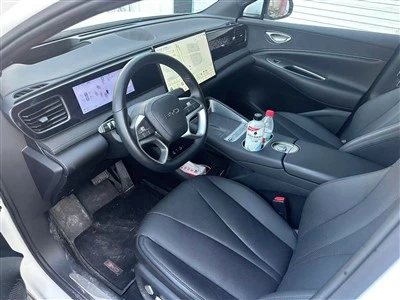
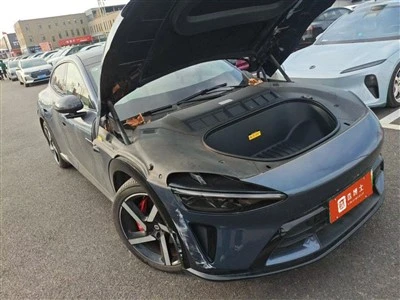
Most guides to importing used cars from China describe a 2018 to 2022 vehicle with 50,000 to 150,000 km, and spend their word count on engine wear, gearbox condition and rust. That is a real trade, but it is not the trade our stock represents. The 24 units on our used-car section run from 2023 to 2027 model years, with recorded mileage from 0 to 34,721 km, and are almost entirely battery-electric, plug-in hybrid or extended-range vehicles. Used, in this context, is a registration and ownership status rather than a description of mechanical wear.
That changes where the risk sits. A conventional used-car buyer worries about whether the vehicle will last another five years. A buyer of a nearly new Chinese NEV should worry about different things: whether the registration date triggers the 180-day requirement, whether the recorded mileage is consistent across the registration certificate, the inspection report and the vehicle itself, whether a 13% VAT invoice is available for that specific unit, whether the battery health report supports the asking price, whether the powertrain type is correctly declared, and whether the unit is left-hand drive for the intended market. Those are documentation and data questions, not workshop questions.
There is also a counter-intuitive consequence for age limits. Many destination markets set used-vehicle age ceilings in the 5 to 12 year range. For a 2025 or 2026 vehicle, those ceilings are comfortably satisfied, so age is rarely the binding constraint for this stock. The binding constraints are instead the registration-age rule on the China side and the consistency of the vehicle data on both sides. In other words, the newer the car, the more the paperwork matters. A buyer who negotiates hard on mileage and never checks the registration date has optimised the wrong variable.
For help choosing between the three powertrain types actually present in the stock, the stock list sets out the BEV, PHEV and EREV mix unit by unit, and the Top 10 Chinese EV cars for export does the same for new vehicles by range.
The Cost Stack on the Importing Side
Our FOB price breakdown explains the five lines on the export side: the vehicle, the body and equipment build, documents and certification, inland transport to port, and port charges. This section starts where that page stops - with what the importer actually pays to put the vehicle on the road at destination. We deliberately do not print duty percentages here. Several major destinations revised their vehicle tax regimes during 2026, and published figures for the same market disagree because they use different tax bases, different vehicle categories or different dates. A single number would be precise and wrong.
| Layer | Typical components | Who can give you a firm figure |
|---|---|---|
| Vehicle price | The agreed unit price, in a stated currency and on a stated basis | Your supplier, in writing |
| China-side export compliance | Inspection report, licence application, customs declaration, deregistration, temporary plate and insurance, inland transport, terminal handling, loading | Your supplier or forwarder, itemised |
| International freight and insurance | RoRo or container space, battery-related carriage requirements for new-energy vehicles, marine insurance | Your forwarder, against a specific sailing |
| Destination taxes and duties | Import duty, VAT or GST, consumption or environmental or recycling levies, age-related penalties, customs valuation adjustments | A licensed customs broker in the destination market, per VIN |
| Port-to-road | Clearing agent, destination inspection, conformity certification, rectification or modification, registration, inland delivery, storage and demurrage if delayed | Your destination agent, itemised |
Three items are regularly missed. First, some customs authorities value an imported used vehicle against their own reference tables rather than the commercial invoice, so the tax base can be higher than the price you paid. Second, a vehicle can clear customs and still be refused registration - for example where a technical inspection or a product-status requirement is applied at the registration stage - and the resulting rectification cost is not a duty. Third, pre-shipment certification has a lead time of its own; if it is not built into the booking schedule, the cost appears as demurrage rather than as a line in a quotation.
The practical request to make is a landed-cost worksheet with the tax layer left blank for the destination broker to complete, rather than a total that includes an unverified percentage. Our service package page states clearly which layers we handle and which remain with the buyer or the buyer's agents, so the worksheet has an owner for every row.
Three Price Bases That Cannot Be Compared
When we compiled the 24-unit stock list, we found three different kinds of number in the price fields of our own product pages: an FOB figure in US dollars, a current asking price in RMB, and an official reference price in RMB. They are not interchangeable, and treating them as a single price column would misstate the depreciation case by a wide margin. The stock list explains this unit by unit; it belongs in an import guide because it is the first thing that distorts a cost calculation.
Two examples from our pages illustrate the point without needing any external data. A 2026 Zeekr 7X page shows an official reference price of RMB 249,800 alongside an asking price of RMB 220,000. A 2025 Changan Qiyuan Q07 page shows RMB 171,800 against RMB 130,000. Both are domestic RMB figures - an official list price and a current asking price - and neither is an FOB export quotation. The gap between them is real evidence of depreciation on a nearly new vehicle, but converting either number into a landed cost in another country requires a currency basis, an Incoterm, a VAT invoice position and a freight quote first.
The sentence worth putting to any supplier is short: is this an FOB figure in USD, a domestic RMB asking price, or an official reference price, and is a 13% VAT invoice available for this unit? The invoice question is not administrative detail. Whether a used-vehicle VAT invoice is available affects the export-side tax treatment, and on our own stock the answer differs from one unit to the next, as the stock list records explicitly. For the full argument about why two quotations for the same vehicle can differ, see the price breakdown.
Destination Rules - What to Verify Not What to Assume
Destination rules are where a guide ages fastest. In 2026 several markets revised vehicle age ceilings, tax schedules or pre-shipment certification, and for some of them published sources disagree with each other by a wide margin. Rather than reproduce a table of numbers that may be stale by the time you read it, here are the six variables that must be confirmed in writing for your specific destination, vehicle and buyer type.
| Variable | Why one fixed answer is unsafe | Who confirms it |
|---|---|---|
| Vehicle age ceiling and its start point | Rules count from manufacturing year in some markets and first registration year in others; a vehicle can be inside one limit and outside the other | Destination customs or standards authority, in writing |
| Steering position | Left-hand drive is mandatory in most of the markets relevant to Chinese stock, while right-hand-drive markets are effectively closed to it; this is a hard gate, not a negotiable fee | Destination registration authority |
| Emission standard and conformity certification | Standards and certificate types differ by market, and some certificates must be obtained before the vessel departs rather than at arrival | Destination standards body and the appointed inspection company |
| Customs valuation basis | Some authorities use the invoice CIF value, others a VIN-based reference table or a depreciated list price, so the tax base is not always the price you negotiated | Licensed destination customs broker |
| Commercial import versus personal use | The two channels often have different quotas, documentation, resale restrictions and tax treatments; a personal-import route is not a commercial shipment plan | Destination customs and your importer of record |
| Transit and re-export treatment | Bonded free-zone storage, withdrawal for local sale and onward transfer within a customs union can trigger additional or refundable charges | Your forwarder and destination broker, in the contract |
None of these six can be settled by reading an article - including this one. The useful output of this section is a contractual instruction: the buyer or the buyer's broker provides a written confirmation of each variable for the specific VIN list, dated before shipment, and that confirmation becomes part of the order documentation. If a supplier offers a definitive answer to all six without consulting the destination side, ask which authority issued it and on what date.
Age Limits That Have an Official Text Behind Them
There are a few destination age rules we can cite with an identifiable official document or a high degree of source agreement. We include them because they show what a verifiable rule looks like - and, in two cases, because the official sources themselves disagree. Even here, the conclusion is a confirmation task, not a number to build a contract on.
| Market | What the identifiable source says | Status and what to do |
|---|---|---|
| Ghana | The Ghana Standards Authority public notice on the enforcement of national vehicle standards for imported used vehicles, effective 1 October 2026, prohibits vehicles over fifteen years old among a longer list that also covers flood, fire and structural damage. It applies by date of shipment, so vehicles shipped before 1 October 2026 are unaffected even if they arrive later | Read the GSA notice. Official commentary and press coverage of the same reform have also been reported as a ten-year threshold. Because the written notice and the public statements differ, select vehicles against the stricter interpretation and obtain written confirmation before loading |
| Nigeria | The customs import prohibition list is widely reported as barring used vehicles more than 12 years from their year of manufacture, which in 2026 points to 2014 and later; some service-provider guides still quote 15 years, which reflects an earlier standard | Treat 12 years as the working assumption and verify the current schedule. A 2026 industry guide to Nigerian used-car import policy also describes vehicle age, emissions, left-hand drive and pre-shipment certification as four separate gates, which is a useful structure for your own checklist |
| Nigeria, tax schedule | A 2026 fiscal policy package revised the import charges on fully assembled passenger cars and introduced an engine-capacity-based green levy; electric vehicles were treated separately | A compliance bulletin reproducing the official measures is available, but percentages and effective dates must be checked against the current customs tariff before quoting. We do not reproduce the rates here |
| Saudi Arabia | A late-2025 personal vehicle import rule sets a five-year age ceiling, excluding the current year, for light vehicles and is reported as applying the same ceiling to heavy vehicles; a service-provider source instead gives ten years for trucks and buses | The two statements conflict. Obtain the current written rule from the destination authority and require conformity certification to be completed before the vessel departs |
| United Arab Emirates | Dubai's roads and transport authority is reported as stating there is no general vehicle age limit for registration, while commercial guides commonly quote ten years and note that individual emirates may apply stricter practical thresholds at the registration stage | There is no single nationwide figure to quote. Confirm by target emirate and fuel type, and record the conclusion in the contract, because a vehicle may clear customs and still fail registration |
Two patterns are worth taking from this table. First, even where an official text exists, its interpretation can differ between an authority's written notice and its public statements - the Ghana case is the clearest example. Second, clearance and registration are separate decisions in several markets; satisfying the first does not guarantee the second. Both are reasons to treat an age figure as a screening input rather than a clearance guarantee.
We have deliberately not included a row for every market. For several large destinations, published age ceilings conflict with one another, or a rule changed during 2026 without a national-level text we could verify, or a reported emission requirement was described as still at proposal stage. Writing a single number for those markets would be the exact mistake this guide is trying to avoid. Our Central Asia export page covers the region from a sourcing and logistics angle; for current import conditions, use the written confirmation process above.
Where Sources Conflict and Why That Matters
Research for this guide produced a substantial body of 2026 material that we chose not to turn into facts. Naming the categories is more useful than pretending the gap does not exist.
Conflicting age ceilings for the same country. For one major market, published figures include a five-year ceiling, an eight-year ceiling, and a statement that no nationwide age ban exists at all and that age only changes a recycling-tax bracket. Those are different claims about the same legal question. We do not pick one and print it.
Duty percentages that cannot be reconciled. Several markets quote figures on different tax bases - a share of CIF, a per-cubic-centimetre amount, a combined rate, or a tiered rate by power output. A percentage from one basis cannot be converted into a percentage from another. Where the same market was also revised during 2026, an unqualified number is worse than no number.
Levy amounts that vary by an order of magnitude. For recycling or environmental charges tied to engine power, published estimates for the same class of vehicle differ so widely that any single figure would mislead a buyer into a wrong landed-cost estimate. These charges are calculated per consignment against a current schedule, not quoted from a guide.
Trade volume statistics with different definitions. Export totals for the same period appear in several versions depending on whether near-zero-mileage registered vehicles are counted. We cite no volume figures here.
Procedural steps without a traceable national text. Where a reported additional verification step could not be linked to an official document, we left it out of the China-side sequence.
The operational conclusion is asymmetric and simple: select vehicles against the strictest credible interpretation, and price the shipment only against a written, current calculation from the destination broker. Over-screening costs you a few candidate units. Under-screening costs you a container of vehicles that cannot be registered, plus storage and return freight. The two risks are not the same size, and a guide that hides the uncertainty makes the larger one more likely.
Steering Certification and the Pre-Shipment Gate
Two destination-side requirements are worth separating from the tax discussion because they are pass-or-fail rather than a matter of cost.
Steering position is a hard gate. Most of the markets that take Chinese used vehicles require left-hand drive for normal registration. Right-hand-drive markets are in practice closed to Chinese left-hand-drive stock, and in some markets right-hand-drive vehicles can only enter a bonded zone for re-export without ever being registered locally. Because China's domestic fleet is left-hand drive, this is usually satisfied without effort - but it should still be confirmed explicitly for the target market, and it is not waived by a newer vehicle, a lower mileage or a cleaner emission standard.
Conformity certification must be completed before shipment, not after arrival. Across several 2026 markets, the pattern is the same: an appointed inspection or standards body issues a certificate or product-status document in the country of origin, and the destination authority will not accept an application to obtain it after arrival. Names differ by market - a certificate of conformance, a pre-shipment vehicle conformity programme, a product conformity certificate registered before the vessel sails, a vehicle type approval or a technical conformity certificate - but the timing logic is shared. Our pre-shipment inspection guide and our service package describe what is handled before loading and what is not.
On the China side, the corresponding documents are the third-party inspection report to WM/T 8-2022 or WM/T 9-2022 and the exporter's declaration that the vehicles meet the target market access standards - both in section 5 of the announcement. So the destination certificate chain and the China-side document chain meet at the same point: before the licence application is filed. Build the certification lead time into the vessel schedule, not into the arrival schedule.
A Realistic Timeline Built Backwards from the Vessel
The four time limits in the national announcement are often quoted as if they described the duration of an import project. They do not. They are administrative processing limits on the China side. Everything else - inspection, destination certification, booking, inland transport, sailing, clearance - has no fixed duration in the announcement and must be quoted by the parties performing it.
| Activity | Time basis | Source of the figure |
|---|---|---|
| Enterprise eligibility review | Within 15 working days | Announcement, section 3(3) |
| Temporary plate after pending-export endorsement | At most 60 days | Announcement, section 4(2) |
| Export licence issuance for a conforming application | Within 3 working days | Announcement, section 4(4) |
| Deregistration after export clearance | Within 2 months | Announcement, section 4(1) |
| Third-party inspection and report | Not specified nationally | Quote from the inspection body |
| Destination conformity certification | Not specified nationally | Quote from the appointed body; must complete before loading |
| Booking, inland transport, loading, sailing | Not specified nationally | Quote from the forwarder against a named sailing |
| Destination clearance and registration | Not specified nationally | Quote from the destination broker |
Plan backwards from the vessel, and note which activities cannot overlap. The pending-export endorsement starts a 60-day clock, so it should happen close to a booked sailing rather than at the start of a long sourcing process. The inspection report and the target-market declaration must exist before the licence application, so their lead times sit in front of the three-day licence window. Destination certification has to complete before loading, so its lead time sits in front of the sailing date, not after it. And because the declared quantity is locked at the licence application, the VIN list must be final before any of those clocks start.
A schedule that puts the 60-day plate window first and the document work after it has the sequence backwards. A schedule that quotes three working days as the time to ship a car has confused a processing limit with a logistics plan. Ask for a dated plan with an owner for each row, and compare it against the four fixed limits in the table.
Ten Questions to Put in Writing Before You Pay
These are the questions that turn the sections above into an order specification. They are deliberately phrased so that each has a document or a named party as its answer, rather than an assurance.
| # | Ask | What a satisfactory answer looks like |
|---|---|---|
| 1 | Is the VIN on the vehicle, the registration certificate and the licence application identical, and is the registered owner the exporting enterprise? | Three matching identifiers and one named entity |
| 2 | What is the first registration date, and does the unit fall inside the 180-day requirement? | A date, plus the specific confirmation document if applicable |
| 3 | Is the recorded mileage consistent across the odometer, the inspection report and any maintenance record? | One figure with its sources |
| 4 | Is the quoted price an FOB figure in USD, a domestic RMB asking price or an official reference price, and is a 13% VAT invoice available for this unit? | Currency, basis and invoice status stated separately |
| 5 | Is the powertrain BEV, PHEV or EREV, and is there a battery health report for this VIN? | A declared type and a report you can read |
| 6 | Has any repaint, panel repair, accident, flood or fire history been disclosed for this unit? | A written condition statement, including any disclosed repairs |
| 7 | Is the unit left-hand drive and confirmed eligible for the target market? | Written confirmation from the destination side |
| 8 | How many export licences will the order require, under how many commodity codes, and is the VIN list final? | A batch plan, not a promise to handle paperwork |
| 9 | Who provides the current written confirmation of age, emission, certification and valuation rules for this destination? | A named broker or authority and a date |
| 10 | Is the certification lead time built into the vessel schedule, and who bears demurrage or return freight if clearance fails? | A dated plan with cost ownership in the contract |
Our stock list already answers questions 3 to 6 unit by unit, including two vehicles with disclosed repaint or panel repair records. The supplier verification checklist expands question 1 into a full due-diligence routine.
How This Guide Connects to Our Other Pages
This page is the hub for the used-car topic cluster. Each of the following covers one part of the process in more depth, so the hub can stay focused on sequence, cost structure and verification rather than repeating itself.
Rules and compliance. China used-car export rules and the 180-day requirement for the registration-age condition; Used EV battery health for importers for the highest-value component; Pre-shipment vehicle inspection in China for the physical checks.
Cost and scope of service. Vehicle export price breakdown for the five FOB lines; Export service package for the six modules and the eight things we do not offer.
Stock and selection. 24 low-mileage used Chinese NEVs in stock, the used-car category and the electric vehicle category.
Model and supplier lists. Top 10 Chinese EV cars, Top 10 Chinese trucks under USD 20,000 FOB, Top 10 Chinese pickup trucks and Top 10 Chinese refrigerated trucks for model-level comparisons; Top 10 car exporters in China, Directory of auto export companies, Supplier verification checklist and Shipping and process guide for the supplier side; Central Asia export page for the regional view.
Frequently Asked Questions
Do I need an import licence, or only the exporter needs one? The export licence described in this guide is a China-side document applied for by the exporting enterprise under the who-exports-applies principle. Whether you need an import licence, an importer of record or a permit in your own country is a destination question, and it belongs in the six variables listed above.
Can one licence cover a 30-car order? Not under the national rule. A licence is issued one per batch, with a maximum of 20 vehicles under one commodity code, and the declared quantity must clear in one operation. A larger order needs a batch plan, which is exactly why we ask you to fix the VIN list before the application is filed.
Is a 2026 car showing 0 km really a used car? Under the national definition, a used car is one that has been registered and transferred before reaching mandatory scrapping age. Registration and ownership status make it used, not wear. Our stock list includes registered but effectively undriven units, and their documentation - registration date, invoice status, mileage consistency - matters more than their mechanical condition.
Why will you not quote the import duty percentage for my country? Because several destination schedules changed during 2026, because published figures use incompatible tax bases, and because the correct calculation depends on the VIN, the powertrain, the engine rating and the age of the specific unit. A percentage printed here would be precise and unreliable. Ask a licensed broker in your market for a per-VIN written calculation, and leave that row of the landed-cost worksheet for them to complete.
If the rule is national, does every province process the paperwork the same way? The conditions and the time limits in the announcement are national. The announcement also assigns enterprise review and licence issuance to provincial commerce authorities, and local arrangements for registration service can differ. So the legal conditions do not vary, but the accepting window's document checklist is worth confirming with the party filing your application. That is different from treating a local policy explainer as an export condition.
Can we ship first and complete the destination certification on arrival? For several 2026 markets, no - the certificate or product-status document must be issued in the country of origin before loading. Build its lead time into the booking schedule. Ship now, certify later is the most expensive way to discover this.
What if the vehicle clears customs but cannot be registered? Clearance and registration are separate decisions in some markets. A vehicle may pass one and fail the other on steering position, technical inspection or product-status grounds. That is why we ask for written confirmation of the registration-side rules, not only the customs-side tariff, before shipment.
Are you a government-authorised used-car export pilot enterprise? We are Hong Kong Dragon Fist Trade Services Limited, operating as an export service provider. We do not claim a government pilot designation. Under the national framework, enterprise eligibility and export licensing are matters of the announced conditions and review by the competent commerce authority; you should verify any counterparty's documents directly rather than relying on a self-description. See the supplier verification checklist for how to do that.
Sources and How to Verify Them
Every external source used in this guide is listed here with what it supports and how to check it. We have kept the list short on purpose.
| Source | Used for | How to verify |
|---|---|---|
| Announcement on Matters Concerning the Export of Used Cars, five national ministries, effective 1 March 2024 | The entire China-side sequence, all four time limits, the 20-vehicle cap, the five licence documents, inspection standards, prohibited categories and exporter duties | Read the numbered sections directly; the table in the first section of this guide gives the section references |
| Ghana Standards Authority public notice on enforcement of national vehicle standards for imported used vehicles | The prohibition list, the effective date and the shipment-date basis for Ghana | Check the current version on the authority's own site, and reconcile it with any public statements before loading |
| Compliance bulletin reproducing 2026 Nigerian fiscal measures | Confirmation that a 2026 revision to vehicle import charges and a green levy exists | Do not quote the rates from a bulletin; obtain the current customs tariff from a licensed Nigerian broker |
| 2026 industry guide to Nigerian used-car import policy | The four-gate structure of age, emissions, steering and pre-shipment certification | Industry source, useful as a checklist shape; every number in it needs independent confirmation |
Two exclusions are as important as the inclusions. We do not use provincial or municipal policy interpretations as evidence of export conditions, because those documents describe local implementation and industry support rather than the national requirements a shipment must meet. And we do not publish figures - duty percentages, levy amounts, export volumes, additional verification steps - that we could not trace to an identifiable national or destination-level text. Where a rule is unsettled, we say so and point to the authority that can settle it.
This page is a summary of publicly available policy material and is not legal, tax or customs advice. Used-vehicle import rules change frequently and sometimes without a transition period. Before shipment, confirm every destination-side requirement with the customs authority, standards body and registration authority of the importing country, and record the current written position in your order documents.
Request a Written Quotation
Tell us the destination, the intended buyer type, the target vehicle class and the number of units, and we will reply with a stock proposal from the units we actually have, a statement of the price basis and VAT invoice status for each, an itemised export-side cost sheet, and a dated document plan showing which licences and certificates the order will need. We will also tell you which parts of the landed cost we cannot quote, so your broker can complete them.
Hong Kong Dragon Fist Trade Services Limited - export service provider for Chinese vehicles. Browse the used-car category or start from the 24-unit stock list.